



Antique Silver Plate Cutlery
Antique silver plate cutlery brings the refined weight of Victorian dining and Art Deco service to the modern table.
Antique Silver Plate Cutlery
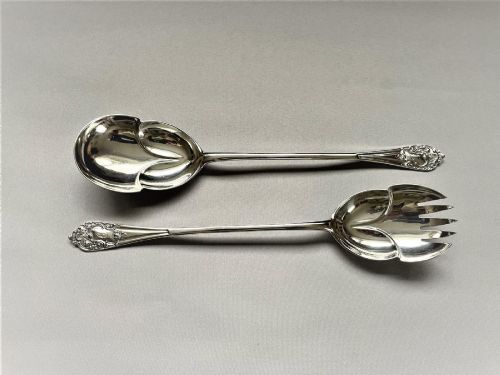
Antique silver plate cutlery covers everything from large family canteens to single serving pieces designed for fish, fruit, and seafood. Buyers searching for antique silver plate cutlery will encounter formal canteens, fish servers, lobster picks, and knife rests spanning the Victorian, Edwardian, and Art Deco periods.
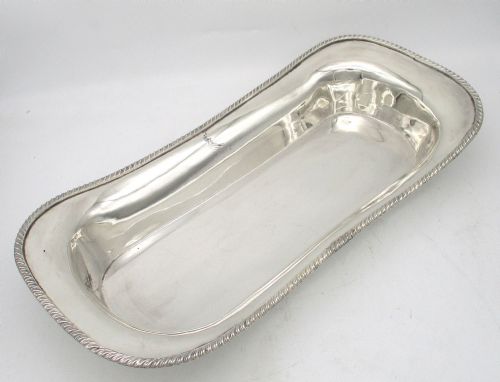
The selection ranges from utilitarian nineteenth-century serving trays and canteens to specialised dining accessories like grapefruit spoons and knife rests. Pieces frequently originate from British makers alongside notable continental and Scandinavian workshops.
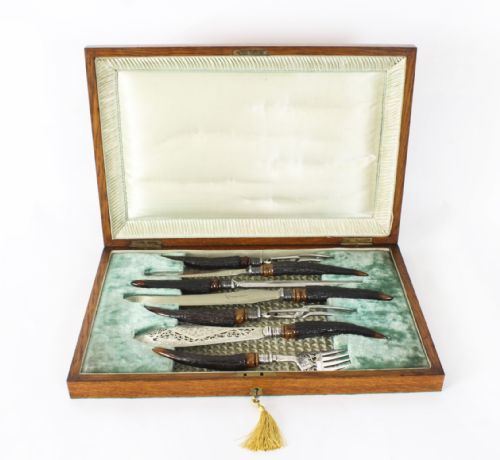
Victorian examples tend towards elaborate engraving and naturalistic motifs like antler handles, while later Art Deco pieces emphasise geometric lines and clean forms.
Materials and Methods
The foundation of these items is typically a base metal such as steel, nickel silver, or copper, coated with a layer of silver through plating techniques like Old Sheffield plating or electroplating.
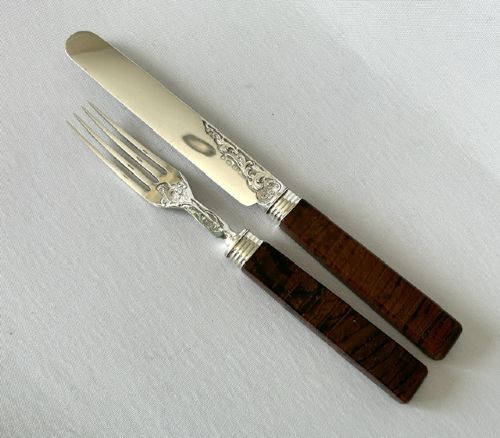
Handles introduce a variety of tactile materials including mother-of-pearl, carved antler horn, porcelain, agate, and various woods, secured to steel or plated blades and tines.
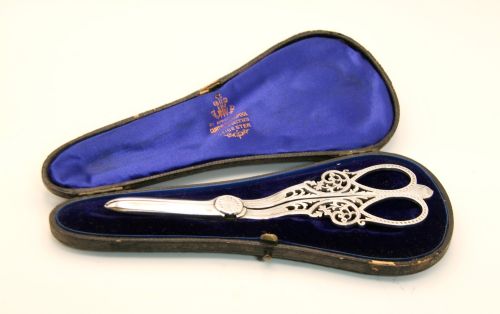
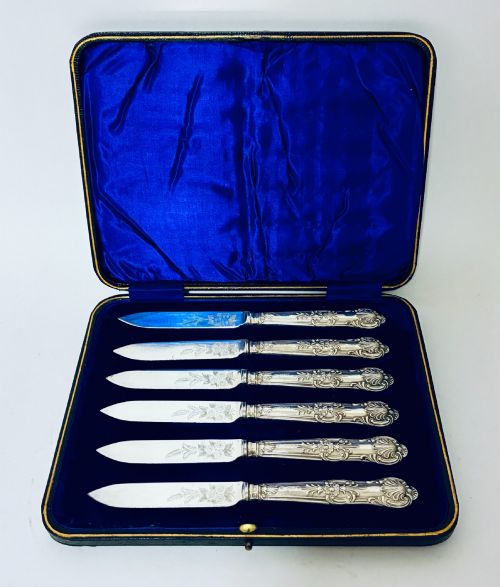
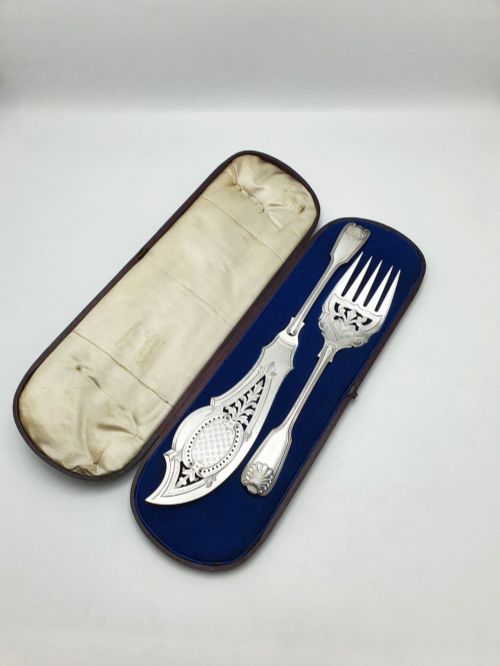
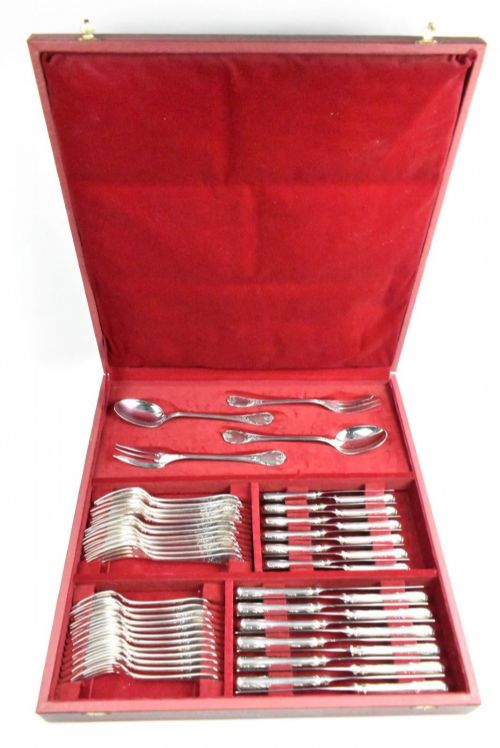
Cased sets often feature interiors lined with velvet or silk, housed in oak or mahogany boxes designed to protect the metal from tarnishing and wear.
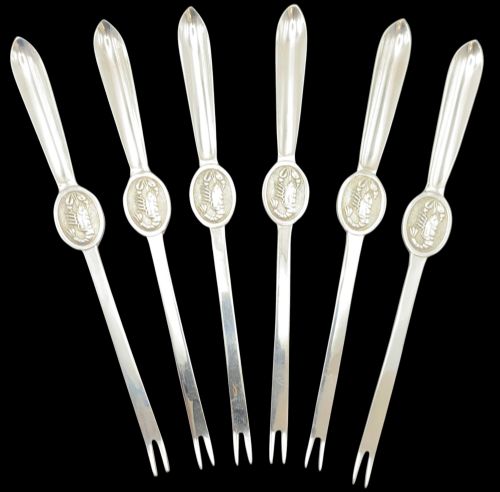
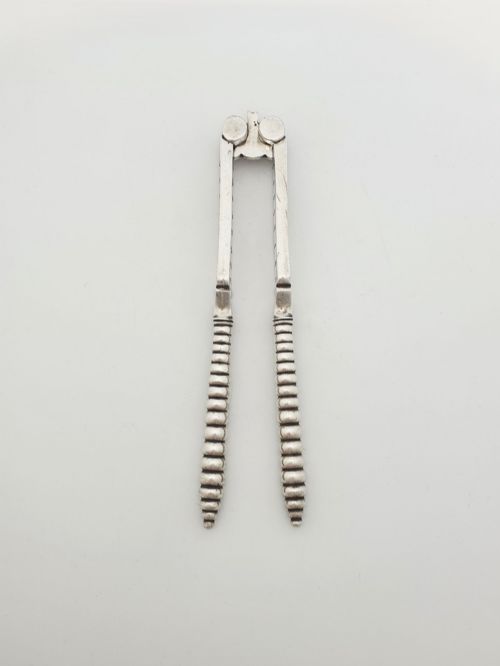
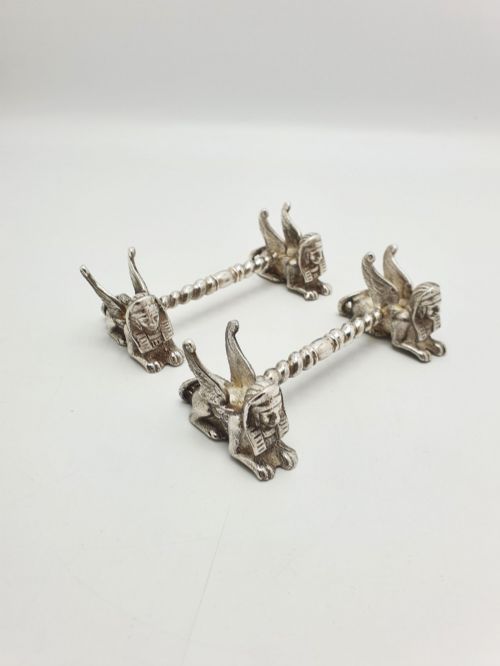
Sphinx knife rests and lobster crackers remind us that Victorian dining involved specialised tools for every conceivable anatomical challenge.
Markers of Quality
Quality rests upon the thickness of the silver deposit over the base metal and the crispness of the chased or engraved decoration. Substantial weight in the hand and balanced proportions distinguish finer production.
Maker signatures from established houses indicate superior workshop standards and careful finishing of details like handle pins and serrated edges.
The integrity of fitted wooden cases and the retention of original silk or velvet linings also reflect the overall grade of the set.
Christofle·Suckling Ltd.·Creswick·Carrington·Asprey and Co.·Harrods·Walker Knowles·Cooper Bros and Sons·Elkington·James Dixon·David Andersen·Waring and Gillows
The Antique Silver Plate Cutlery Glossary
- Silver Plate
- A base metal coated with a thin layer of silver. This process allowed makers to produce durable tableware with the appearance of solid silver at a lower cost.
- Old Sheffield Plated
- An early fusion method where a sheet of silver was fused to a copper ingot. This technique predates modern electroplating and produces a warm tone.
- Canteen
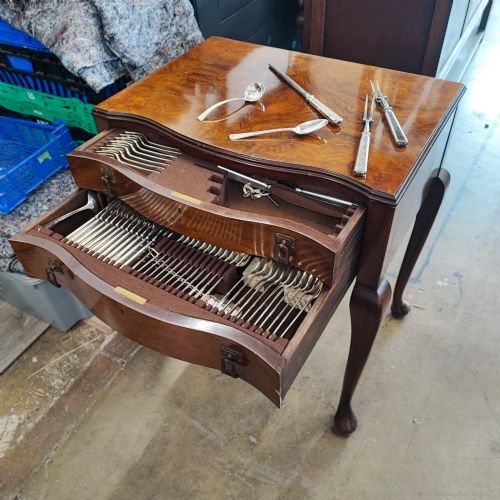
- A fitted box or chest designed to hold a complete set of cutlery. These containers often feature multiple tiers and velvet linings.
- Knife Rests
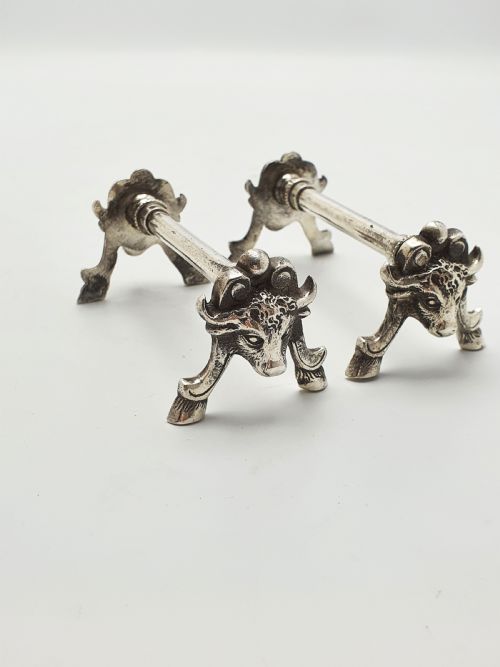
- Small supports placed on the table to keep used blades off the linen between courses. They appear in materials like silver plate, glass, and porcelain.
- Fish Servers
- A matched pair comprising a large knife and fork with pierced and engraved blades. They were utilised for serving whole fish at formal Victorian and Edwardian dinners.
- Electoplating
- A method of depositing silver onto a base metal using an electrical current. This technique became widespread during the nineteenth century.
Antique Silver Plate Cutlery: Frequently Asked Questions
How do I clean silver plate cutlery?
Use a specialised silver polish and a soft cloth to gently remove tarnish from the plated surface. Avoid harsh abrasives that can wear away the thin silver layer over time.
Wash pieces by hand in warm soapy water and dry them thoroughly immediately afterward to prevent water spots and corrosion.
Can I use antique cutlery every day?
Many people choose to use these pieces for daily dining, provided they are hand-washed rather than placed in a modern dishwasher. The high heat and harsh detergents of dishwashers will damage plated surfaces and organic handles.
Storing them in lined boxes or cloth rolls will protect the metal from scratches and excessive tarnishing between meals.
How do I date an antique canteen?
Examine the style of the wooden case, the interior layout, and any maker marks stamped onto the metal blades or handles. Victorian canteens often feature heavy oak construction and elaborate brass hardware.
Art Deco sets display cleaner lines and simpler geometric shields, while specific maker stamps can be cross-referenced against historical registration records.
What is the difference between solid silver and silver plate?
Solid silver contains a high, regulated purity of silver throughout the entire object, whereas silver plate consists of a base metal core covered by a thin outer layer of silver.
Silver plate items often bear marks indicating the plating technique or the base metal used, such as EPNS, distinguishing them from hallmarked sterling pieces.