



Antique Silver Place Markers
Antique silver place markers bring sharp detail to a formal table, holding cards or menus with distinct period character.

Antique Silver Place Markers
Antique silver place markers function as small table accessories designed to hold cards or menus during formal meals. When you search for antique silver place markers, you encounter pieces that double as menu holders and place card holders from the Edwardian, Victorian, and later decades.
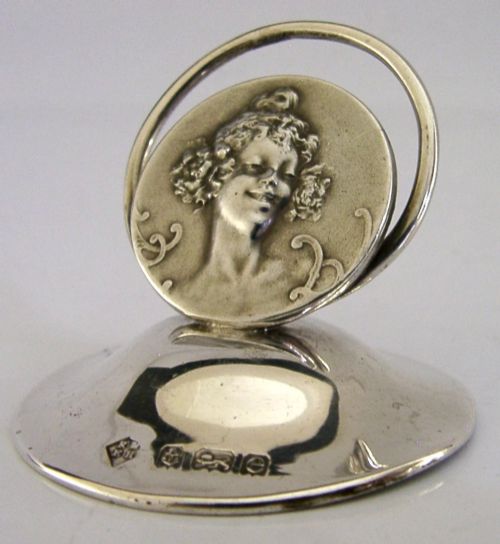
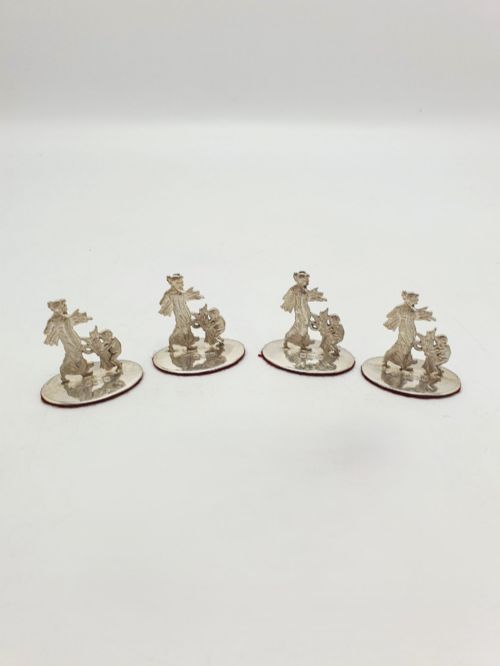
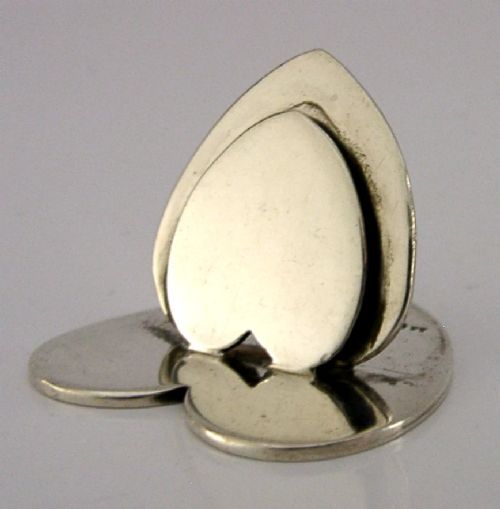
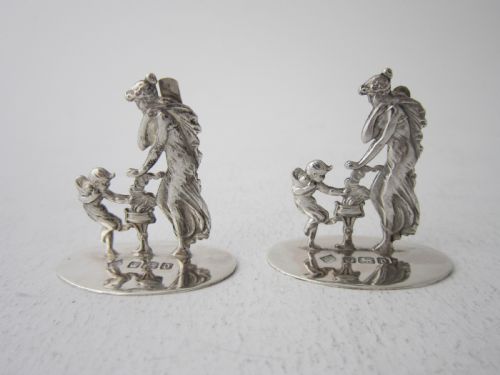
The most common versions on this page take the form of figural subjects, animals, and decorative mounts made in sterling silver or silver plate. They appear individually, in pairs, or in sets ranging from three up to twelve items.
The periods represented stretch from the late Victorian era through the Edwardian years into the 1920s and 1930s, encompassing styles such as Art Nouveau, Art Deco, Arts and Crafts, and Scottish Revival. These objects reflect the elaborate dining customs of their time, when every place setting required specific identification and menu information.
How they were made
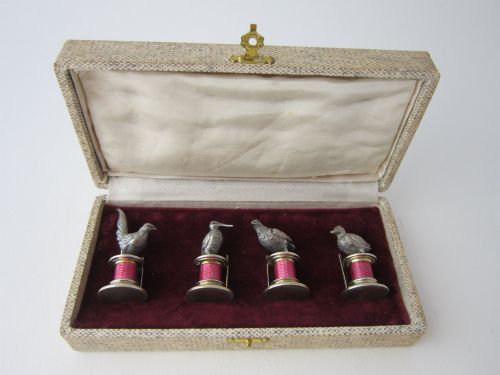
Makers utilised sterling silver and silver plate, often combining the metalwork with supporting elements like velvet, silk, and gemstone accents. Some examples incorporate enamel and guilloche enamel to add colour and contrast to the metallic surface.
Constructed through casting, chasing, and mounting techniques, these pieces achieve intricate shapes ranging from animals and human figures to geometric and heraldic forms. The metal is shaped to support cards securely without obscuring the decorative subject.
Antique Silver Place Markers Retail Price Guide 2026
Typical asking prices for silver place markers among the pieces listed under this phrase on Sellingantiques today, from the lower quarter to the upper quarter. They describe what is for sale here now, not the wider market.
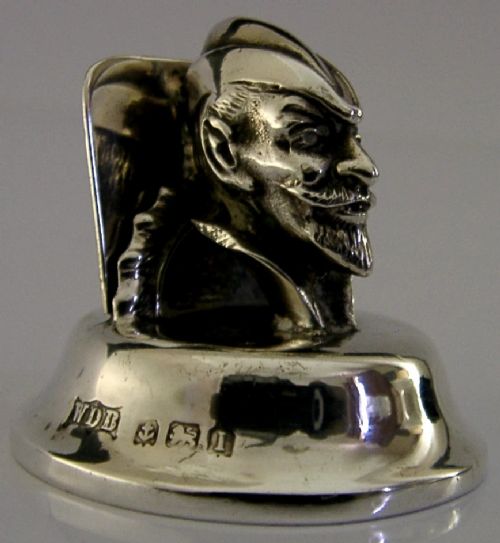
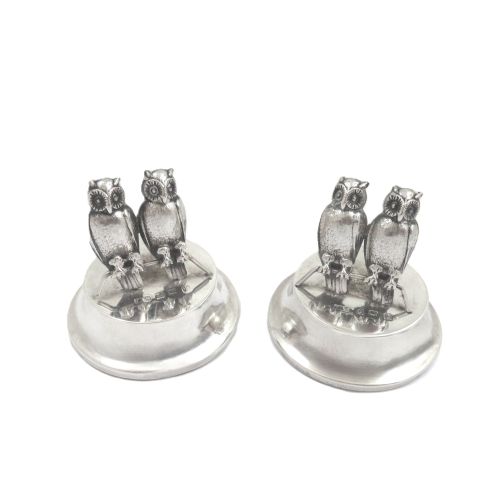
Listings include figural subjects such as owls, foxes, grouse, horses' heads, and Robin Hood.
What varies in quality
The presence of maker marks, intact enamel work, and matching sets elevates certain examples above single items or unmarked pieces. The complexity of the design, such as figurative or enamelled work versus plain mounts, also defines the upper tier.
Sampson Mordan·Liberty
The Antique Silver Place Markers Glossary
- Sterling silver
- A silver alloy containing 92.5 percent pure silver and 7.5 percent other metals, usually copper, ensuring durability for small table items.
- Menu holder
- A weighted or footed mount designed to stand upright on a dining table and display a paper menu card.
- Place card holder
- A miniature stand that grips a small card bearing the name of a guest at a dinner party.
- Guilloche enamel
- Decorative enamel applied over a metal surface that has been engraved with an intricate repetitive pattern or design.
- Figural
- Representing a human, animal, or recognizable subject in solid form rather than pure abstract or geometric decoration.
Antique Silver Place Markers: Frequently Asked Questions
What are antique silver place markers?
Antique silver place markers are small decorative metal stands used at formal dining tables to hold place cards or menus.
They combine utility with sculptural design, often taking the shape of animals or figures.
How were place markers used?
Hosts placed them beside each setting to guide guests to their designated seats or to inform them of the upcoming courses.
They served as conversational centrepieces during elaborate Edwardian and Victorian banquets.
How do I care for silver markers?
Clean them gently with a soft microfibre cloth and specialised silver polish only when necessary to preserve fine details.
Avoid abrasive cleaners that can wear down cast textures or damage enamel and gemstone inserts.
How can I tell the period?
Examine the stylistic cues, such as flowing Art Nouveau lines or geometric Art Deco shapes, alongside any stamped hallmarks.
Hallmarks on the silver often reveal the exact year of assay and the workshop responsible.