



Antique Silver Pen Rest
These antique silver pen rest pieces are practical desk accessories designed to hold writing instruments, keeping ink off papers while offering period craftsmanship.
Antique Silver Pen Rest
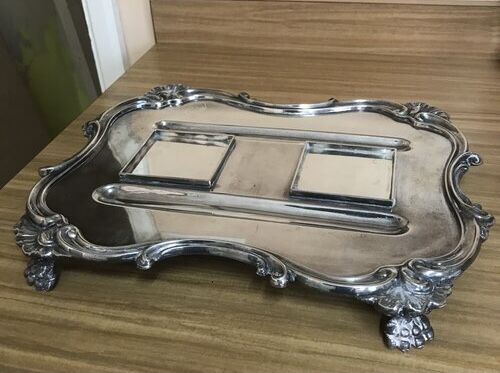
When you search for an antique silver pen rest, you encounter desk accessories, inkstands, and inkwells that incorporate dedicated supports for pens. These items date from the Victorian, Edwardian, and turn of the twentieth century periods, reflecting the heavy correspondence demands of those eras.
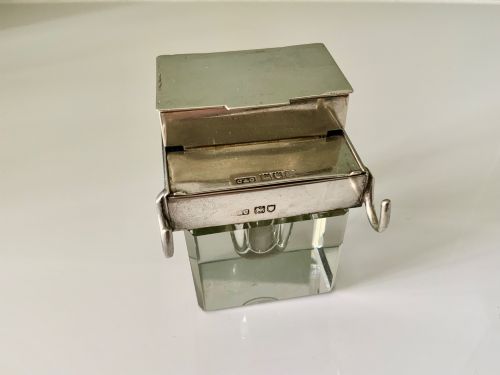
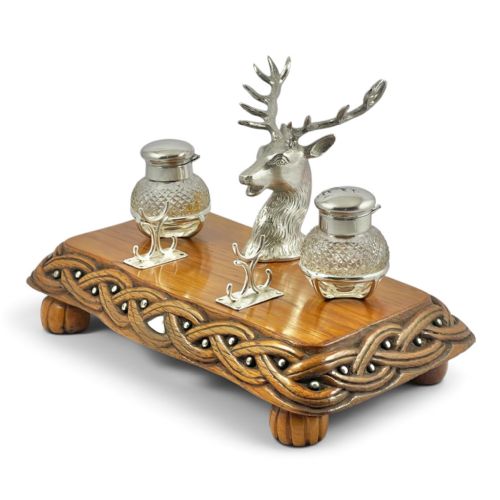
You are most likely to meet integrated desk stands and inkwells featuring silver mountings, glass bodies, or oak bases. Many examples combine silver plate or sterling silver with materials like horn, antler, and onyx.
The styles range from utilitarian Victorian designs to ornate Art Nouveau curves and Scottish regional variations involving oak and horn. Each piece served a specific function on a writing desk, holding a dip pen alongside ink reservoirs.
How they were made
Silversmiths shaped sterling silver and silver plate through casting, hammering, and engraving, often mounting the metal onto dense organic materials. Oak and turned wood served as sturdy bases for multi-part desk tidies.
Makers integrated natural elements such as horn, hoof, and antler alongside cut crystal and glass to construct inkwells and pen stands. Enamel detailing and bronze casting appear in pieces from the Art Nouveau period.
Antique Silver Pen Rest Retail Price Guide 2026
Typical asking prices for silver pen rest among the pieces listed under this phrase on Sellingantiques today, from the lower quarter to the upper quarter. They describe what is for sale here now, not the wider market.
The listings on this page include materials such as sterling silver, silver plate, oak, antler, horn, onyx, and lapis lazuli across Victorian and Edwardian periods.
What varies in quality
The calibre of an antique silver pen rest depends on the weight of the metal and the precision of the silver mounts fitted to organic materials like horn or oak. Heavier gauge sterling silver and crisp hallmarks indicate higher production standards.
Construction complexity distinguishes standard desk items from superior pieces that incorporate novelty shapes, integrated clocks, or scarce decorative stones such as lapis lazuli.
Harrods·Zimmermann·Maurice Dufrene
The Antique Silver Pen Rest Glossary
- Sterling silver
- A silver alloy containing 92.5 percent pure silver by mass, standard for quality British plate and desk accessories.
- Hallmark
- An official stamp applied to precious metals, indicating the assay office, metal standard, and date letter for the piece.
- Desk tidy
- A multi-functional desk accessory combining inkwells, pen rests, and sometimes stamp boxes or small drawers into one base.
- Capstan
- A desk inkwell shaped like a ship's capstan, featuring a wide flat base tapering upwards to a lid.
- Art Nouveau
- A style popular around 1900 characterised by sinuous natural lines, floral motifs, and stylised organic forms.
Antique Silver Pen Rest: Frequently Asked Questions
What is an antique silver pen rest?
An antique silver pen rest is a desk accessory or an integrated feature on an inkstand designed to hold a pen safely off the writing surface.
These pieces date primarily from the Victorian and Edwardian eras when handwriting instruments required dedicated desktop organisation.
How were antique desk stands used?
They sat on writing desks to hold inkwells, blotters, and dipping pens during the height of handwritten correspondence.
The incorporated pen rests kept wet nibs from staining papers and wooden desk surfaces.
How do I identify a Victorian inkstand?
Victorian pieces often feature heavy oak bases, cut glass inkwells, and ornate silver mounts reflecting stylistic movements like Rococo Revival or Scottish Baronial.
Examining the hallmarks and the overall heft of the sterling silver or silver plate helps confirm the nineteenth-century period.
Can I use these inkwells today?
Many inkwells remain functional, though glass inserts and silver lids should be handled with care to preserve their age.
Most modern collectors prefer to display them as decorative desk accessories rather than filling them with ink.