
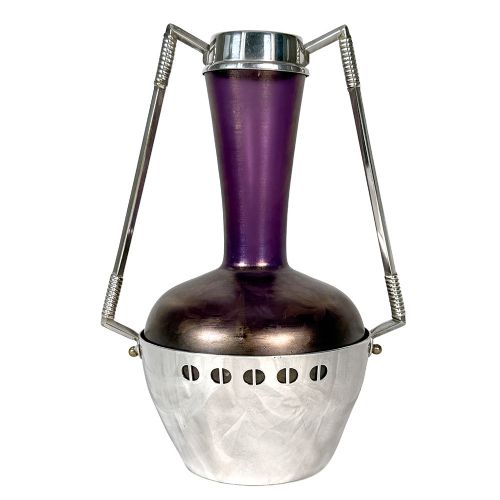
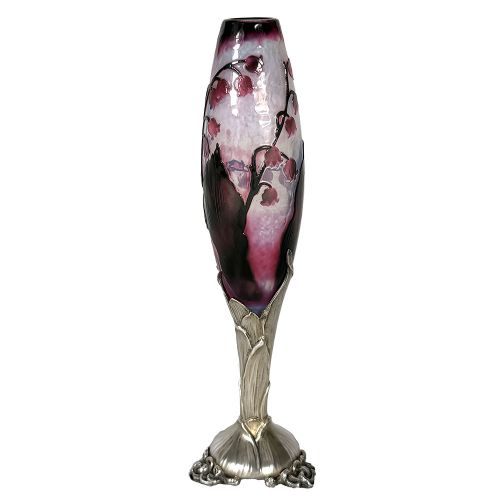
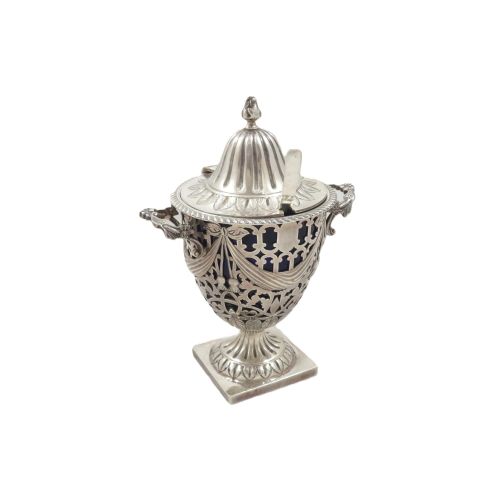


Antique Silver Glass Urn
These antique silver glass urn pieces bring dramatic Victorian and Edwardian decorative presence to a room, combining rich glass bodies with precious metal mounts.
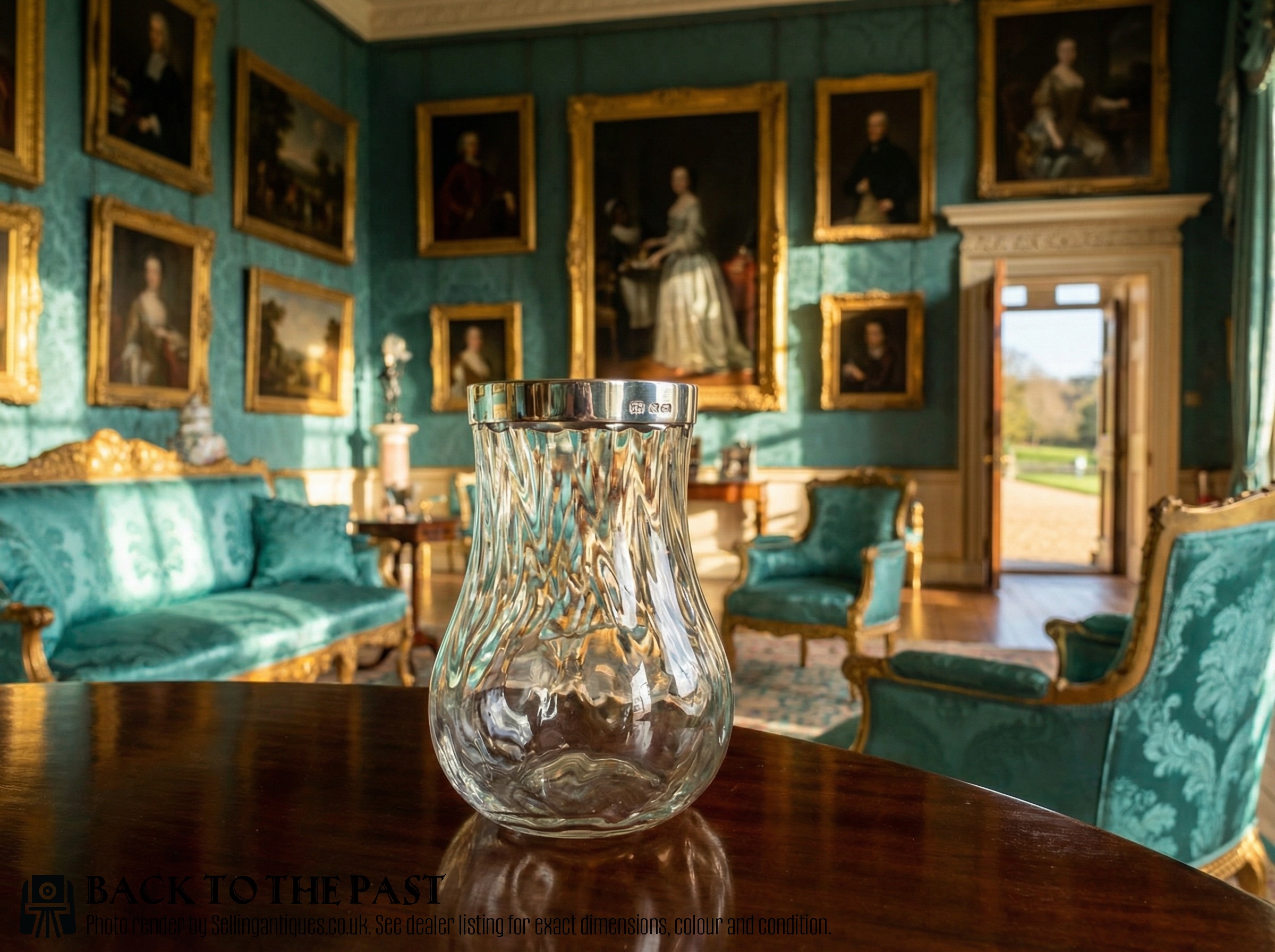
Antique Silver Glass Urn
When you search for an antique silver glass urn, you encounter vessels that bridge traditional glassmaking and metalwork from the Victorian and Edwardian eras. These decorative pieces take various forms, including lidded sugar baskets and table vases produced across Britain and continental Europe.
The versions you are most likely to meet on this page span the late nineteenth and early twentieth centuries. They incorporate distinct regional characteristics, reflecting the aesthetic shifts from Victorian ornamentation through to Edwardian refinement and Art Nouveau fluidity.
Materials and construction
Makers combined blown or cut glass with sterling silver, pewter, and silvered treatments. Coloured vessels in cobalt blue and green frequently served as the foundation for applied metal overlays and mounts.
Craftsmen utilised secure collars, pierced galleries, and hinged lids to anchor silver components directly to fragile glass bodies. Artisans also applied specialised silvered finishes to the interior and exterior surfaces of the glass to achieve reflective depth.
Some Edwardian sugar urns spent their early days dispensing lumps while guests debated the merits of steamships.
Judging quality in silver and glass
Quality rests in the precision of the metal overlay and the clarity or depth of the underlying glass. Heavier sterling silver components and crisper cast details elevate a piece above standard plated alternatives.
The harmony between the glass body and the metal mount determines distinction. Superior examples feature mounts tailored specifically to the vessel's contours rather than generic adaptations.
Loetz Witwe·Hukin And Heath
The Antique Silver Glass Urn Glossary
- Sterling Silver
- A standard alloy of silver comprising ninety-two point five percent silver by mass and seven point five percent other metals, typically copper. This material provides the structural durability for decorative mounts and handles.
- Cobalt Glass
- Deep blue glass coloured by the addition of cobalt salts during the melting process. It creates a striking contrast when paired with bright silver overlays.
- Art Nouveau
- An international style of art and architecture that peaked in popularity around nineteen hundred. It is characterised by organic, asymmetric lines and motifs inspired by natural forms.
- Overlay
- A technique where a secondary material, such as silver or pewter, is applied over a glass body in decorative patterns. This method requires precise adherence between the distinct mediums.
Antique Silver Glass Urn: Frequently Asked Questions
How do I clean an antique silver glass urn?
Use a soft, dry microfiber cloth to dust the glass and silver surfaces regularly. Avoid submerging mounted pieces in water, as moisture can become trapped between the glass and the metal fittings.
Apply silver polish sparingly with a cotton bud to the metal components only, taking care to keep chemical polishes away from the glass. Professional conservation is recommended for pieces with delicate silvered glass finishes.
What is the difference between Victorian and Edwardian examples?
Victorian pieces tend to feature heavier ornamentation, deeper colours like cobalt blue, and robust silver mounts reflecting historicist revivals. They carry a sense of substantial decorative weight.
Edwardian designs generally lean towards lighter proportions, refined silverwork, and brighter aesthetics. The transition reflects changing domestic interiors that favoured airier, less cluttered displays.
Were these urns used for food or display?
Many lidded examples functioned as sugar baskets or sweet bowls on formal dining tables. They held confectioneries or sugar lumps within reach during afternoon tea and dinner service.
Other taller forms served purely as decorative vases for floral arrangements or mantelpiece ornaments. Their dual utility meant they were both functional tableware and status items.
How can I date a silver and glass piece?
Examine the silver components for hallmarks, which indicate the assay office, standard of metal, and date letter corresponding to specific years of production. Stylistic cues such as Art Nouveau curves also point towards the turn of the twentieth century.
Look closely at the construction methods, including the thickness of the glass and how the metal mounts are secured. Hand-finished details often help distinguish nineteenth-century production from later decorative wares.