




Antique Silver Compact Box
An antique silver compact box gathers the small luxuries of the dressing table, offering enamelled geometry and polished metal from past decades.
Antique Silver Compact Box
An antique silver compact box serves as a portable receptacle for cosmetics, powder, or pills, emerging in various forms such as powder compacts, trinket boxes, cigarette cases, and vinaigrettes. These items reflect the personal habits and social customs of the nineteenth and twentieth centuries, spanning periods from the Edwardian era through the Art Deco movement and into the mid-century.
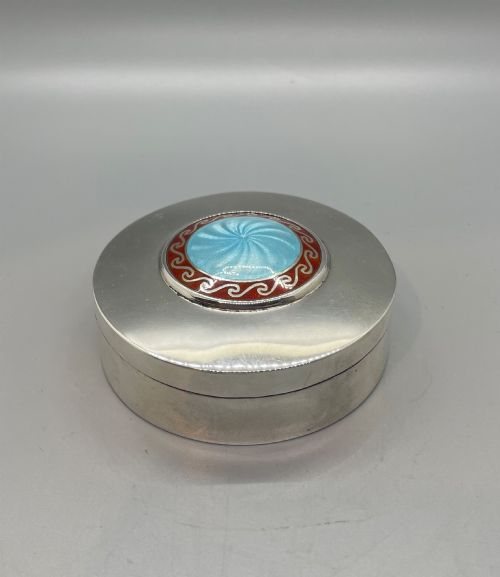
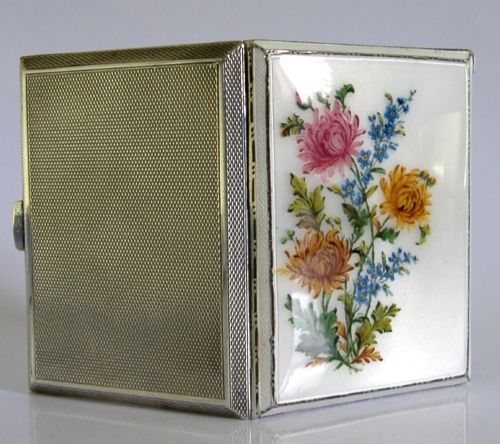
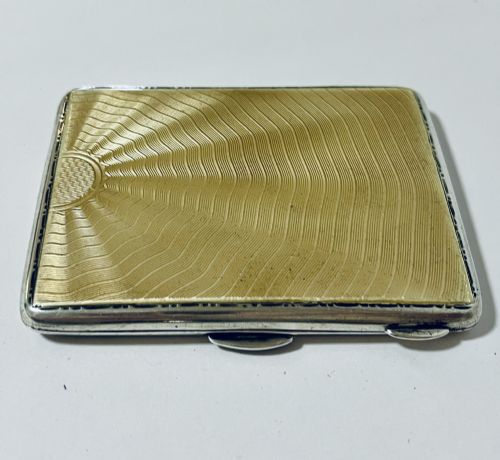
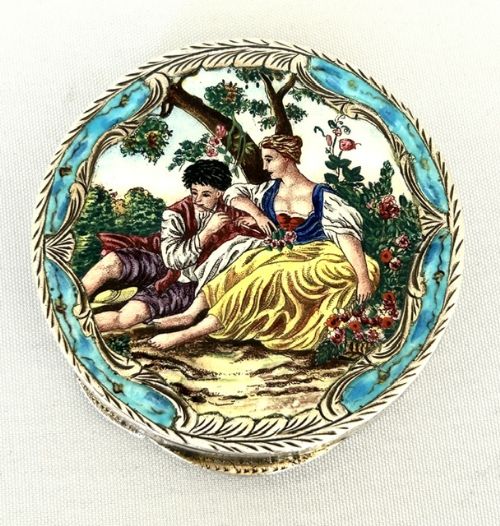
The pieces encountered most frequently on this page date from the early decades of the twentieth century, particularly the 1920s and 1930s, displaying distinct stylistic influences ranging from geometric Art Deco motifs to floral hand-painted enamel and filigree work. Objects range from British hallmarked sterling silver to continental European pieces, including Chinese export silver and Italian work.
Beyond standard powder compacts, the category encompasses specialised containers like rouge pots, pill boxes, watch cases, and combination vanity cases that incorporate spaces for lipstick or mirrors. Such items demonstrate the versatility of silverworking during periods of changing fashion and expanding personal accessories.
Materials and Construction Techniques
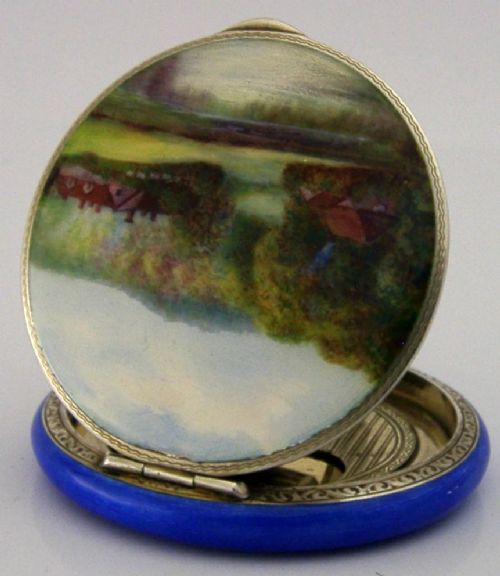
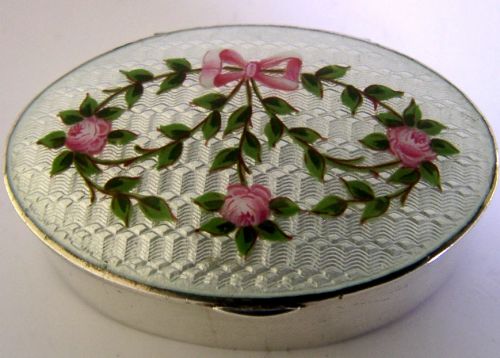
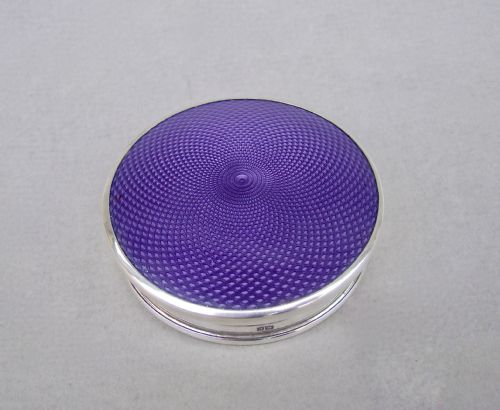
Makers utilised sterling silver, standard silver, and silver-gilt as the primary structural metals, often combining them with vitreous enamel or guilloche enamel to create patterned, coloured surfaces. Engine-turned casting and manual chasing added texture to the metal foundations, while applied elements such as silk, leather, and suede lined the interiors of cases and boxes.
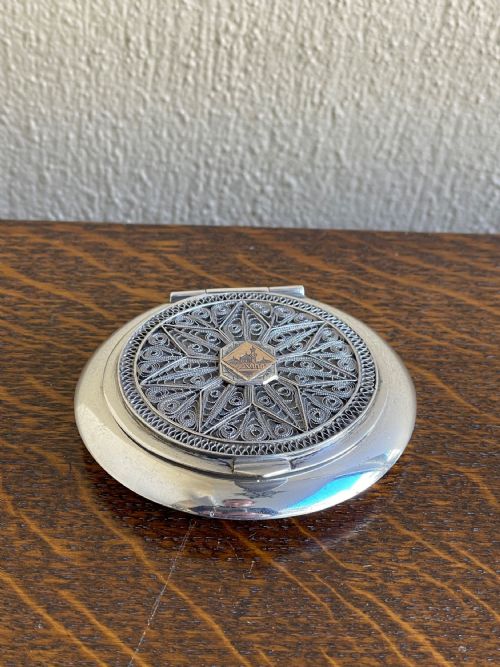
Surface decoration frequently relied on hand-painted enamel details depicting flowers, scenic views, or figural subjects, alongside filigree wirework soldered onto the metal frame. Pieces were often stamped with hallmarks indicating the city of assay and the year of production, linking the physical item to documented silversmithing workshops.
Listings feature items spanning the 19th century through the 1950s, utilising sterling silver, enamel, silk, and leather.
Distinctions in Quality and Craftsmanship
Quality within these objects rests upon the precision of the metalwork, the complexity of the enamel application, and the integrity of the closing mechanism. Fine examples display crisp engine-turning and securely seated enamel without loss or heavy fracture, whereas lesser pieces show simple stamped decoration and basic hinges.
The presence of original fitted cases, interior mirrors, or specialised linings such as red Moroccan leather elevates the historical completeness of the piece. Makers who employed detailed hand-painting or intricate filigree work produced items that stand apart from mass-produced commercial boxes.
Nathaniel Mills·Henry Matthews·Elkington and Co·Giuliano Spinelli·Richard Hudnut·Houbigant
The Antique Silver Compact Box Glossary
- Guilloche enamel
- A decorative technique where an engraved metal surface is covered with transparent enamel, allowing the geometric pattern underneath to show through. This method is common on Art Deco compacts and cigarette cases.
- Vinaigrette
- A small ornamental box featuring an inner perforated grille, designed to hold a sponge soaked in aromatic vinegar. These date back to earlier centuries and were used to refresh the wearer.
- Silver-gilt
- Silver that has been coated with a thin layer of gold on its surface, often providing a warm interior finish to boxes and cases. It protects the underlying silver from tarnishing in areas frequently touched.
- Filigree
- Delicate ornamental work made from twisted silver wire soldered together in open patterns. It appears frequently on regional pieces such as Persian or continental European items.
- Cartouche
- An ornamented frame or panel, often shield-shaped, intended to hold an inscription or monogram. On earlier patch boxes, these were sometimes left blank.
Antique Silver Compact Box: Frequently Asked Questions
What is the difference between a compact and a vinaigrette?
A compact is designed to hold cosmetic powder, rouge, or puffs for facial grooming, often including an internal mirror.
A vinaigrette is an older, smaller box that contains a pierced metal grille over a sponge soaked in aromatic vinegar for freshening the air.
How do I identify an Art Deco silver compact?
Art Deco pieces typically feature geometric patterns, clean lines, and symmetrical engine-turned engraving on the silver surface.
They frequently incorporate bold coloured enamels and were predominantly produced during the 1920s and 1930s.
Were these boxes only made in Britain?
While many pieces bear British hallmarks from assay offices in cities like Birmingham and London, a significant portion originates from continental Europe and beyond.
Evidence includes items from France, Austria, Italy, Persia, and China, each displaying regional decorative traditions.
What materials line the inside of these boxes?
Interiors often feature polished silver or silver-gilt, sometimes accompanied by fitted mirrors or metal compartments for powder and lipsticks.
Some surviving examples retain original textile linings made from silk, suede, or red Moroccan leather.