
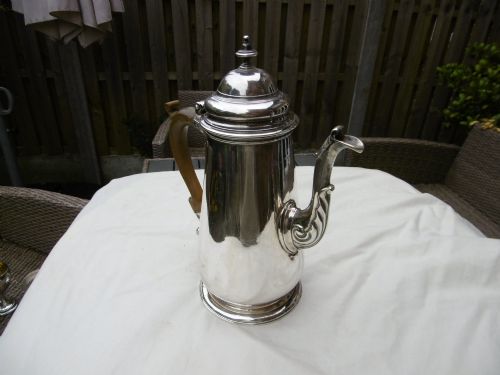
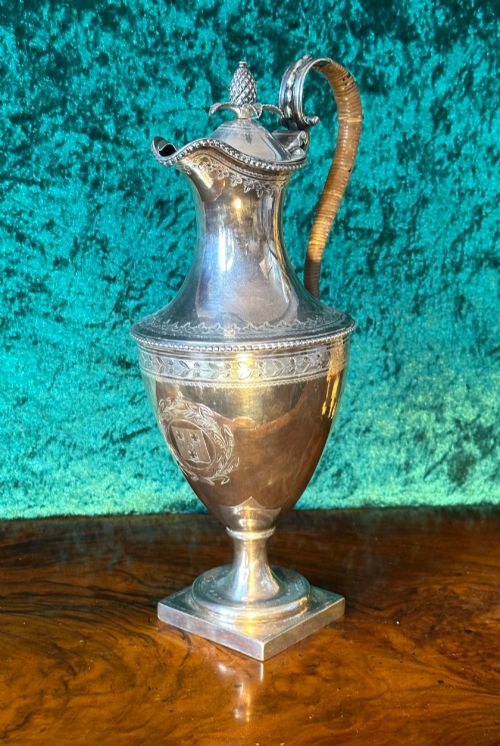

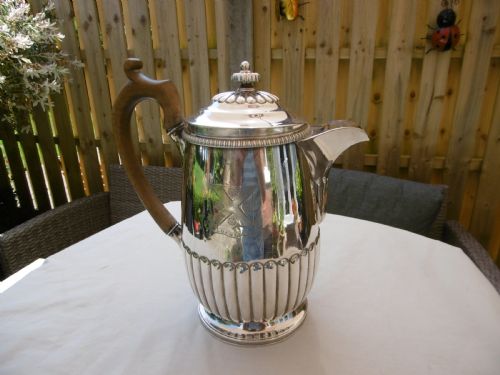


Antique Silver Beverage Pot
These antique silver beverage pot examples bring Georgian, Victorian and Edwardian craftsmanship directly to the table for daily service or display.
Antique Silver Beverage Pot
Makers shaped these items in sterling silver, silver plate, and Old Sheffield Plate, frequently pairing the metallic bodies with insulators like wood and bone on side handles.
Collectors encounter diverse regional origins, including English and Scottish workshops, spanning the eighteenth, nineteenth, and early twentieth centuries.
Materials and construction methods
Silversmiths utilised solid sterling silver and copper-based Old Sheffield Plate or silver plate to construct the durable holloware bodies. Workshops shaped these metals through hammering, casting, and soldering techniques.
Handles often incorporated carved wood, bone, or even wrapped wicker to insulate the user's hand from hot liquids. Crests and decorative motifs were meticulously engraved or applied onto the surfaces.
Some chocolate pots arrived in pairs, perhaps ensuring that nobody at the Georgian breakfast table ever ran short of cocoa.
Assessing quality and distinction
Quality rests upon the weight of the silver, the crispness of chased or engraved crests, and the structural integrity of the handle insulators. Heavier gauges and prominent maker marks distinguish finer productions.
Pieces bearing distinct maker attributions or matching companion items such as milk jugs demonstrate higher levels of original commissioning thought.
Richard Gurney·Matthew Boulton·Harrison Brothers And Howson
The Antique Silver Beverage Pot Glossary
- Old Sheffield Plate
- A fused composite material made by applying a thin sheet of silver to a thicker copper core. This technique predates modern electroplating.
- Sterling Silver
- An alloy consisting of pure silver and other metals, usually copper, to increase durability. British pieces typically carry standard hallmarks.
- Ewer
- A large jug with a flared spout, historically used for pouring water or beverages. These frequently double as coffee vessels in early dining sets.
- Side-Handled
- A pot configuration where the handle sits perpendicular to the spout rather than opposite it. This design appears on specific chocolate and coffee service styles.
Antique Silver Beverage Pot: Frequently Asked Questions
What is an antique silver beverage pot?
An antique silver beverage pot is a holloware vessel created to serve hot drinks like coffee, chocolate, or hot water.
These pieces date from historical eras including the Georgian and Victorian periods, constructed from sterling silver or plated metals.
How do I identify the period?
Dating relies upon examining maker marks, hallmarks, stylistic traits, and the construction methods used on the metal body.
Georgian and Victorian designs often display distinct decorative revivals, whereas Edwardian items reflect early twentieth-century manufacturing standards.
Were these pots meant for daily use?
Original owners utilised these vessels during formal dining and drawing-room hospitality to serve guests.
Their sturdy construction in silver and plate meant they were built for actual service rather than mere display.
Why do some pots have wooden handles?
Wooden or bone insulators prevent heat transfer from the boiling liquid inside to the handle gripped by the user.
Silversmiths pinned these organic materials directly into metal sockets to protect hands from scalding.
What is the difference between silver plate and sterling?
Sterling silver contains a regulated high purity of silver throughout the entire metal structure.
Silver plate and Old Sheffield Plate apply a superficial layer of silver over a base metal core such as copper.