
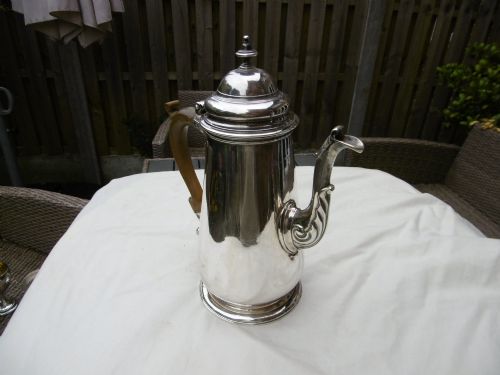


Antique Sterling Coffee Pot
An antique sterling coffee pot brings the weight and bright polish of Georgian and Victorian silver directly to the modern breakfast table.
Antique Sterling Coffee Pot
When you search for an antique sterling coffee pot, you encounter hollowware spanning the Georgian, Victorian, and Edwardian eras. The most frequent forms include tapered cylindrical pots from the eighteenth century, pear-shaped vessels with repoussé decoration, and later Victorian iterations with substantial capacity.
Makers utilised various styles such as Neoclassical, Rococo, and Art Deco across these centuries. Sets occasionally appear alongside matching tea pieces, alongside smaller bachelor pots and side-handled chocolate pots.
Pieces originate predominantly from English, Scottish, and Irish assay offices, carrying full hallmarks that anchor their exact year of production and place of testing.
Materials and Techniques
Silversmiths formed these vessels primarily from solid sterling silver, often incorporating wood or ebony insulators within handles to prevent heat transfer during use. Silver-gilt interiors appear on specific luxury examples.
Manufacturing methods combined raising silver sheets from flat discs with casting for spouts, handles, and feet. Artisans then applied chased, repoussé, or engraved ornamentation by hand.
Certain antique pots bear secret family crests and armorials, inviting owners to trace the aristocratic breakfast tables they once served.
Craftsmanship and Weight
Quality rests in the gauge of the silver and the crispness of the hand-applied decoration, distinguishing heavy, substantial vessels from lighter productions. Well-balanced proportions and comfortable handle insulation separate standard domestic items from superior studio work.
The clarity of the hallmarks and the preservation of original armorials or crests add significant historical interest to individual vessels.
Richard Gurney·Edward Power·Joseph Craddock·Harrison Brothers And Howson·Paul Storr·Birmingham Silversmiths Company·Harry Atkin
The Antique Sterling Coffee Pot Glossary
- Sterling silver
- An alloy containing 92.5 percent silver by mass, with the remainder consisting of other metals like copper. This standard defines British silver plate production.
- Repoussé
- A metalworking technique where the artisan hammers the silver from the reverse side to form a raised design in relief on the front. This method is common on Georgian pear-shaped pots.
- Biggin
- A tall coffee pot or percolation vessel often fitted with a stand and lamp. These examples usually date from the nineteenth century.
- Hallmark
- A series of official marks stamped on items to certify the purity of the metal, the maker, and the year of testing. British marks provide precise dating evidence.
- Finial
- The small decorative knob or sculpture attached to the lid of the pot. These take various forms, including birds or floral motifs.
Antique Sterling Coffee Pot: Frequently Asked Questions
How do I clean an antique silver coffee pot?
Use a soft cloth and a specialised silver polish designed to remove tarnish without abrading the metal surface. Avoid harsh chemical dips that strip the natural patina accumulated over centuries.
Wash the pot in warm, soapy water after polishing, then dry it thoroughly with a lint-free cloth to prevent water spots.
Can I use an antique coffee pot daily?
Many collectors use their silver pots for special occasions, though modern acidic coffee can react with older metal surfaces over time. Ensure you rinse the interior immediately after use to protect the silver.
Take care with the wooden or ebony insulators on handles, as boiling water can stress fragile historical joints.
How do I identify the date of my pot?
Examine the base or body for a series of small stamped hallmarks, which include a date letter corresponding to the assay office's records. Reference books or online registers match these letters to specific years.
Maker's marks and town marks appear alongside the date letter to confirm the origin.
What is the difference between a coffee pot and a chocolate pot?
Chocolate pots often feature a side handle rather than a rear handle, designed to accommodate a wooden stirring rod used to mix the thick beverage. They also frequently include a small removable lid at the top for the stirrer.
Coffee pots generally feature rear handles positioned opposite the pouring spout.