



Antique Silk Sampler
An antique silk sampler carries the careful stitches of a child, mapping letters, numbers or geography in durable thread.
Antique Silk Sampler
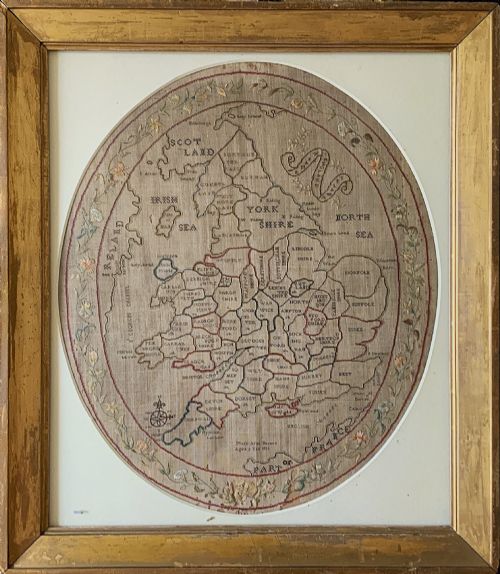
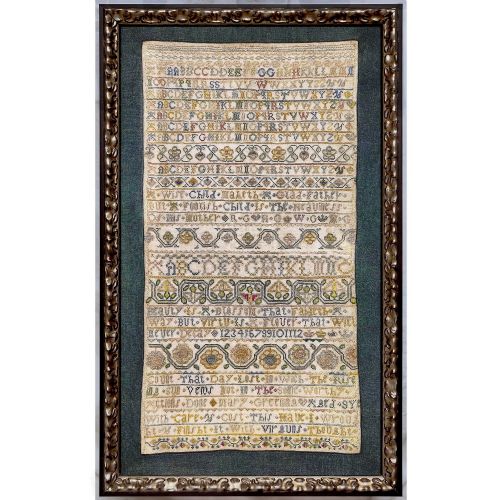
An antique silk sampler presents educational needlework exercises stitched by young girls in domestic or school settings. These textiles record alphabets, family registers, biblical verses or maps of England and Wales worked in fine threads upon a base fabric.
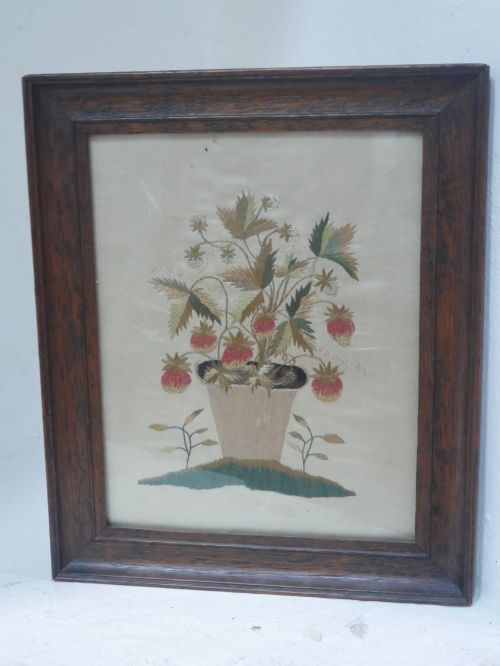
The pieces appearing on this page span several centuries, with particular strength in Georgian and nineteenth-century examples. Map samplers and narrative pictorial panels sit alongside traditional band samplers bearing names and dates.
Makers recorded on these cloths range from young pupils such as Mary Banion and Sarah Baker to unnamed hands. Their works survive behind glass in period wooden frames, preserving fragile historic threads from handling.
How they were made
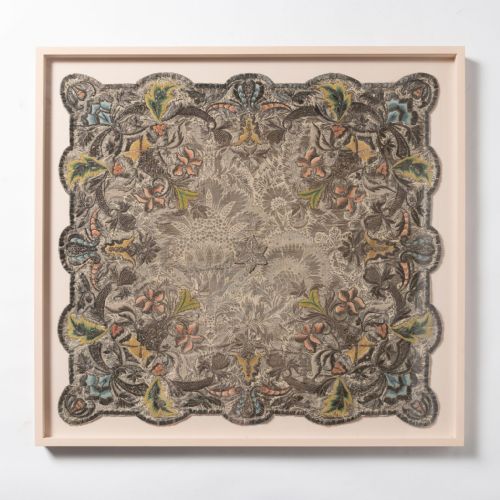
Needleworkers utilised silk thread and wool worked across woven linen grounds to build their intricate designs. Some panels incorporate silk floss alongside standard threads to create varied texture and light reflection across the surface.
Makers mounted finished embroideries into wooden frames behind protective glass to shield the delicate materials from dust and moisture. Original frames frequently accompany eighteenth and nineteenth-century examples, secured with old fixings.
Young embroiderer Louiss Elkins recorded her age as twelve yeas, leaving an endearing spelling error stitched permanently in silk.
What varies in quality
Technical proficiency dictates the standing of an antique silk sampler, marked by the regularity of the stitches and the complexity of the motifs. Advanced compositions like cartographic maps or figurative scenes require superior planning compared to basic alphabets.
The survival of legible maker details, dates and place names elevates a piece's historical interest. Clear provenance and original wooden framing enhance the overall integrity of the textile.
The Antique Silk Sampler Glossary
- Band sampler
- A long, narrow textile displaying horizontal rows of different embroidery stitches and patterns. These early formats served as reference guides for the maker.
- Map sampler
- An educational needlework piece depicting geographical regions such as England and Wales. Young girls stitched counties and towns to demonstrate knowledge alongside dexterity.
- Needlework picture
- A pictorial textile composition illustrating figures, landscapes or stories rather than text. Subjects often draw upon biblical narratives or traditional folklore.
- Silk floss
- Unspun or loosely twisted silk fibres used in embroidery to produce a high gloss finish. The material catches the light differently than standard spun threads.
Antique Silk Sampler: Frequently Asked Questions
How do I date a sampler?
Many pieces bear stitched dates alongside the maker's name and age, providing a clear point of origin. Stylistic clues like lettering fonts and framing help place undated examples.
Changes in board construction and glass type within the frame offer further evidence for dating these textiles.
Why did girls stitch maps?
Geography formed a key part of female education during the Georgian and Regency periods. Stitching a map tested both needle skills and academic knowledge.
These educational exercises were then displayed in the home to showcase accomplishments.
How should I display them?
Keep textile art away from direct sunlight to prevent the silk threads from fading and degrading. Wall placement should avoid damp areas and high humidity.
Retain the protective glass in the original frame to shield the delicate fibres.