
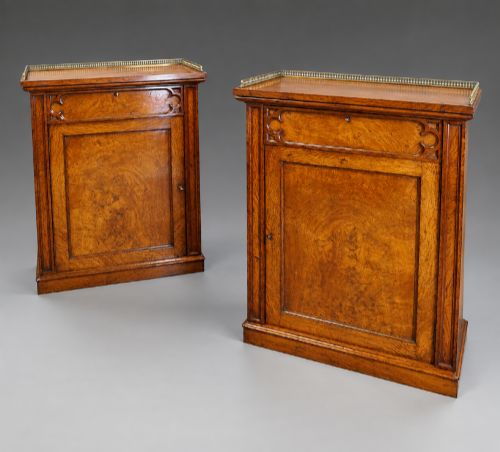
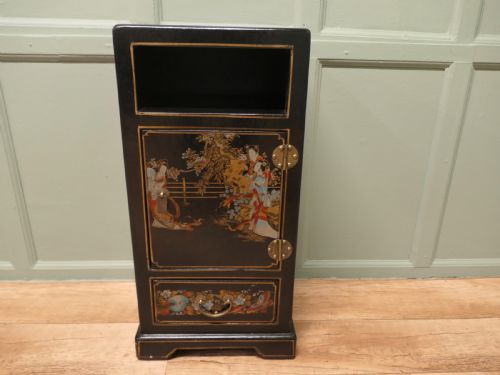
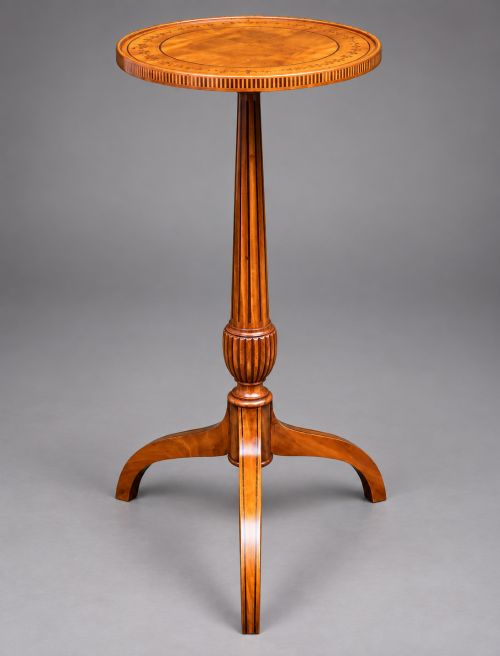
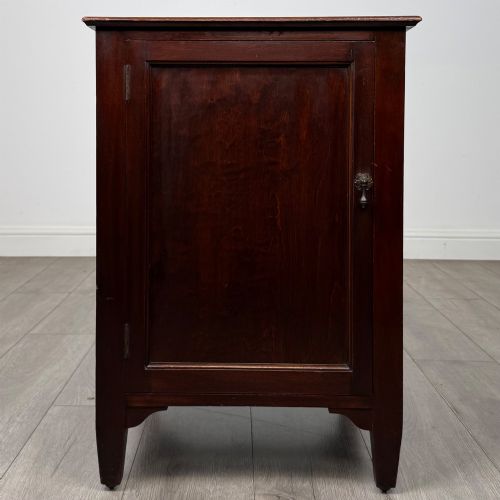
Antique Side Pedestals
These antique side pedestals offer compact surfaces and sculptural central supports, bringing practical elegance and period character to any room.
Antique Side Pedestals
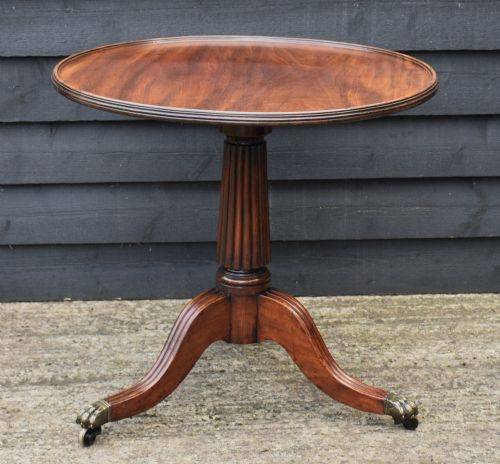
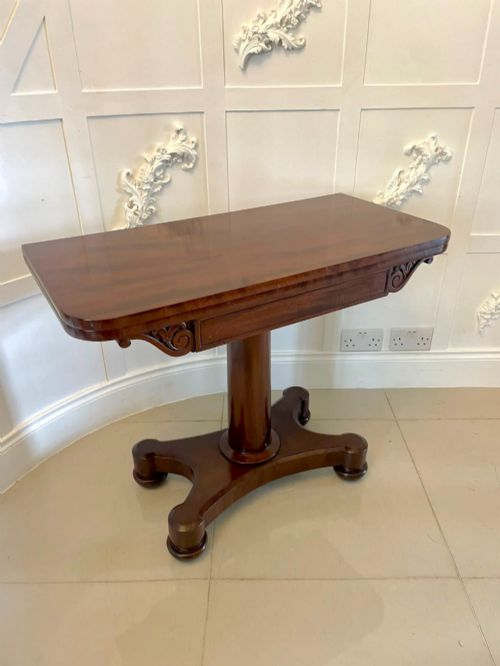
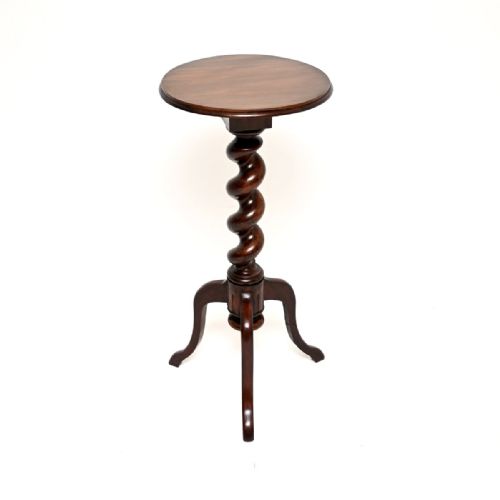
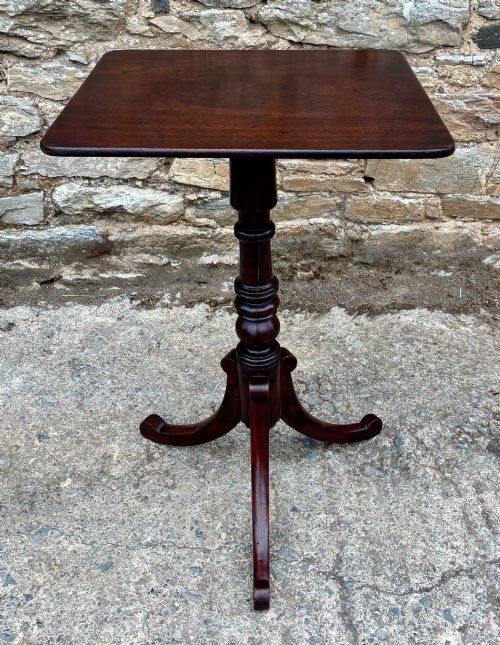
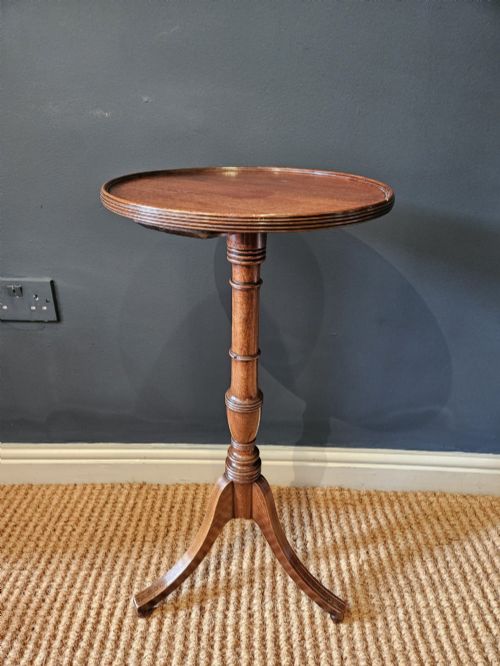
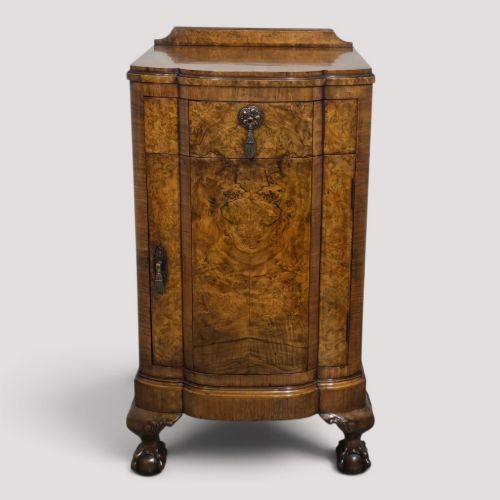
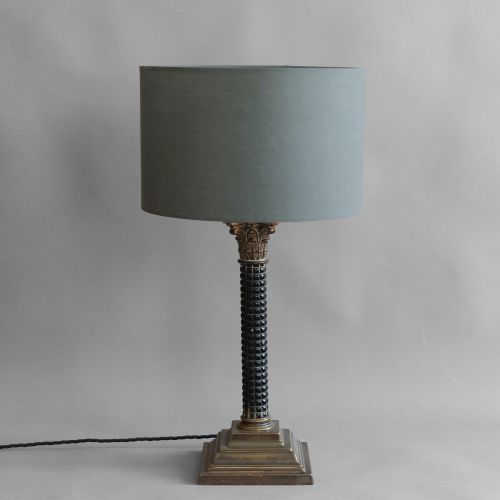
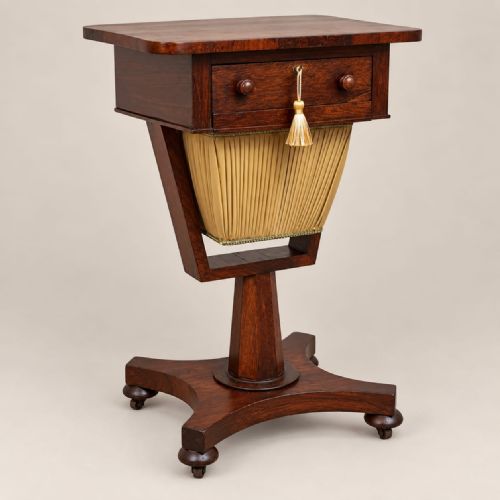
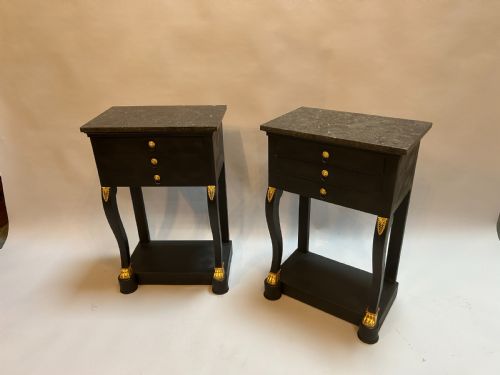
When you search for antique side pedestals, you encounter a varied group of small occasional furniture designed to stand beside seating or against walls. The selection includes wine tables, lamp tables, wine tables, and occasional tables supported by a central pillar.
The pieces span several centuries, with examples originating from the 18th century through the Edwardian era and the 1930s. Mahogany, walnut, and rosewood feature prominently alongside oak and satinwood.
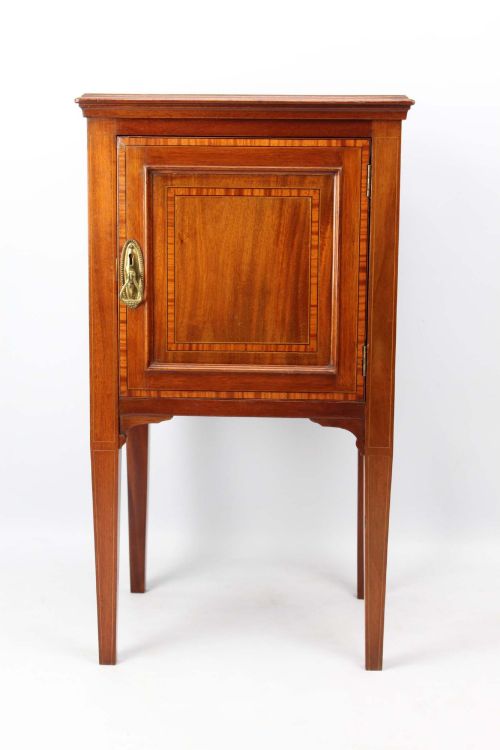
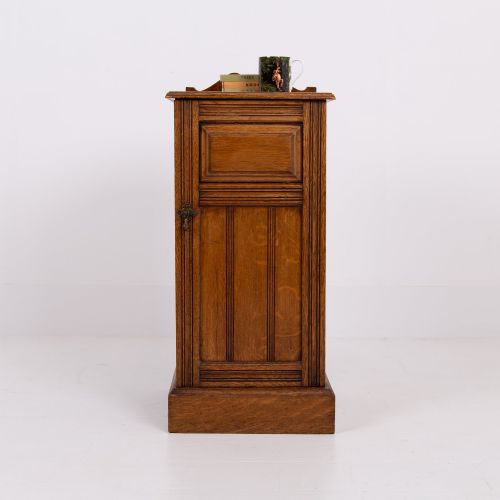
Most entries reflect domestic English and continental European craftsmanship, ranging from Georgian wine tables to Victorian walnut lamp tables and Edwardian bedside cabinets.
How they were made
Cabinet makers utilised dense hardwoods such as mahogany, walnut, and rosewood, often selecting figured veneers and burr timbers for tabletops and cabinet fronts. Brass mounts, inlay, and leather inserts appear on select Regency and Victorian examples.
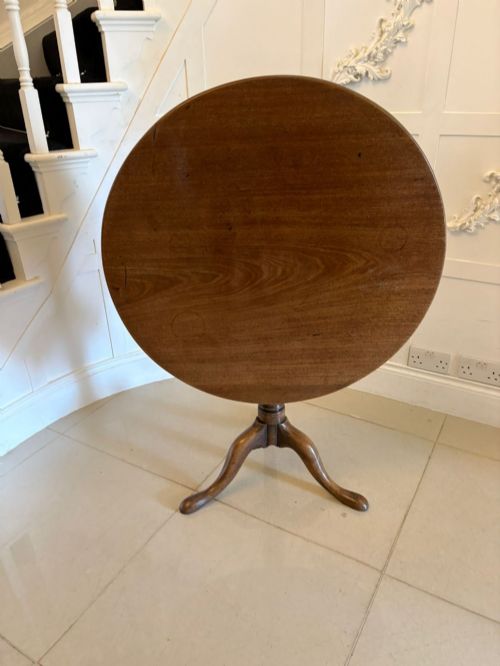
Central pedestal forms rely on sturdy turned or carved columns rising from tripod legs or platform bases, frequently incorporating tilt-top mechanisms using iron catches.
Materials recorded across the selection include mahogany, walnut, rosewood, oak, marble, satinwood, and brass.
What varies in quality
The distinction between ordinary and exceptional pieces lies in the selection of timber grain, such as flame mahogany or burr walnut, and the crispness of carved details on the pedestal and legs. Superior construction involves stable pillar joints and well-fitted table tops that remain flat over time.
Finer examples display harmonious proportions and careful attention to secondary timbers, whereas simpler utilitarian items utilise plain oak or pine with minimal ornamentation.
The Antique Side Pedestals Glossary
- Tilt top
- A tabletop mounted on a hinge mechanism that allows the surface to fold vertical when not in use. This clever design saved valuable floor space in smaller period rooms.
- Gueridon
- A small French table supported by a central column or pillar, often featuring a circular marble top. These decorative stands arrived in interiors during the 18th century.
- Pembroke table
- A small drop-leaf table with hinged flaps on either side, introduced during the 18th century. They serve as versatile side furniture against walls or beside chairs.
- Piecrust edge
- A carved raised rim around the perimeter of a circular tabletop, shaped in undulating curves. It requires considerable skill from the woodcarver.
- Burr timber
- Wood harvested from tree growths that produce swirling, highly decorative grain patterns. Cabinet makers prized these sections for prominent table surfaces.
Antique Side Pedestals: Frequently Asked Questions
Where should I place a side pedestal?
These small tables fit easily beside armchairs, sofas, or beds to hold lamps, drinks, or books.
They also work well in empty corners or hallways where a full-sized table would block movement.
How do I identify a tilt-top table?
Look beneath the tabletop for a wooden or brass catch that releases the mechanism allowing the surface to pivot.
Original mechanisms should move smoothly without excessive wobble in the central pillar joint.
What is the difference between a lamp table and a wine table?
Wine tables traditionally feature smaller circular tops designed originally for holding glasses during evening gatherings.
Lamp tables often provide slightly broader surfaces suited to carrying heavier lighting fixtures.
How do I care for polished wood surfaces?
Keep wooden furniture away from direct sunlight and heat sources to prevent the polish from drying and the timber from splitting.
Dust regularly with a soft dry cloth and apply quality beeswax periodically to nourish the grain.