
Antique Sheraton Sideboard
When you want an antique sheraton sideboard, you are looking for balanced geometry, fine timbers, and crisp inlay.
Antique Sheraton Sideboard
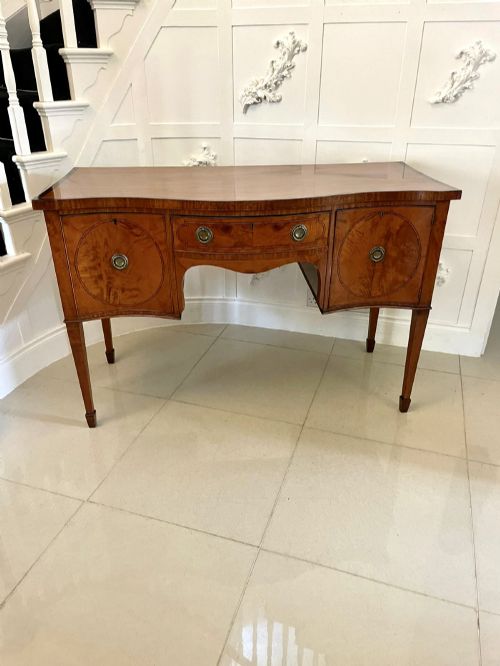
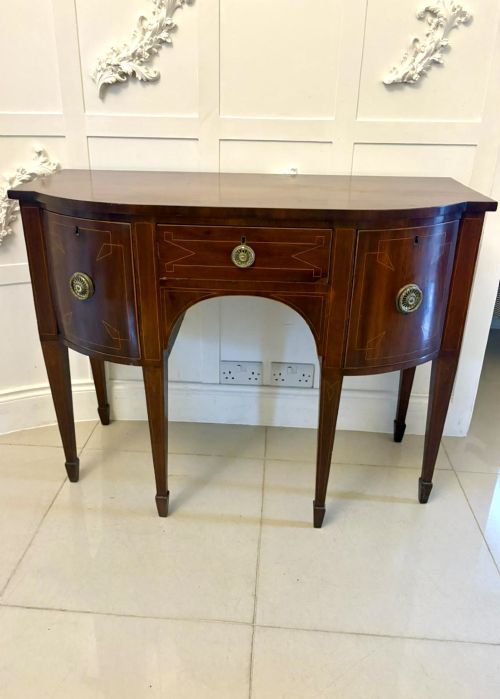
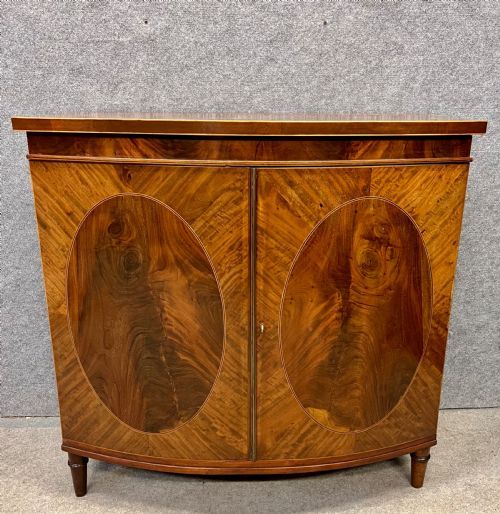
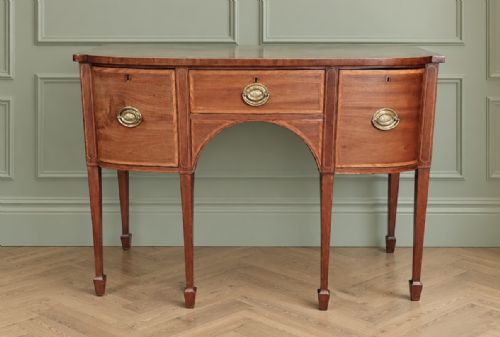
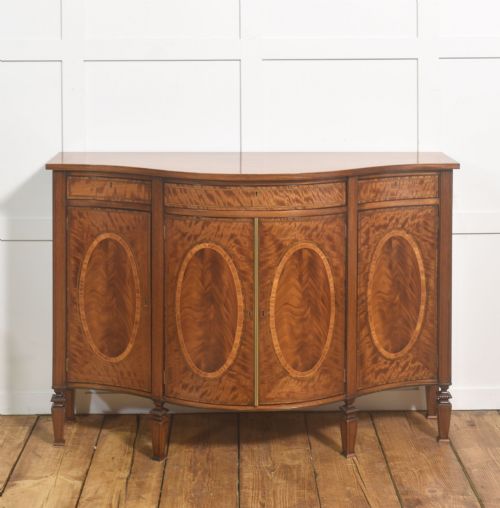
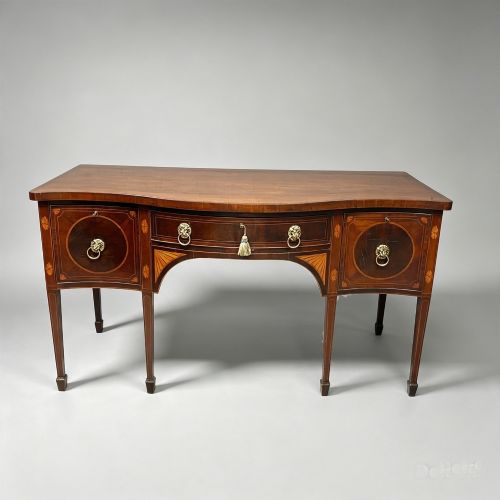
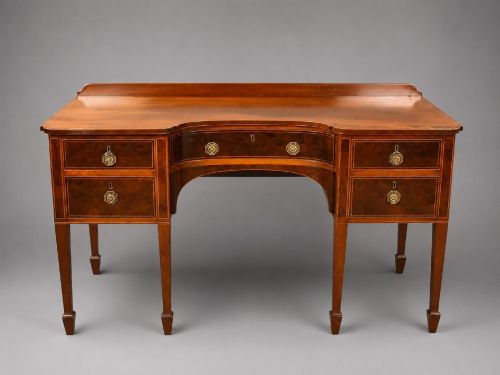
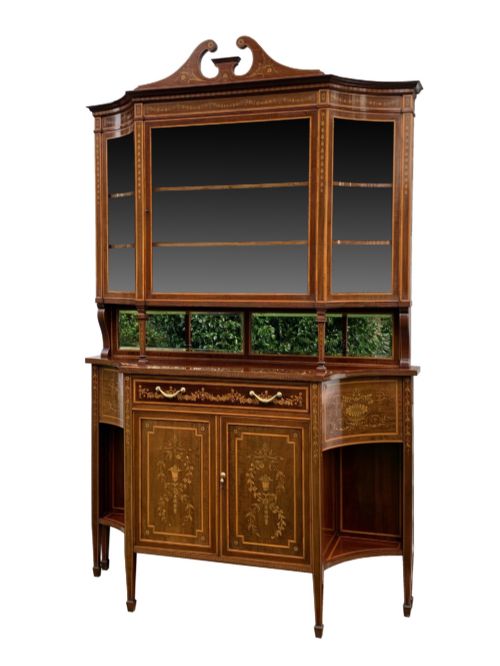
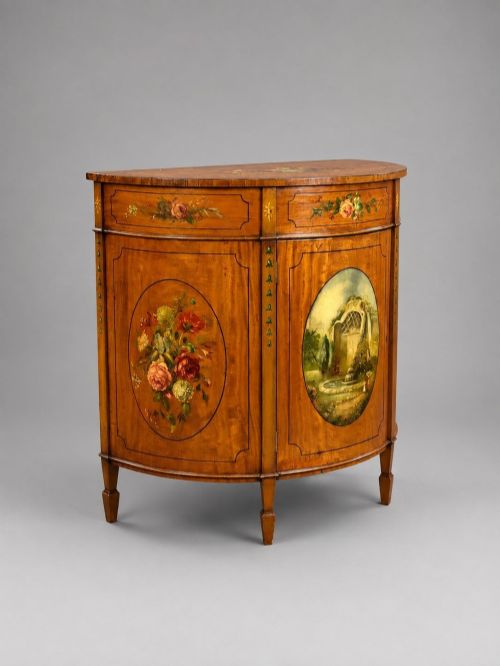
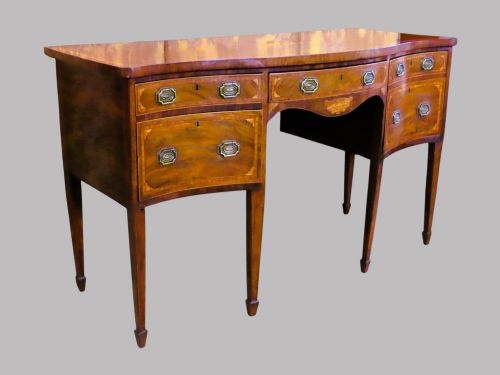
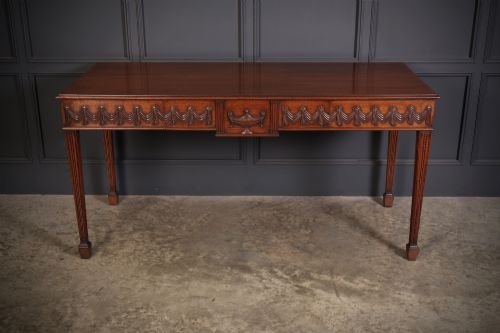
An antique sheraton sideboard brings refined neoclassical lines to a dining room or hall, appearing in formats from bow-fronts to serpentine shapes and demi-lune cabinets.
You will encounter pieces originating from the eighteenth century through the Georgian period and nineteenth century, alongside later Sheraton Revival examples from the Edwardian era.
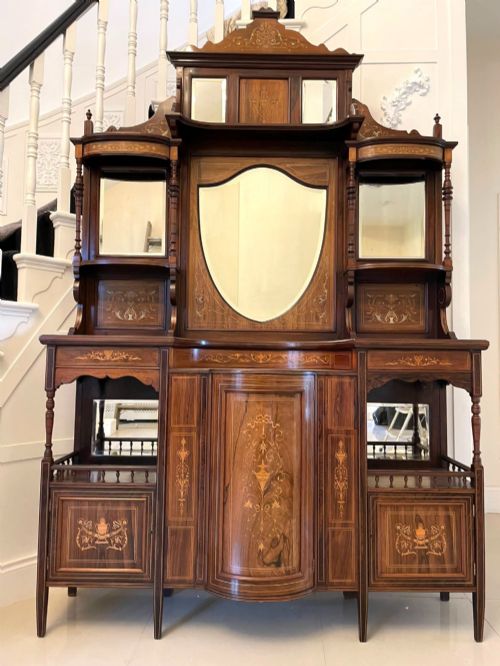
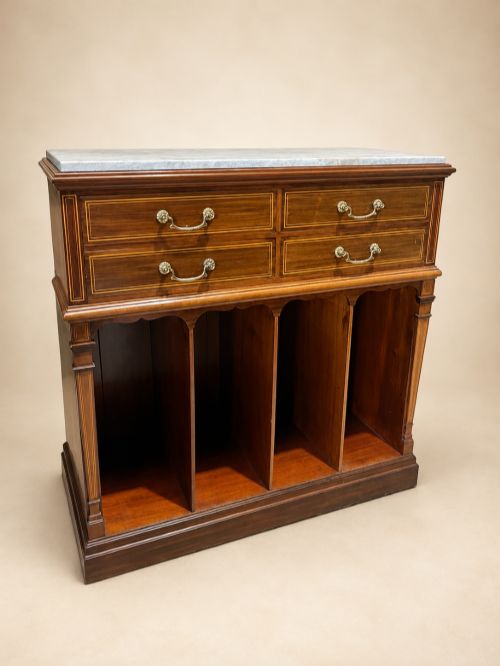
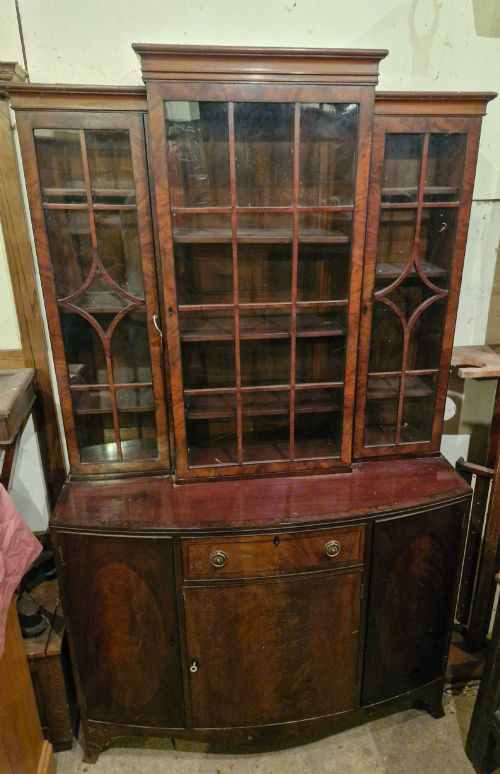
The form functions as a serving table, buffet, or side cabinet, frequently accompanied by related case furniture such as display cabinets, commodes, and serving pieces.
Materials and technique
Cabinet makers built these pieces primarily using solid mahogany and flame mahogany veneers, often enhanced with contrasting satinwood, boxwood, and rosewood timbers.
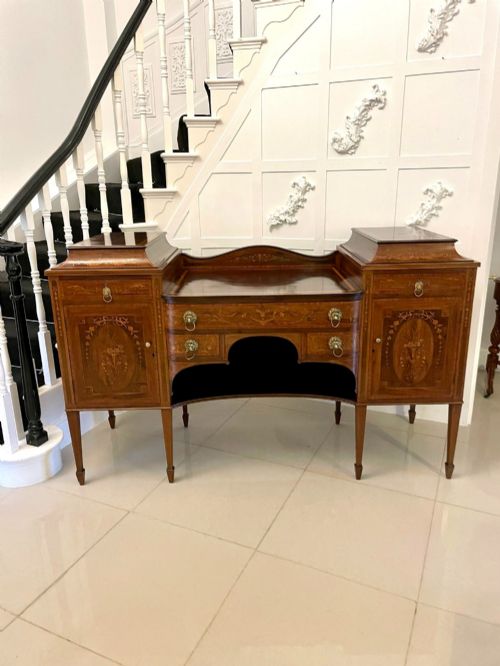
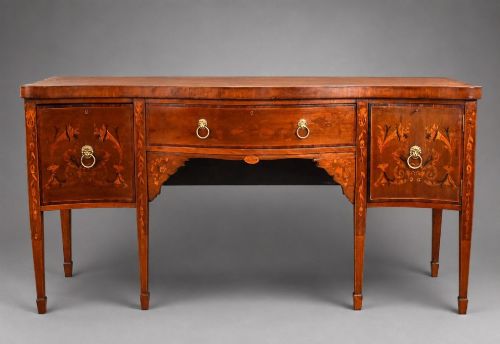
Surface enrichment relied on wood inlay, marquetry, and delicate crossbanding, complemented by brass hardware and glass elements in associated display pieces.
Listings span from the eighteenth century to the Edwardian period, showing mahogany, satinwood, and elaborate wood inlay.
Variations in quality
The standard of an antique sheraton sideboard rests on the crispness of its wood inlay and the figure of the mahogany veneer selected for the facade.
Superior execution shows in the handling of curved serpentine and bow-front carcases, where balanced proportions and harmonious timber selection distinguish finer workshops.
Hewetsons London·Edwards and Roberts·James Hicks·Warings
The Antique Sheraton Sideboard Glossary
- Serpentine
- A front shape curving inward centrally and outward at the ends, creating a fluid, undulating facade. This profile demands high skill from the cabinet maker.
- Bow-front
- A convex curved front projecting outward in an arc. It provides generous internal capacity while softening the room's angles.
- Demi-lune
- A half-moon shape used for small cabinets and sideboards. These pieces fit neatly against flat walls in compact spaces.
- Crossbanding
- A border strip of veneer laid with the grain running perpendicular to the main panel. It frames the primary timber with a contrasting edge.
- Marquetry
- Elaborate decorative patterns formed by fitting together small pieces of various coloured woods. It decorates top surfaces and drawer fronts on refined examples.
- Cutlery urn
- A tall, vase-shaped wooden vessel designed to hold table silver. These matched dining room furniture suites.
Antique Sheraton Sideboard: Frequently Asked Questions
How do I date a sideboard?
Dating relies on timber choice, construction methods, and stylistic cues such as inlay motifs. Georgian examples contrast with Edwardian Sheraton Revival pieces through construction details and veneer thickness.
Examine the secondary woods inside the drawers and the style of the brass hardware for further clues to the period.
Where should I place a sideboard?
These pieces suit dining rooms, hallways, and living spaces where surface area and storage are both required. Bow-front and serpentine forms look best against a flat wall with adequate clearance.
Consider the depth of the cabinet relative to the walkway before deciding on its final position.
What is the difference between George III and Sheraton Revival?
George III pieces date from the original eighteenth or early nineteenth-century period of manufacture. Sheraton Revival items date from the late nineteenth or early twentieth century, emulating earlier neoclassical designs.
Both categories utilise mahogany and fine inlay, but secondary woods and internal construction methods reveal the true age.
How do I care for mahogany surfaces?
Protect the wood by keeping it away from direct sunlight and sudden temperature shifts. Dust regularly with a soft, dry cloth to preserve the finish.
Apply a traditional wax polish occasionally to nourish the timber and maintain the natural sheen of the grain.