




Antique Shell Back Chair
An antique shell back chair brings fluid, curved elegance to a room with its distinctive fluted woodwork or upholstery.
Antique Shell Back Chair
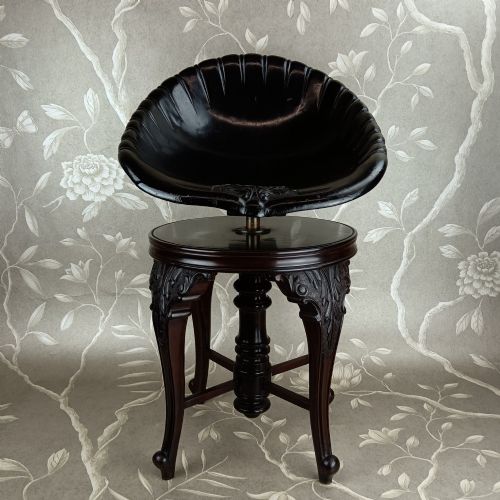
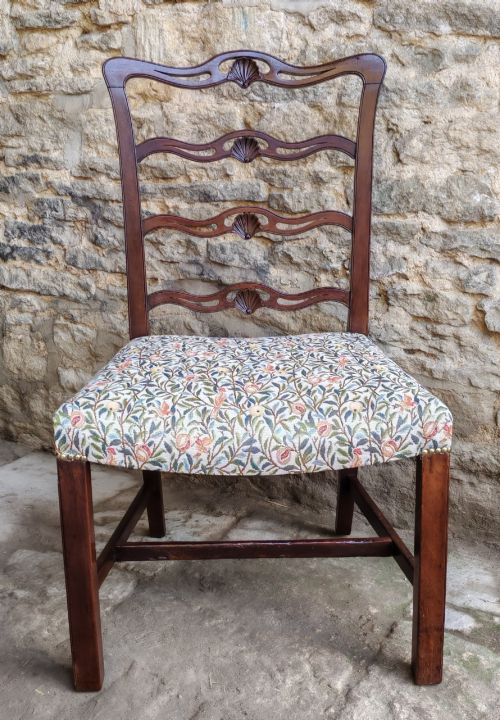
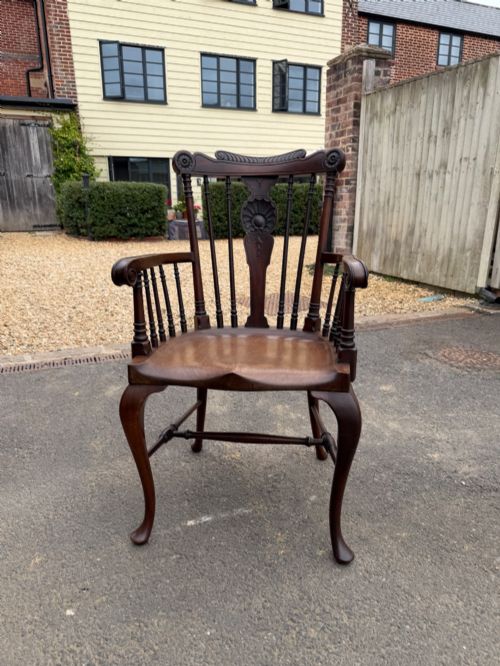
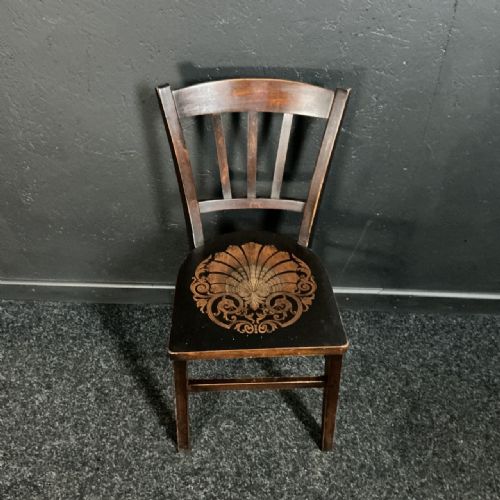
An antique shell back chair is defined by its characteristic carved or upholstered backrest resembling a seashell, appearing across various forms in the listings. These pieces emerge most frequently as Victorian or Regency hall chairs and nineteenth-century armchairs, alongside specialised seating like music stools and dining chairs.
The materials span mahogany, walnut, oak, and papier-mâché, reflecting periods from the Georgian era through to Art Deco and the Edwardian years. Buyers encounter both rigid wooden hall chairs with carved fluting and deeply upholstered tub armchairs designed for comfort.
Materials and construction methods
Cabinetmakers utilised dense hardwoods such as mahogany and walnut to carve the intricate radial ribs of the shell motif, ensuring structural integrity in the backrest. Brass elements and textile upholstery appear alongside turned wooden frames and papier-mâché bodies.
Joinery methods range from traditional mortise and tenon joints in dining chairs to bentwood techniques and revolving mechanisms found in music stools and desk chairs.
Listings feature shell back forms spanning the Georgian, Regency, Victorian, Edwardian, and Art Deco periods.
Assessing craftsmanship and finish
The distinction between standard examples and the finest works lies in the depth and precision of the carved timber, particularly the crispness of the fluted shell ridges. Superior specimens display well-figured mahogany or walnut timbers combined with balanced proportions.
Makers such as Jennens and Bettridge demonstrate exceptional quality through meticulous papier-mâché work and integrated revolving actions, whereas simpler pieces rely purely on basic turned frames.
Jennens and Bettridge·Gillows
The Antique Shell Back Chair Glossary
- Shell back
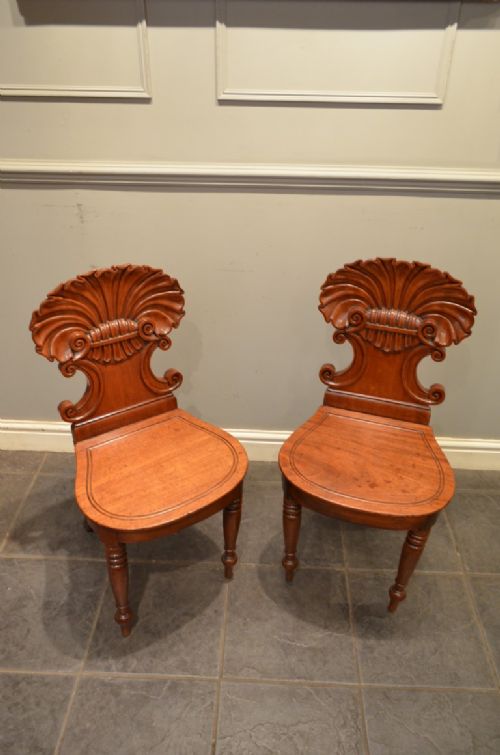
- A chair backrest carved or upholstered in the shape of a fluted seashell. This design motif appears prominently on nineteenth-century hall chairs and armchairs.
- Hall chair
- A rigid wooden seat traditionally placed in an entrance hall. These pieces often feature solid carved seats and display heraldic or decorative shell motifs.
- Tub armchair
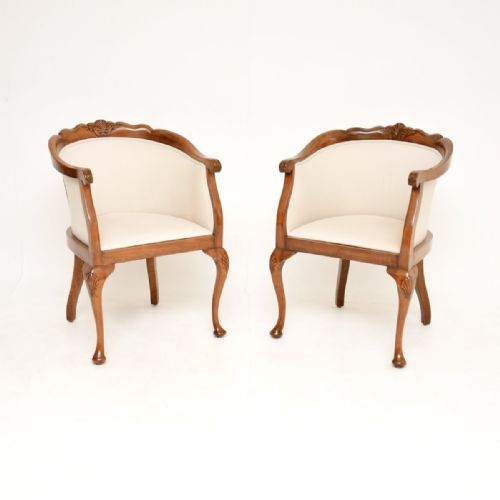
- An upholstered seat with a continuous curved back and arms forming a rounded enclosure. Examples in the listings combine walnut or mahogany frames with soft padding.
- Papier-mâché
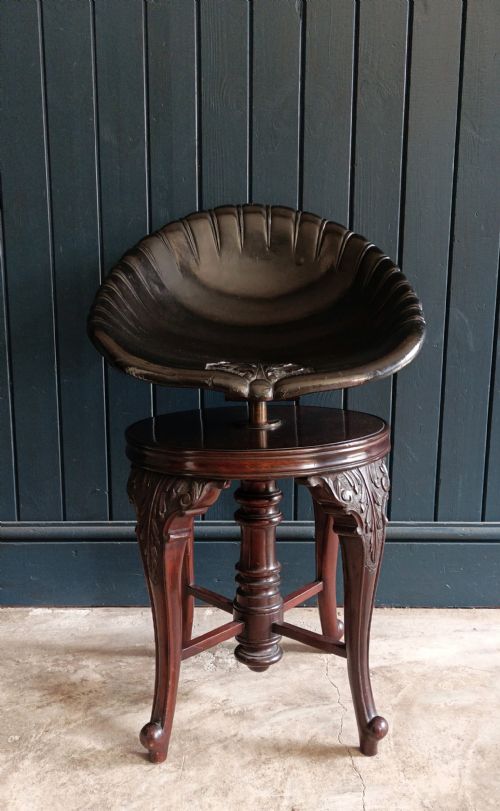
- A composite material made from paper pulp mixed with glue and resin, pressed and varnished. Makers utilised this substance for durable, decorative music stool bodies.
Antique Shell Back Chair: Frequently Asked Questions
Where were shell back chairs placed?
These chairs served multiple domestic functions depending on their specific form. Hall chairs stood in entranceways to display family crests or decorative carving for arriving visitors.
Upholstered armchairs and tub seats provided comfortable seating in parlours, studies, and bedrooms throughout the nineteenth and early twentieth centuries.
How do I date a wooden shell chair?
Dating relies on examining the timber species, secondary woods, and construction techniques used in the frame. Regency and Georgian examples exhibit characteristic dense mahogany and sharp hand-carving.
Later Victorian and Edwardian pieces incorporate machine-assisted joinery, bentwood methods, or alternative finishes like ebonised wood and papier-mâché.
Are music stools different from standard chairs?
Music stools feature specialised revolving mechanisms designed to allow pianists and harpists to adjust their height or turn freely during performance. The listings include papier-mâché and mahogany revolving harpist stools from the nineteenth century.
Standard chairs have fixed frames intended for stationary seating at a desk, dining table, or hallway wall.