





Shell Back Accent Chair
These shell back accent chair designs bring sculptural curves and period character into a room.
Shell Back Accent Chair
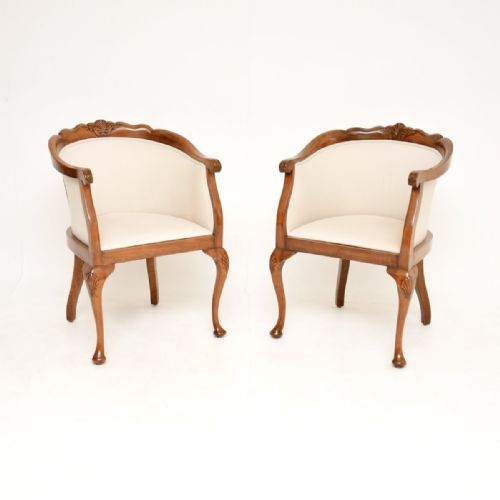
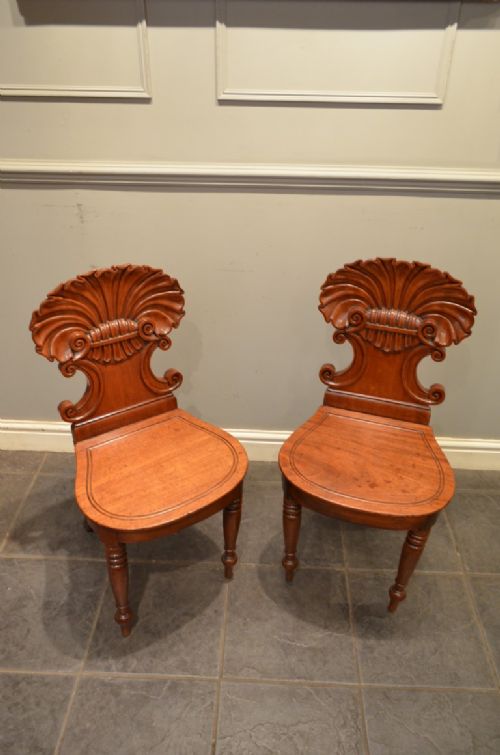
A shell back accent chair provides a distinctive fluted or scalloped upholstery pattern resembling a seashell, serving as both a functional seat and a decorative focal point. When exploring a shell back accent chair, buyers encounter diverse forms ranging from nineteenth-century hall chairs with carved wooden backs to upholstered tub armchairs from the Art Deco period.
The selections span multiple eras including the Regency period, Victorian era, and early twentieth century, offering options like mahogany hall chairs and velvet-upholstered cocktail chairs. These pieces suit various interior settings, functioning as occasional seating in living rooms or statement pieces in hallways.
How they were made
Cabinetmakers utilised dense hardwoods such as mahogany, walnut, and oak to construct the supportive frames and carved wooden backs of these chairs. Traditional joinery methods ensure the structural integrity of the timber supports, whether for rigid hall chairs or sprung upholstered armchairs.
Upholstered versions rely on quality textiles, including leather, fabric, and velvet, gathered or stitched tightly into the characteristic fluted channels that define the shell motif. Brass details sometimes accent the woodwork or feet, adding subtle metallic contrast to the natural grain of the timber.
Shell Back Accent Chair Retail Price Guide 2026
Typical asking prices for shell back accent chair among the pieces listed under this phrase on Sellingantiques today, from the lower quarter to the upper quarter. They describe what is for sale here now, not the wider market.
Electric blue velvet brings a striking twentieth-century pop of colour to traditional wooden frames.
What varies in quality
The crispness of the carved woodwork sets superior examples apart, particularly in pieces featuring intricate fluting or detailed crest rails on the timber frames. Sharp, deep relief carving demonstrates the skill of the original maker, whereas softer lines indicate a more utilitarian production.
Upholstery execution dictates the visual success of soft versions, requiring precise tension along each channel of the shell motif to maintain the curved silhouette. The selection of primary timbers, such as figured walnut or dense mahogany, also distinguishes finer formal seating from simpler regional furniture.
Gillows
The Shell Back Accent Chair Glossary
- Shell back
- An upholstered or carved chair back featuring radiating vertical flutes that mimic the form of a seashell. This motif appears across various nineteenth and twentieth-century seating styles.
- Tub armchair
- A comfortable seat featuring a continuous curved back and arms that wrap around the user in a semicircular enclosure. This form provides a snug sitting position often utilised for lounge and cocktail seating.
- Hall chair
- A rigid wooden seat designed primarily for display and occasional use in entrance halls rather than prolonged lounging. These pieces frequently incorporate carved wooden shell motifs into the upper backrest.
- Showwood
- Exposed polished timber framing on an upholstered chair where the wood grain remains visible around the padded sections. This technique highlights the quality of the underlying material alongside the fabric.
Shell Back Accent Chair: Frequently Asked Questions
Where should I place a shell back accent chair?
These chairs work well as statement pieces in living rooms, bedrooms, or entrance halls where their distinctive silhouette remains visible. Their compact forms allow them to fit comfortably into corners or paired beside a fireplace.
Consider the surrounding furniture scale to ensure the curved backrest does not obstruct sightlines or room flow.
How do I identify a Victorian shell back chair?
Victorian examples often feature dark hardwoods like mahogany or oak, frequently incorporating moulded panel seats or exposed showwood frames. The construction methods reflect nineteenth-century workshop practices, such as heavier timber gauges and traditional joinery.
Comparing the decorative carving style against established Victorian design traits helps confirm the production period.
Are these chairs comfortable for daily use?
Comfort levels vary significantly depending on whether the chair is a rigid wooden hall seat or an upholstered tub armchair. Upholstered variants provide cushioned support suitable for relaxing, while wooden hall chairs function primarily as occasional seating.
Reviewing the internal padding and upholstery style helps determine the intended seating experience for everyday living.
What is the difference between Art Deco and Regency shell chairs?
Art Deco shell chairs from the twentieth century typically feature smooth velvet upholstery, streamlined curves, and low profiles suited to modern lounges. Regency period examples lean toward formal carved wooden hall chairs with classical proportions and crisp timber detailing.
Examining the materials and silhouette quickly reveals whether a piece belongs to the early nineteenth or twentieth century.