



Vintage Bedroom Armchair Mahogany
A vintage bedroom armchair mahogany brings character to a dressing space, offering a comfortable seat wrapped in rich timber and period upholstery.
Vintage Bedroom Armchair Mahogany
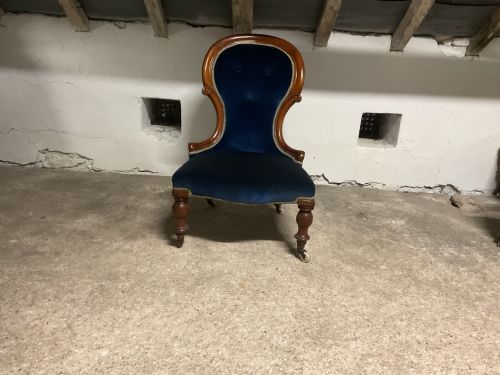
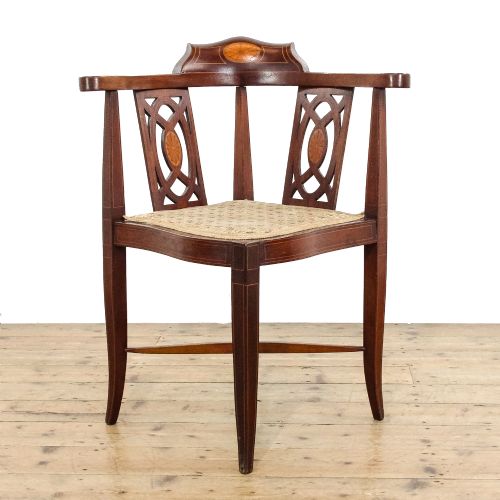
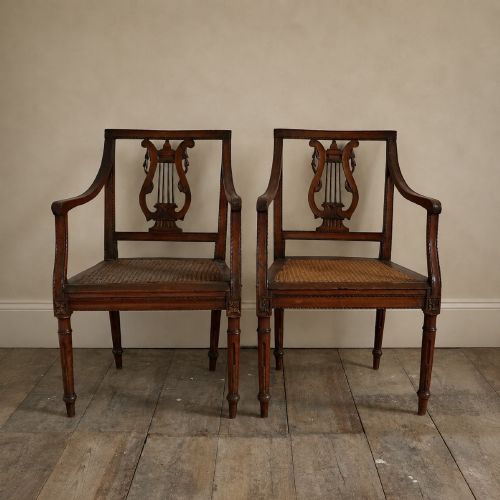
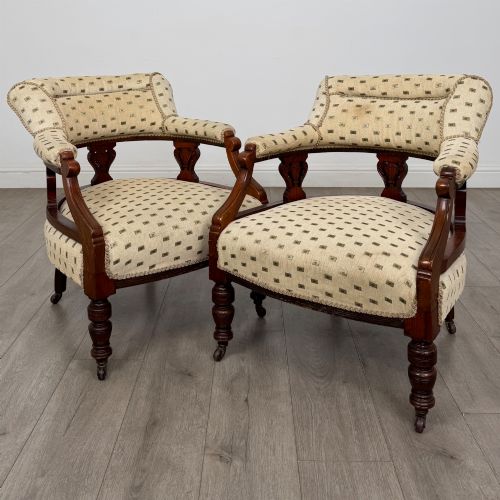
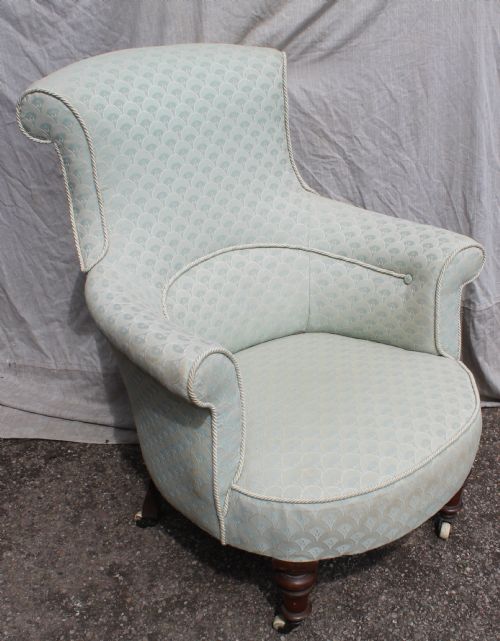
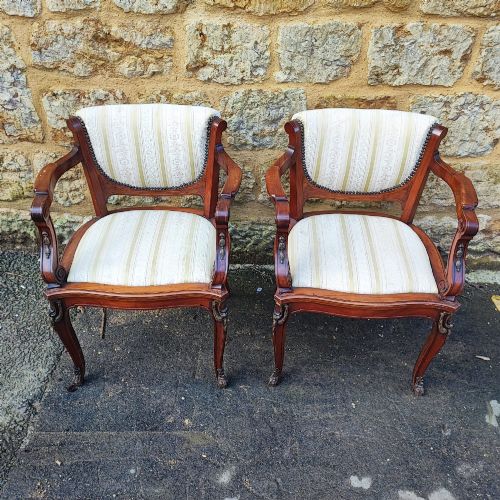
Buyers searching for a vintage bedroom armchair mahogany encounter a diverse array of seating forms designed for private chambers, boudoirs and dressing rooms. The selection on this page spans distinct periods from the nineteenth century through the Edwardian era, featuring styles such as Victorian, Regency, Art Nouveau and revival designs.
What defines the quality range
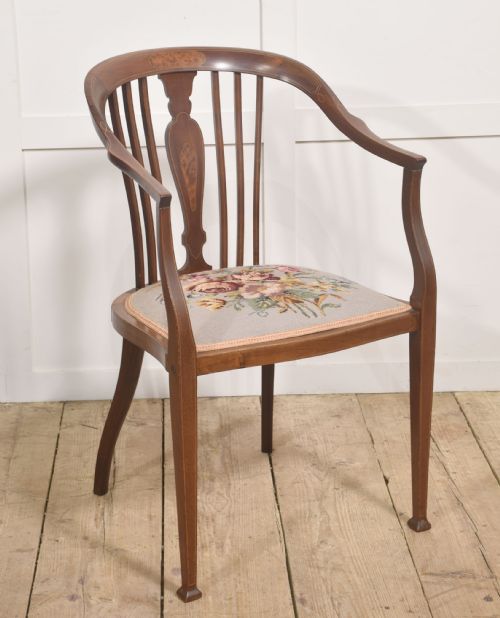
Quality separates through the crispness of the timber carving, the precision of the wood inlay work, and the structural integrity of the mahogany frame. Pieces featuring complex forms like X frames, barrel backs or finely pierced splats demand greater joinery skill than plain side chairs.
The condition and authenticity of the secondary materials also shift the standing of a piece, from intact split cane panels to well-preserved button back upholstery and period fabric. Workshop attention to detail, seen in subtle string inlay and balanced proportions, marks the difference between standard production and superior craftsmanship.
Listings feature mahogany frames combined with cane, brass, velvet and satinwood inlay across the Edwardian and Victorian periods.
Harrods London·Gillows
The Vintage Bedroom Armchair Mahogany Glossary
- Mahogany
- A durable tropical hardwood prized for its deep reddish-brown colour and fine grain. It forms the primary structural timber for the frames listed on this page.
- Cane
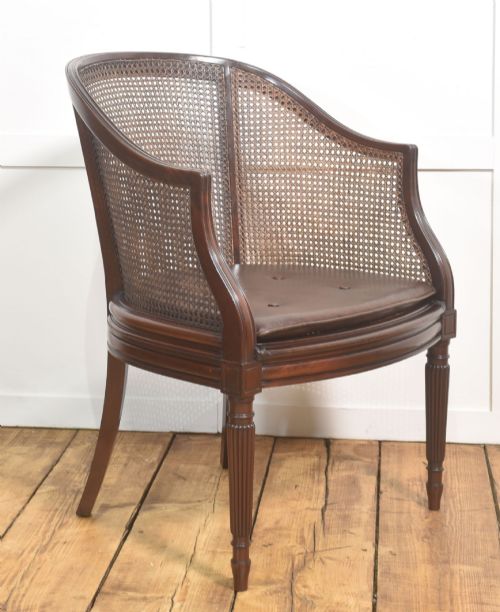
- Woven rattan or split cane used to create light, flexible backrests and seats. It appears frequently in Edwardian tub chairs and Regency style designs.
- Slipper chair
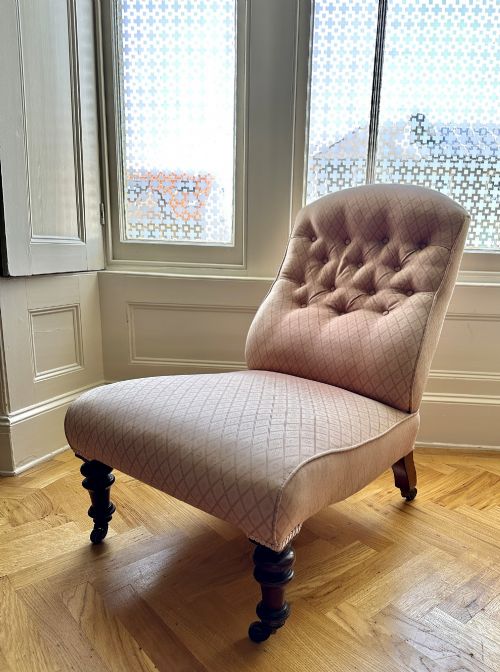
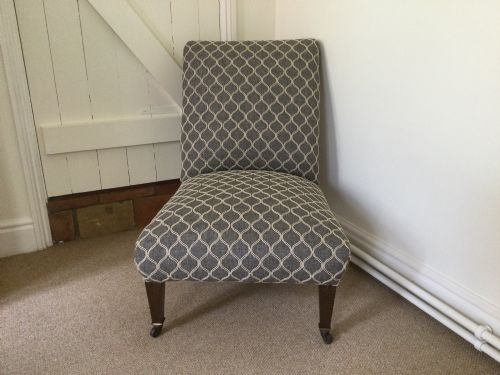
- A low-set bedroom chair traditionally designed without arms to allow women room to dress in comfort. These pieces sit close to the floor and often feature button back upholstery.
- Tub armchair
- A seating form characterised by a continuous curved back and arms that enclose the sitter. This style provides a cosy, supportive seat suitable for dressing tables and corners.
- String inlay
- Thin lines of contrasting lighter wood, such as satinwood, embedded into the mahogany surface. This technique adds delicate geometric or linear decoration to Edwardian frames.
Vintage Bedroom Armchair Mahogany: Frequently Asked Questions
Where should I place a bedroom armchair?
These compact seats fit well beside a dressing table, in the corner of a guest bedroom or near a fireplace. Their modest proportions ensure they do not overwhelm smaller private spaces.
Positioning one by a window or alongside a wardrobe creates a functional spot for resting while adding period character to the room.
What is the difference between a slipper chair and a nursing chair?
Slipper chairs sit very low to the ground and traditionally lack arms to make dressing easier. Nursing chairs are similarly low but generally include supportive arms and an upholstered back.
Both types served domestic purposes in Victorian and Edwardian bedchambers, though their exact heights and upholstery details vary by period.
How do I identify an Edwardian mahogany armchair?
Edwardian examples often feature lighter mahogany frames ornamented with satinwood string inlay or subtle wood marquetry. The styling leans towards refined revival designs and comfortable tub shapes.
Construction from this period around nineteen hundred typically feels lighter in scale compared to heavier mid-nineteenth century Victorian seating.
Are cane seats on antique chairs fragile?
Split cane panels offer flexibility and breathability but require careful handling to prevent breakage over time. Normal sitting is generally safe if the weave remains taut and intact.
Avoid placing excessive weight on the centre of a cane seat, and keep the material conditioned in very dry indoor environments.