


Antique Sheet Music Table
An antique sheet music table holds folios and scores while serving as a functional occasional piece in a room.
Antique Sheet Music Table
When searching for an antique sheet music table, you encounter forms such as canterburys, music cabinets, music stands, and occasional tables designed to store scores and periodicals. These pieces appear primarily from the Victorian, Regency, and Edwardian periods, constructed in timber forms that accommodate domestic music rooms.
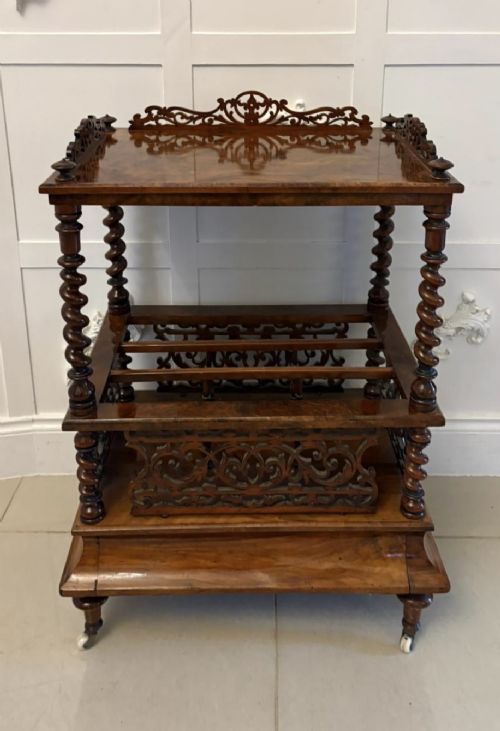
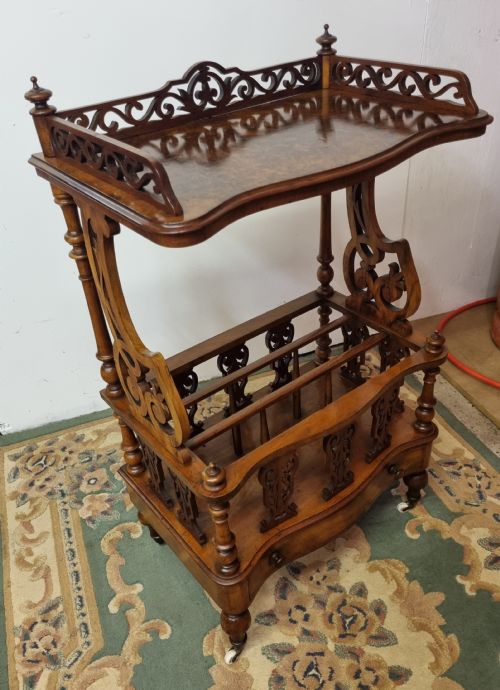
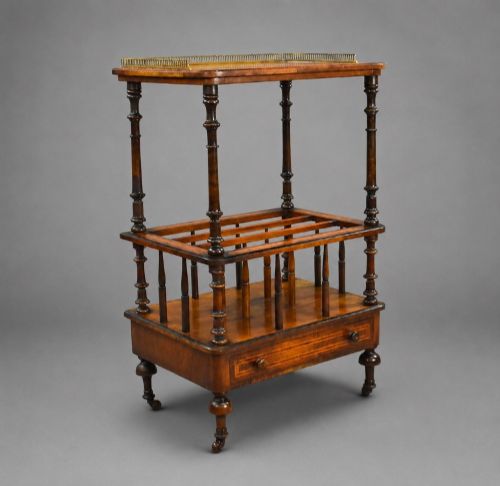
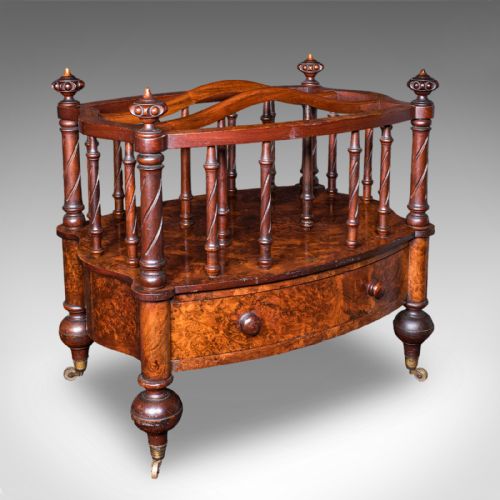
The most common version on this page is the Victorian burr walnut canterbury, often combining vertical dividers for sheet music with a lower drawer or an upper whatnot tier. Mahogany and rosewood examples from the Regency and nineteenth century also recur regularly among these listings.
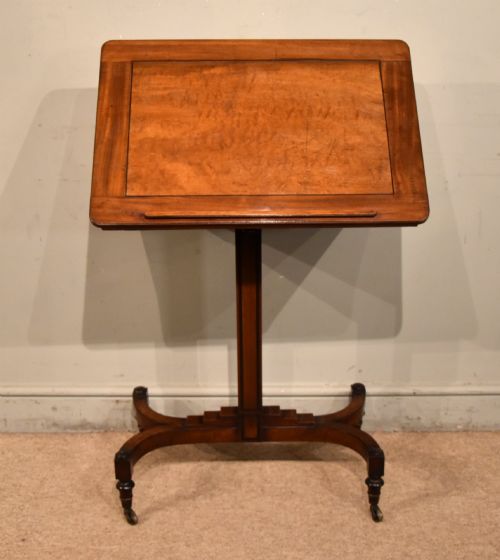
Makers and cabinetmakers built these tables to sit beside a piano or in a parlour, blending book storage with display surfaces. The integration of reading stands, adjustable ledges, and brass castors defines the practical nature of these domestic furnishings.
Materials and construction methods
Cabinetmakers utilised dense hardwoods such as mahogany, walnut, burr walnut, and rosewood, applying satinwood and boxwood inlay for decorative contrast on panelled doors and top surfaces. Burr walnut veneer provides distinctive grain patterns across Victorian canterbury tiers and music cabinet lids.
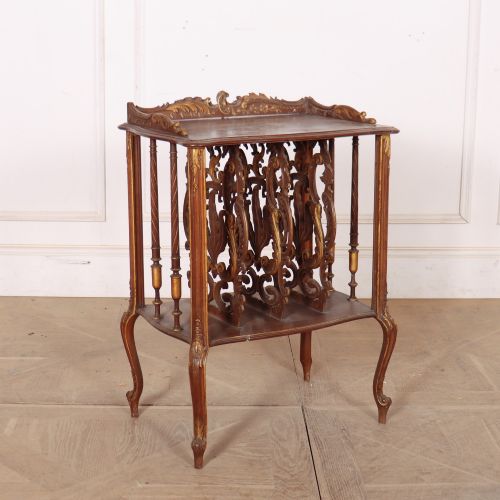
Structural elements incorporate turned wooden columns, fretworked vertical partitions for sheet music slots, and brass fittings including castors, hinges, and adjustable reading brackets. Drawers feature hand-cut dovetails while shelves utilise fixed or tiered wooden supports fixed to corner uprights.
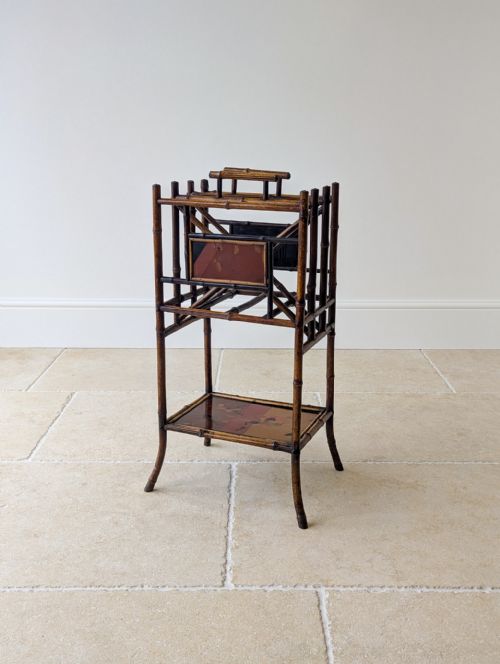
Listings feature woods including burr walnut, rosewood, mahogany, satinwood, and bamboo alongside ceramic and brass elements across nineteenth and early twentieth century periods.
Distinctions in craftsmanship and finish
Quality rests in the selection of veneer figures, where matched burr walnut and intricate boxwood stringing elevate a standard stand to a high-style piece. Finer examples display crisp fretwork on the dividers and precise carving on structural columns.
Durability of the moving mechanisms, such as adjustable reading ratchets and brass castors, separates simpler utility stands from superior parlour furniture. The integrity of the timber joints and the finish applied to secondary woods indicate the workshop standards of the period.
The Antique Sheet Music Table Glossary
- Canterbury
- A low stand featuring vertical partitions designed for holding sheet music, folios, and newspapers. These pieces often incorporate a drawer below and multiple tiers above.
- Whatnot
- An open set of tiered shelves supported by slender pillars, frequently mounted on top of a canterbury or music cabinet for display purposes.
- Inlay
- A decorative technique where contrasting materials such as boxwood or satinwood are inserted into recesses within the primary timber surface.
- Reading Stand
- An adjustable architectural desk or ledge designed to support books, folios, or music sheets at an ergonomic angle.
- Serpentine
- A curved furniture outline that undulates outward and inward, commonly seen on the edges of Victorian table tops and cabinet fronts.
Antique Sheet Music Table: Frequently Asked Questions
How were these tables used originally?
These tables stood beside pianos, reading chairs, or writing desks to hold sheet music scores, books, and writing accessories within easy reach of the musician.
Adjustable reading stands and book rests allowed performers to mount scores at a readable angle directly on the furniture.
How do I date a walnut music table?
Dating relies on observing timber choices, decorative motifs, and construction styles recorded across Victorian, Regency, and Edwardian periods.
Burr walnut and elaborate inlay point toward mid to late Victorian production, while simpler mahogany forms often align with earlier nineteenth century eras.
Can these tables hold modern magazines?
The vertical slots and partitions accommodate standard modern magazines, folios, and newspapers alongside historical sheet music collections.
Their sturdy timber construction and compartment dividers function well for contemporary organisation in living spaces.