


Antique Serpent Ring
An antique serpent ring wraps the finger in gold and gemstones, embodying the Victorian fascination with eternal devotion and endless renewal.
What these pieces are
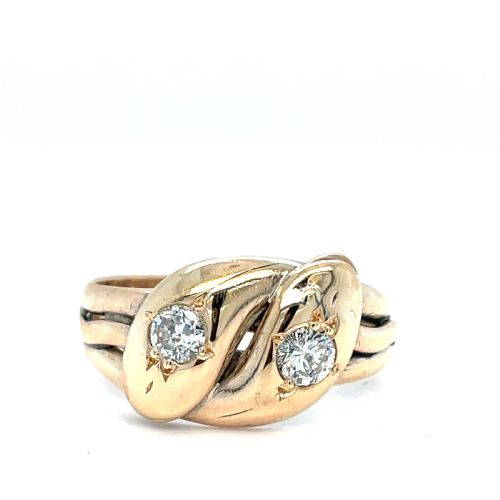
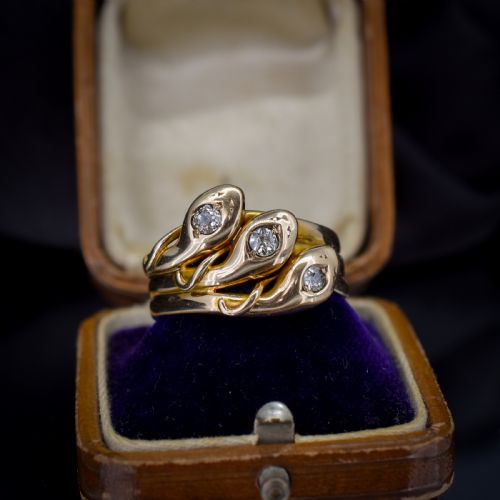
An antique serpent ring appears primarily as a coiled band or a double snake formation, fashioned across the Victorian and Edwardian periods. These rings originate from the nineteenth and early twentieth centuries, featuring distinct hallmarks from assay offices in London, Chester, and Birmingham.
How they were made
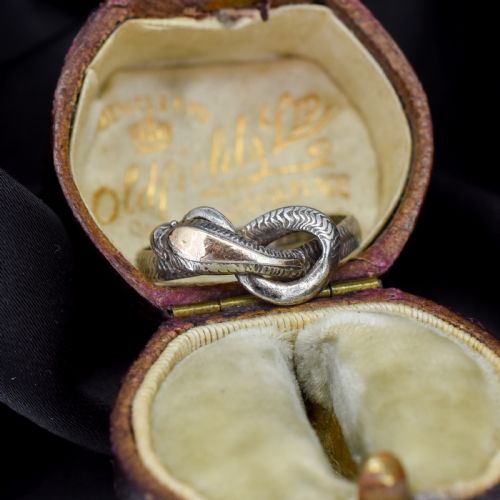
Goldsmiths shaped these pieces predominantly from eighteen-carat or nine-carat yellow gold, forming the sinuous bodies through casting and hand-finishing. The coiled bands often display chased scale patterns or smooth polished surfaces that wrap around the finger.
Gemstones such as rose-cut diamonds, old mine-cut diamonds, and sapphires are flush or claw set into the head sections to represent the eyes of the serpent. Hallmarks stamped into the interior of the shank record the metal purity and the specific assay year.
Retail Price Guide 2026
Typical UK retail prices for serpent ring, calculated from the Sellingantiques database of over a million retail prices indexed since 2003. This retail price guide relies exclusively on Sellingantiques data; no external sources or auction records are used, so the figures do not describe the wider market.
Some serpents hold a sapphire in one jaw and a diamond in the other, forever debating eternity.
What varies in quality
The distinction between tiers of the range rests on the substance of the gold and the presence of substantial gemstones. Heavier bands containing more gram weight and larger, better-cut diamond or sapphire eyes command greater attention from collectors.
Artistic execution in the rendering of the head and the clarity of the chased scale engraving also mark out superior examples. Pieces bearing crisp, legible hallmarks from respected assay offices provide clearer provenance and structural integrity.
The Antique Serpent Ring Glossary
- Serpent ring
- A finger ring shaped to resemble a snake, often coiled around the band. This motif symbolised eternity and wisdom during the Victorian era.
- Rose-cut diamond
- A diamond cut with a flat base and a domed crown consisting of triangular facets. This style was frequently utilised for the eyes of antique snake rings.
- Old mine-cut diamond
- An early form of brilliant cut featuring a cushion shape, high crown, and large culet. These stones appear commonly in nineteenth-century settings.
- Hallmark
- An official stamp applied by an assay office indicating metal purity and year of manufacture. British examples often show town marks alongside the gold standard.
- Double snake ring
- A variation featuring two serpents intertwined along the band. These designs often incorporate contrasting gemstones for each head.
Frequently Asked Questions
What do antique snake rings symbolise?
In the nineteenth century, the serpent symbolised eternal love, wisdom, and commitment. Prince Albert famously gave Queen Victoria a snake engagement ring featuring an emerald, which popularised the motif.
This romantic symbolism meant these rings were frequently exchanged as tokens of affection and devotion throughout the Victorian period.
How can I date my serpent ring?
Dating relies heavily upon the assay office hallmarks stamped inside the shank of the gold band. These small marks indicate the specific year the piece was tested and registered.
Stylistic elements, such as the cut of the diamonds and the formation of the serpent head, also help narrow down the manufacturing period.
Are these rings comfortable to wear daily?
Most antique serpent rings sit relatively flush against the finger, making them suitable for regular wear if treated with care. The low profile of the coiled band prevents excessive snagging on clothing.
However, because these pieces are over a century old, removing them during manual labour or heavy tasks preserves the delicate scale engraving and stone settings.
What metals were used in these pieces?
The listings show that jewellers primarily utilised yellow gold, graded at either eighteen-carat or nine-carat purity. Silver also appears in specific dress ring configurations from the nineteenth century.
These metals provide the warm tone characteristic of Victorian and Edwardian jewellery production.