


Diamond Snake Ring
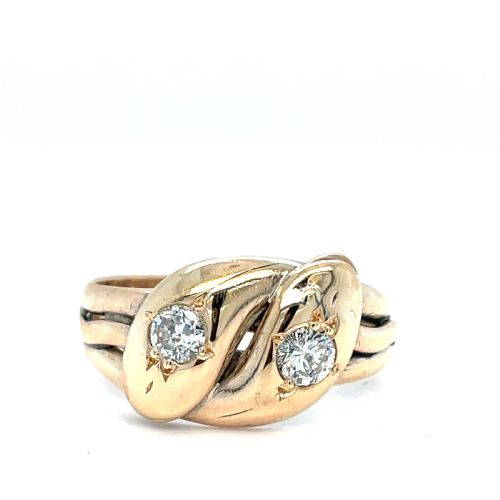
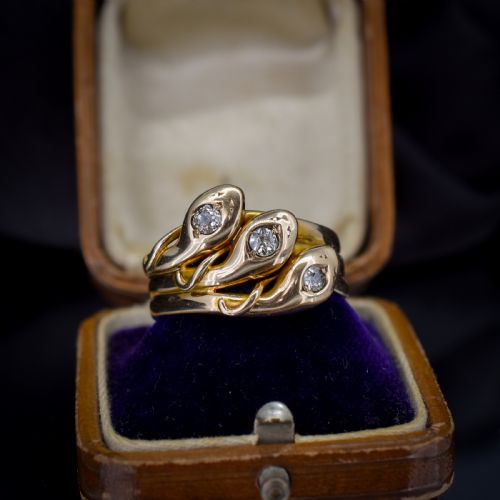
A diamond snake ring wraps the finger in glittering coils that carry centuries of romantic symbolism.
Diamond Snake Ring
Makers fashioned these bands from yellow gold, rose gold, and 9ct or 18ct gold alloys. Many bear English hallmarks from assay offices in London, Chester, and Birmingham, alongside continental European examples. The imagery draws directly upon historical symbolism representing eternal love and wisdom.
Materials and Methods
Goldsmiths constructed these rings using 9ct and 18ct yellow or rose gold, shaping the coiled bodies with detailed scale engraving or cast bands. The metalwork often accommodates heavier weights in substantial Victorian and Edwardian examples.
Gemstones including old cut, old mine cut, and rose-cut diamonds form the eyes or encrust the serpentine heads. Jewellers frequently paired these diamonds with sapphires, rubies, or enamel work to add colour to the coiled forms.
Assessing the Pieces
The distinction between tiers rests upon the substance of the gold and the prominence of the stones. Heavier gram weights and substantial old cut diamonds separate robust examples from lighter bands.
Artistry in the engraving of the scales and the integration of secondary gems like sapphires define the upper end of the range. Hallmarks providing clear assay office dates add verifiable context to the construction.
Roberto Coin
The Diamond Snake Ring Glossary
- Old Cut Diamond
- A hand-faceted diamond cut popular before the modern brilliant cut was standardised, featuring a small table and high crown.
- Rose-Cut Diamond
- A vintage stone cut with a flat base and a domed crown of triangular facets resembling an unopened rosebud.
- Serpent Ring
- A band shaped as a snake, frequently coiled one or more times around the finger as a historic symbol of eternity.
- Hallmark
- An official stamp applied to precious metals indicating the purity, maker, and assay office year of testing.
Diamond Snake Ring: Frequently Asked Questions
What do snake rings symbolise?
Viktorian and Edwardian jewellery used the serpent motif as a powerful emblem of eternal love, loyalty, and wisdom.
Queen Victoria famously received a snake engagement ring featuring an emerald set head, which popularised the design across Britain during the nineteenth century.
How do I identify a Victorian snake ring?
Victorian examples often display heavy 18ct yellow gold construction, hand-engraved scales, and old cut diamonds set into the serpent's head.
Assay office hallmarks stamped inside the band provide specific dates, linking the ring to towns like Chester, Birmingham, or London.
Are these rings comfortable to wear daily?
Low-profile coiled bands sit smoothly against the finger, making them practical for everyday wear if handled with care.
Substantial gold weights and secure gemstone settings ensure the structural integrity of these antique pieces during regular use.