


Vintage Serpent Jewellery
Vintage serpent jewellery coils through centuries of design, offering the wearer pieces crafted in gold, silver and gems.
Vintage Serpent Jewellery
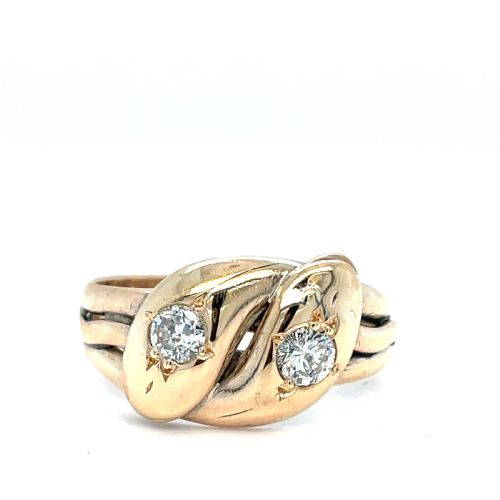
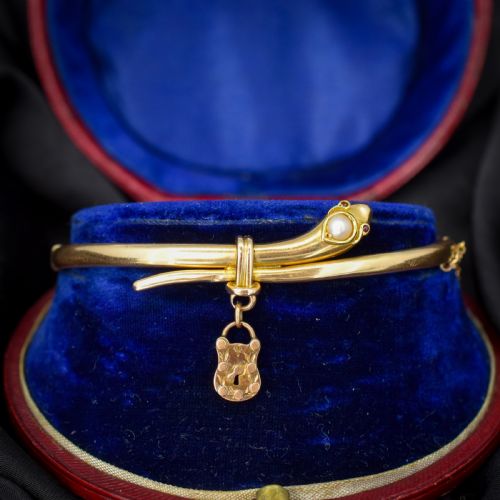
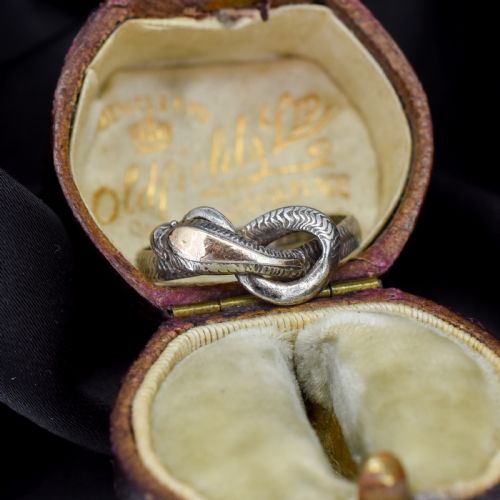
Vintage serpent jewellery spans rings, bangles, pendants, brooches, cufflinks and earrings shaped like snakes. These items appear across periods including the Victorian era, the Edwardian period, 1910, 1920 and 1960.
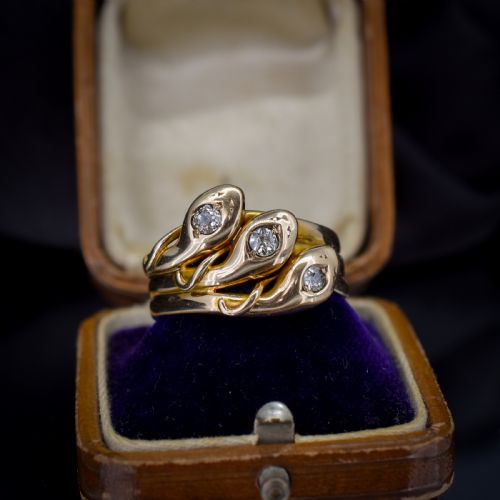
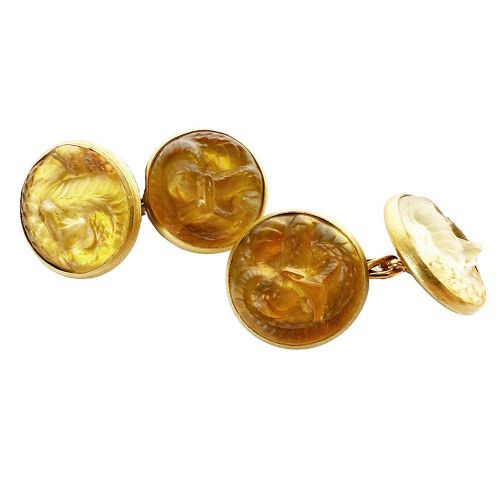
The most common forms on this page include rings set with diamonds and bangles in gold or silver. Examples range from 19th-century triple snake bands to Art Nouveau glass cufflinks and Edwardian pearl pendants.
How they were made
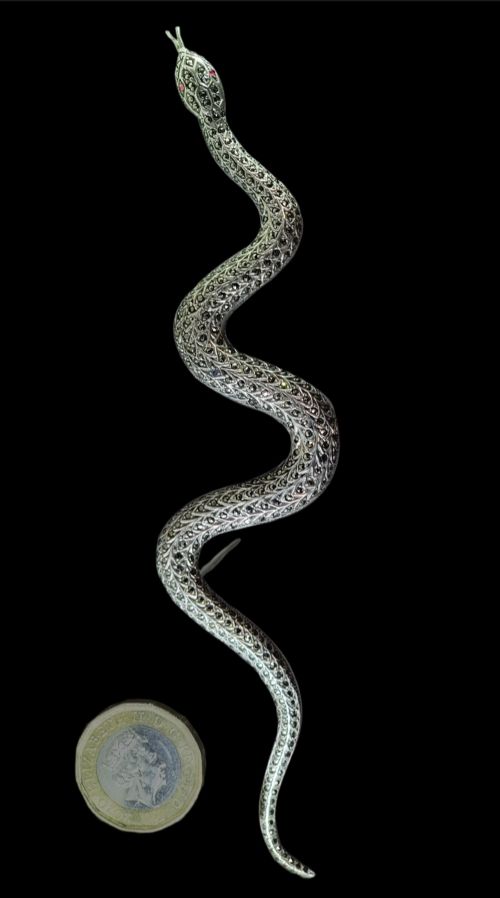
Makers fashioned these pieces primarily in 9ct, 15ct and 18ct gold, alongside silver, moulded glass and marcasite. Stones such as diamonds, pearls, natural rubies and hematite were set into the metalwork.
Techniques varied from traditional hand-forged gold bands with rose-cut diamond eyes to moulded glass and silver settings characteristic of the Art Nouveau and Art Deco periods.
What varies in quality
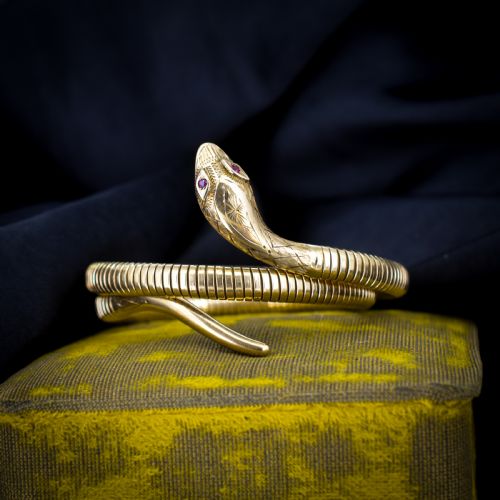
Quality rests in the precision of the metalwork and the grading of the set stones, such as old-cut diamonds and natural pearls. Pieces featuring fully articulated wrap-around bodies and detailed engraved scales demonstrate higher craftsmanship.
The choice of materials also dictates the standard of the item, distinguishing solid 18ct gold and marked designer pieces from simpler silver dress rings and moulded glass variations.
R Lalique·Levinger & Bissinger
The Vintage Serpent Jewellery Glossary
- Old-cut diamond
- A diamond cut by hand with fewer facets and a smaller table than modern stones, prevalent in Victorian jewellery. This gives the gem a softer candlelit sparkle.
- Rose-cut diamond
- A stone featuring a flat base and a domed crown with triangular facets arranged in a star shape. These stones were frequently utilised for snake eyes.
- Marcasite
- Small faceted crystals of iron pyrite set into silver mounts during the Art Deco period. They provide a dark metallic glitter resembling antique steel.
- Wrap-around
- A structural form where the body of the snake coils multiple times around the finger or wrist. This design allows bangles and rings to fit snugly without a traditional clasp.
Vintage Serpent Jewellery: Frequently Asked Questions
What periods do these pieces span?
The selection covers items from the 19th century and the Victorian era through to Edwardian designs, 1910, the 1920 Art Deco period and 1960.
Different decades introduced distinct materials and aesthetics, ranging from heavy gold Victorian bangles to moulded glass cufflinks.
How were snake rings worn?
Snake rings were worn as everyday adornments and tokens of affection, often symbolising eternal love and wisdom in the nineteenth century.
Many examples wrap directly around the finger, utilising flexible coiled bands or fixed precious metal hoops.
What gemstones appear in this jewellery?
Common stones include diamonds, pearls, natural rubies and hematite, frequently used to accent the head or eyes of the serpent.
Makers also incorporated glass and marcasite in pieces from the Art Nouveau and Art Deco eras.
Are these items made of solid gold?
The listings feature pieces rendered in various gold purities, including 9ct, 15ct and 18ct gold, alongside sterling silver.
Each metal grade reflects the standard practices of the specific decade in which the piece was manufactured.