

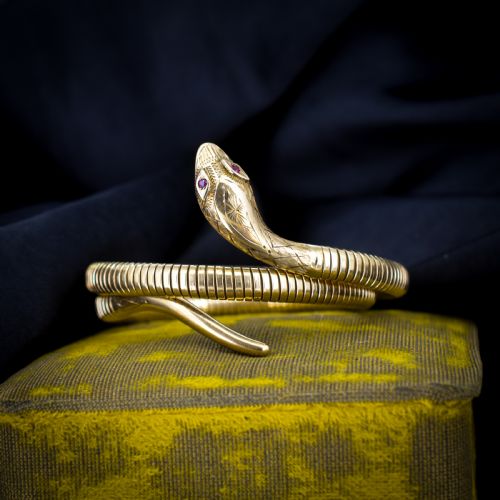


Antique Serpent Jewellery
Antique serpent jewellery comprises rings, bangles and pendants shaped as coiled reptiles, prized for rich symbolism spanning the Victorian, Edwardian and Georgian eras.

Antique Serpent Jewellery
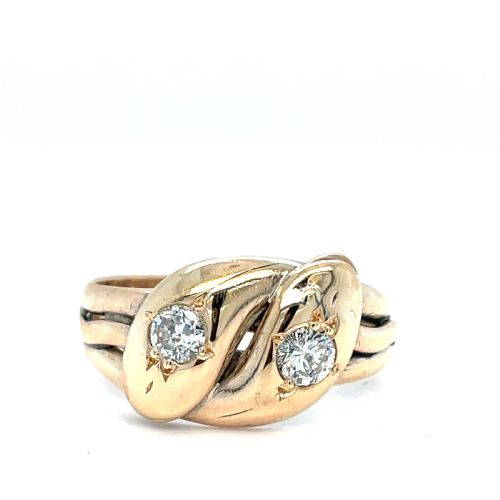
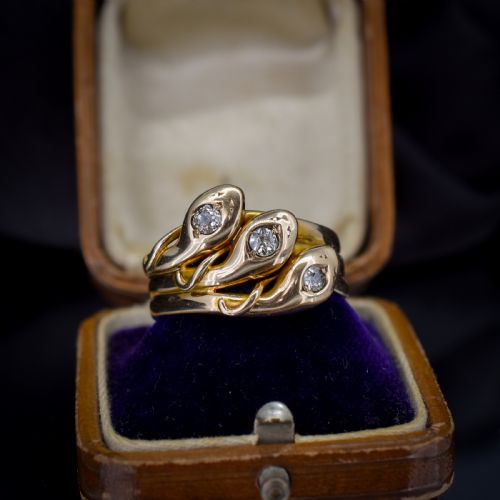
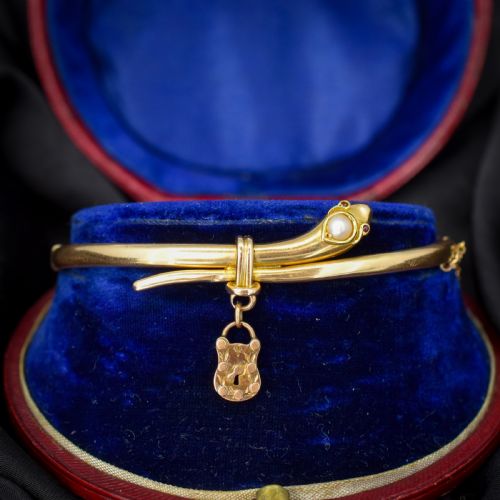
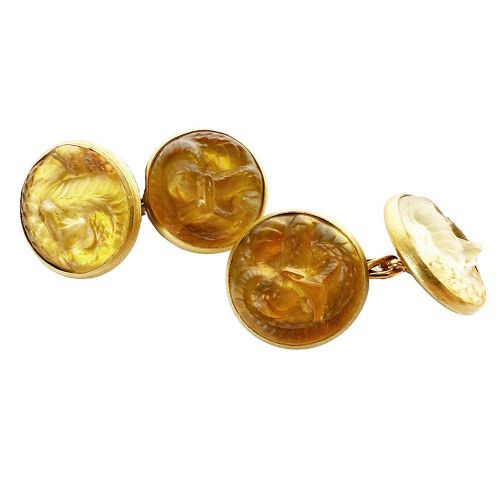
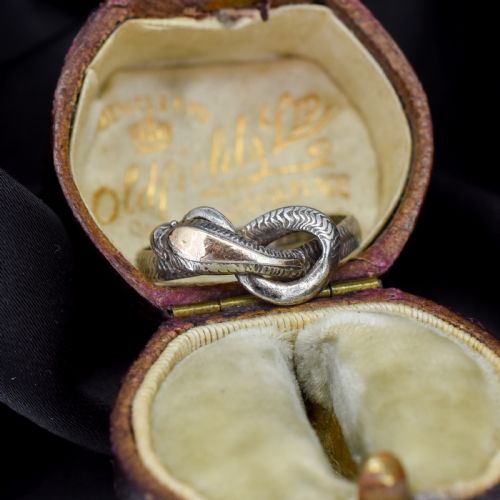
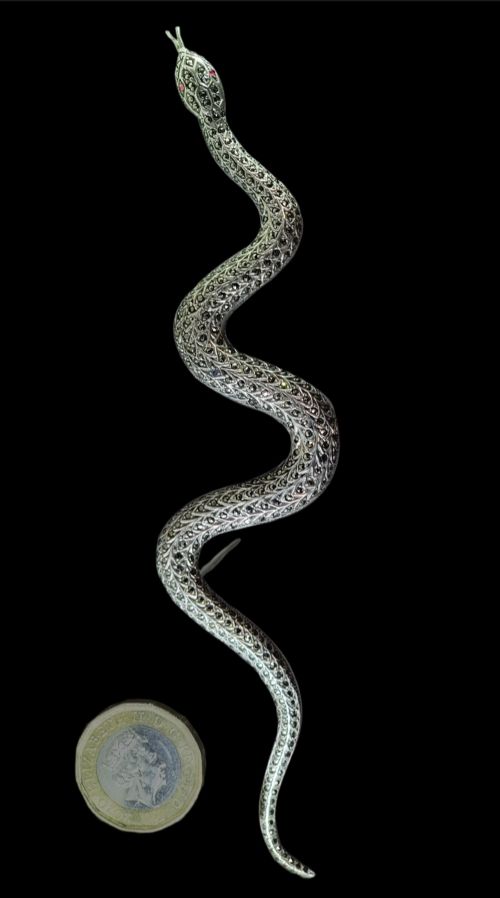
Antique serpent jewellery spans rings, necklaces, earrings, pendants, cufflinks, brooches and bangles shaped after snakes. The forms range from coiled finger bands to dangling drop earrings and hinged bracelets.
Victorian and Edwardian items dominate the selection, frequently incorporating gemstones in the head or body. These pieces reflect historical motifs spanning from Georgian split rings to Art Nouveau and Art Deco designs.
How they were made
Goldsmiths worked primarily in 9ct, 15ct, 18ct and 18K gold alongside silver, platinum, glass and base metals. Construction techniques paired cast or forged metal bands with hinged elements for bangles and secure settings for gems.
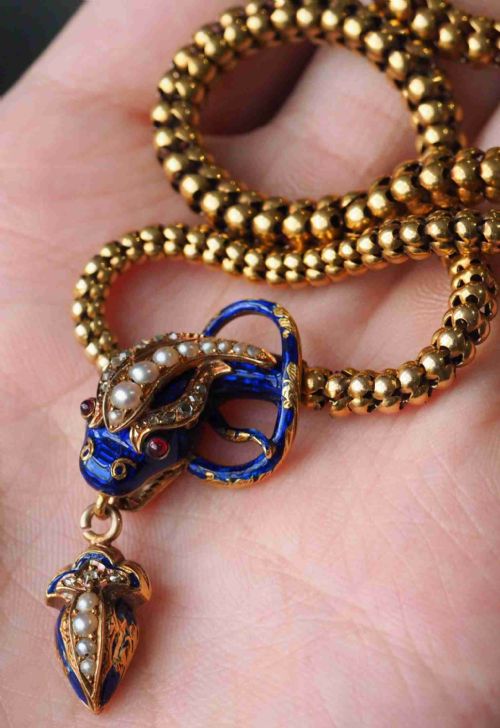
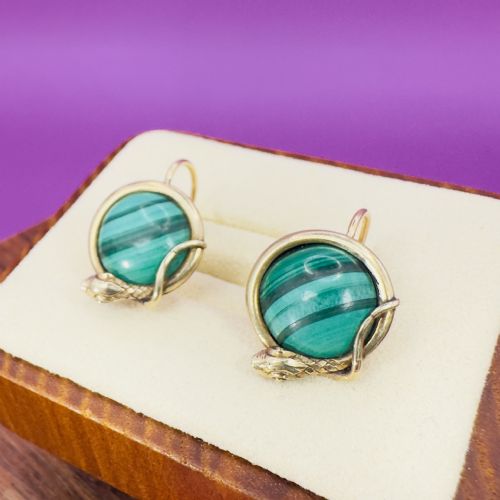
Eyes and heads are frequently set with old-cut diamonds, rose-cut diamonds, pearls, rubies, sapphires, malachite, coral, garnet, hematite and enamel work.
Object forms span functional items like belt buckles and cufflinks alongside traditional rings, pendants, earrings and bangles.
What varies in quality
The precision of the reptilian engraving and the scale patterning dictate the visual strength of the piece. Crisp detailing on the head and scales separates standard production from finer goldsmith work.
The selection of accent stones, such as matched diamonds or natural pearls, alongside clear hallmarks indicating specific assay offices and dates, elevates a piece.
R Lalique·Levinger & Bissinger·Edwards and Roberts
The Antique Serpent Jewellery Glossary
- Ouroboros
- A symbolic circular motif depicting a snake swallowing its own tail, representing eternity and cyclical continuity.
- Old-cut diamond
- A hand-faceted diamond cut before modern machine standards, characterised by a smaller table and high crown.
- Rose-cut diamond
- A gemstone cut with a flat base and a domed crown featuring triangular facets, resembling an unopened rosebud.
- Hallmark
- An official stamp struck into precious metals indicating purity, origin assay office and date of manufacture.
- Bijouterie
- Small decorative items or trinkets, often housing personal adornments and precious items.
Antique Serpent Jewellery: Frequently Asked Questions
What do snake rings symbolise?
Serpent motifs in antique adornment primarily symbolise eternal love, wisdom and rebirth. Queen Victoria popularised the design following her engagement ring choice.
Makers incorporated these reptiles into rings, bangles and necklaces as tokens of enduring affection throughout the nineteenth century.
How do I date an antique snake ring?
Dating relies heavily on official metal hallmarks, gemstone cuts and prevailing stylistic shifts. British pieces often feature assay office stamps and date letters that pinpoint the exact year.
Earlier items from the Georgian era display distinct hand-engraved details, while Victorian and Edwardian examples utilise specific diamond cuts like old-cuts or rose-cuts.
Are these pieces suitable for daily wear?
Solid gold bands and robust bangles withstand regular wear provided the settings are secure. Fragile elements like hollow construction or delicate pearl settings require careful handling.
Checking the security of gemstone prongs and integrated hinges ensures longevity during occasional use.
What materials are common in these designs?
Goldsmiths utilised various gold purities alongside silver, platinum and base metals. Enamel, coloured gems and diamonds frequently accent the heads.
Pearls, rubies, sapphires, malachite, coral, garnet and hematite appear across different historical periods.