




Old Mine Diamond Ring
An old mine diamond ring brings soft, cushion-cut brilliance and historic character to the hand.

What these rings represent
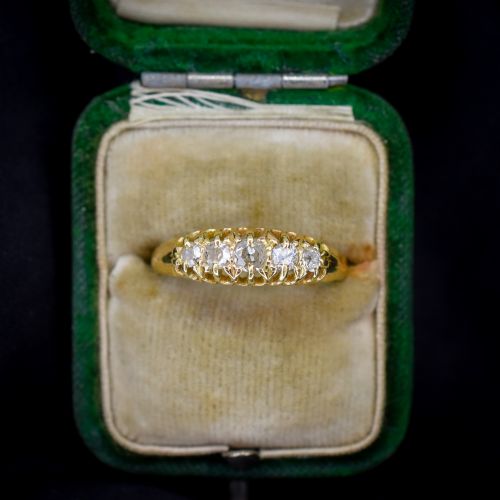
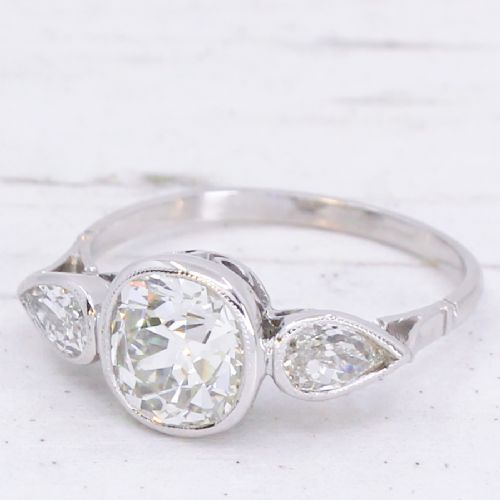
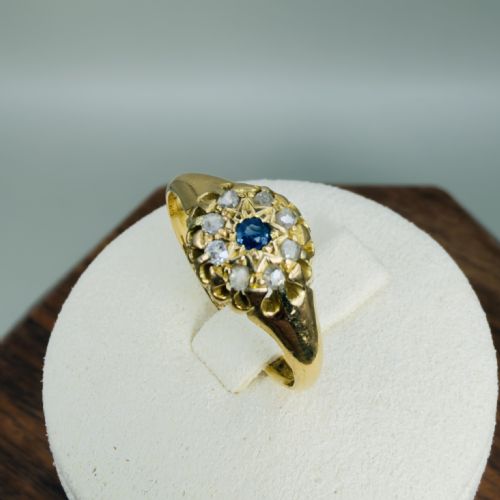
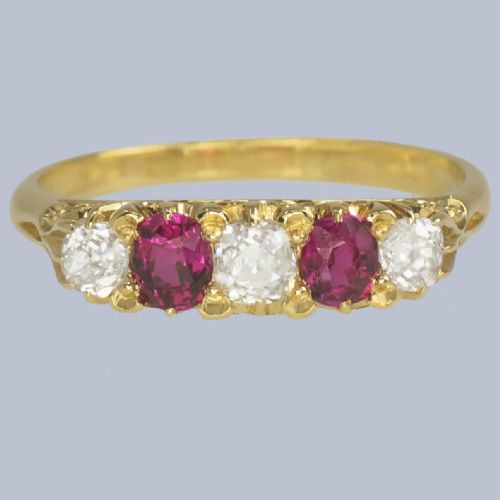
An old mine diamond ring is a historic jewel defined by its distinctive hand-cut stone shape, which bridges the gap between older table cuts and modern brilliants. These pieces span several distinct eras, appearing frequently in Victorian, Edwardian, and Art Deco designs. Buyers encounter everything from simple solitaires and five-stone half hoops to elaborate cluster, snake, and multi-stone configurations.
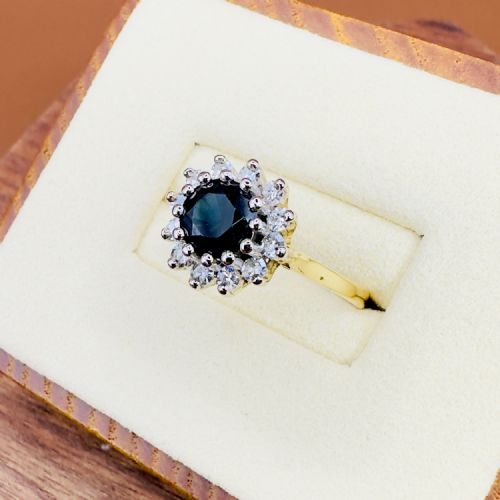
The materials paired with these diamonds reflect the prevailing tastes of the nineteenth and early twentieth centuries. Gold forms the primary structural metal, spanning 15ct and 18ct yellow gold alongside white gold and platinum settings that gained favour toward the Edwardian period. Coloured gemstones such as rubies, sapphires, emeralds and pearls frequently accompany the central diamonds in cluster, trilogy and multi-stone rings.
Materials and construction
The stones in an old mine diamond ring were cut by hand, resulting in characteristic high crowns, small tables, and deep pavilions that catch candlelight with a distinct warm glow. Goldsmiths shaped the precious metals using traditional hand-working techniques, casting and forging 18ct gold and platinum into secure settings designed to showcase the irregular facets of the stones.
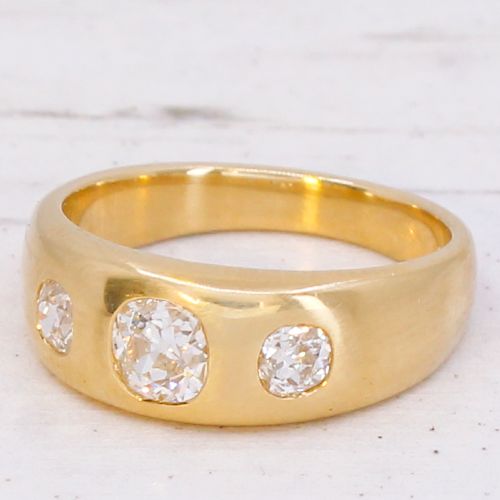
Mountings range from substantial carved half hoops and gypsy settings to delicate pierced platinum galleries and crossover motifs. Hallmarks stamped inside the bands often record assay office locations in cities like London and Birmingham alongside specific dates, providing a clear record of British manufacture.
Retail Price Guide 2026
Typical UK retail prices for old mine diamond ring, calculated from the Sellingantiques database of over a million retail prices indexed since 2003. This retail price guide relies exclusively on Sellingantiques data; no external sources or auction records are used, so the figures do not describe the wider market.
Several Victorian rings feature entwined snakes and serpents, proving that historical sweethearts had a delightfully gothic sense of romance.
Distinctions in quality
The overall quality of an old mine diamond ring rests in the symmetry and optical performance of the hand-cut stones, where skilled historical cutting creates lively light return despite irregular proportions. The weight and integrity of the precious metal mount also separate ordinary pieces from superior examples, particularly where delicate openwork or heavy chasing remains crisp and unaltered by wear.
The harmony between the central diamond and any accompanying gemstones, such as matched rubies or sapphires, dictates the visual success of cluster and multi-stone rings. Preservation of original hallmarks and minimal past resizing ensure the structural longevity and historical authenticity of the piece.
The Old Mine Diamond Ring Glossary
- Old mine cut
- An early diamond cut characterised by a roughly square or cushion shape with a high crown, small table, and open culet. This traditional faceting style produces broad, chunky flashes of light.
- Half hoop
- A ring design featuring a single row of stones set across the upper arc of the band. These settings were exceptionally popular for multi-stone diamond and ruby configurations during the Victorian era.
- Culet
- The small flat facet at the very bottom of a historic diamond pavilion. Hand-cut stones often display a noticeable culet when viewed from the top.
- Trilogy
- A ring featuring three principal stones set in a row, often representing the past, present and future. In period pieces, these combine old mine diamonds with coloured gems.
- Gypsy setting
- A mounting style where the gemstone is flush-set directly into the thick metal band. This technique creates a smooth, durable profile characteristic of late nineteenth-century rings.
Frequently Asked Questions
How do I date my ring?
Dating relies on a combination of mounting style, gemstone arrangement and official hallmarks stamped inside the band. British pieces frequently display assay office marks that narrow the production year.
Victorian examples often feature heavy gold and clustered stones, while Edwardian and Art Deco pieces introduce platinum settings and lighter, geometric openwork.
Are these rings suitable for daily wear?
These historic rings suit everyday wear provided they receive sensible care and regular checks by a jeweller. Solid gold and platinum bands offer strong support for the hand-cut stones.
Owners should remove jewellery during heavy manual tasks to protect delicate claw settings and softer accent stones like pearls or emeralds from impact.
What metals are used in these settings?
The mountings utilise 18ct yellow gold, white gold, 15ct gold and platinum depending on the period of manufacture. Victorian pieces lean heavily toward yellow gold, sometimes paired with silver or platinum accents.
By the Edwardian and Art Deco eras, platinum became the preferred metal for securing diamonds due to its strength and bright white finish.