


Yellow Gold Serpent Ring
A yellow gold serpent ring coils around the finger with the rich symbolism of eternal love that Victorians and Edwardians prized.
Yellow Gold Serpent Ring
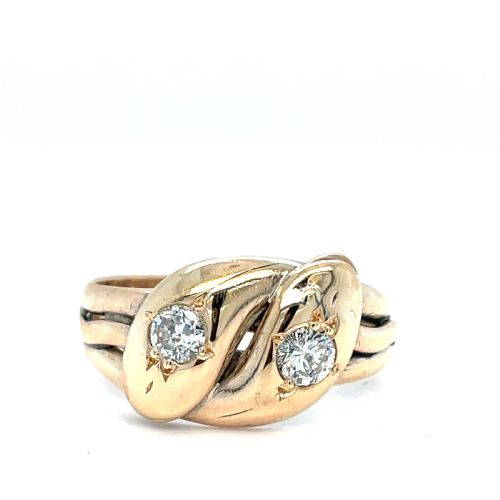
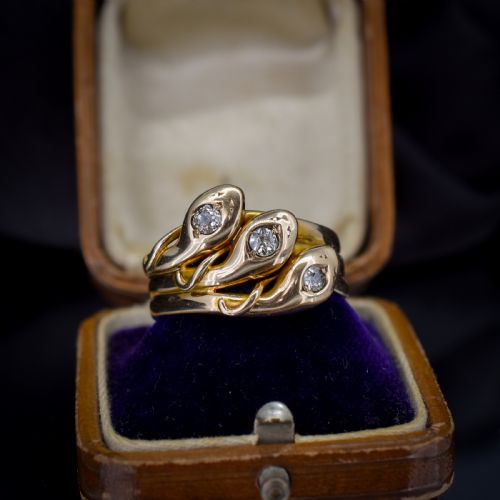
A yellow gold serpent ring takes the form of a coiled snake, rendered in materials like 9ct gold, 18ct gold, and 18ct yellow gold. These pieces mostly date from the Victorian and Edwardian eras, spanning the late nineteenth century through to the early decades of the twentieth century. Single, double, and triple snake configurations appear across the selection.
The serpent motif holds deep historical significance as a token of devotion and eternity, highly sought after by collectors of antique jewellery. You will frequently encounter rings bearing hallmarks from assay offices in towns such as Chester and London. The stones set into the heads most commonly include old cut diamonds, rose-cut diamonds, and sapphires.
How they were made
Goldsmiths shaped these pieces from 9ct and 18ct yellow gold, forming bodies that wrap smoothly around the finger. The metalwork often includes chased or engraved scale details along the coiled band.
Gemstones such as old cut diamonds, rose-cut diamonds, and sapphires are flush-set or star-set into the serpent heads to catch the light. Hallmarks stamped into the inner shank record the metal purity, assay office, and year of assay.
A double snake ring effectively doubles your charm quota, wrapping two golden serpents around the finger in an eternal embrace.
What varies in quality
The distinction between standard examples and the finest pieces lies in the weight of the gold and the complexity of the snake configuration. Double and triple serpent designs require more intricate metalwork than a single coiled band.
The quality of the stones set into the eyes and head elevates a piece, particularly when using larger old cut diamonds or combining diamonds with sapphires. Clear, crisp hallmarks from offices like London or Chester further anchor the provenance.
The Yellow Gold Serpent Ring Glossary
- Old cut diamond
- A hand-faceted diamond cut popular in the nineteenth century, featuring a small table, high crown, and open culet. These stones possess a softer, warmer sparkle than modern brilliant cuts.
- Rose-cut diamond
- A vintage stone cut with a flat base and a domed crown of triangular facets arranged in a symmetrical pattern. They resemble an unopened rosebud.
- Hallmark
- An official stamp applied to precious metals indicating the purity of the gold, the assay office, and the year of manufacture. British hallmarks provide precise dating.
- Assay office
- An official body that tests and certifies the purity of precious metal items. Offices such as London and Chester stamped pieces with their own specific symbols.
Yellow Gold Serpent Ring: Frequently Asked Questions
What do snake rings symbolise?
A yellow gold serpent ring carries profound meaning from the nineteenth century, where the coiled snake represented eternal love and wisdom. Prince Albert famously gave Queen Victoria a snake engagement ring featuring an emerald set head, sparking a widespread fashion.
This romantic symbolism endures today, making these antique pieces popular choices for modern wearers seeking jewellery with historical narrative.
How can I date a gold serpent ring?
Dating relies heavily on the hallmarks stamped inside the shank, which denote the specific assay office and year letter for towns like Chester or London. Stylistic clues also help, such as the use of rose-cut diamonds in Edwardian pieces or heavier old cut stones in Victorian examples.
The gold standard used also guides dating, with higher-carat 18ct gold appearing frequently alongside 9ct variants across the nineteenth and early twentieth centuries.
What stones are set in antique snake rings?
Diamond and sapphire are the primary gemstones found set into the heads of these serpents. Jewellers utilised old cut diamonds and flat-bottomed rose-cut diamonds to give the eyes a bright, expressive sparkle.
Combinations of diamonds and sapphires appear together in double serpent designs, creating a striking contrast against the warm yellow gold bands.