


Gold Diamond Serpent Ring
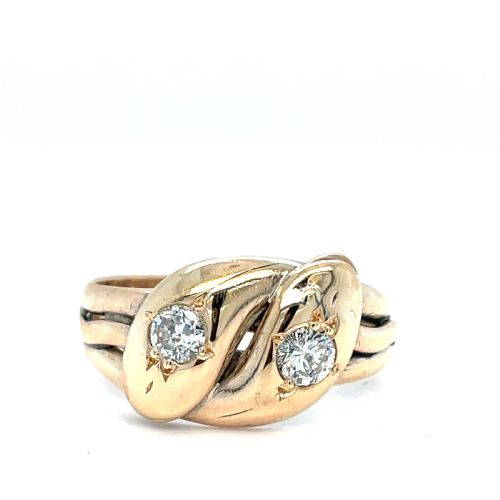
A gold diamond serpent ring coils around the finger as a tactile piece of Victorian and Edwardian symbolism.
Gold Diamond Serpent Ring
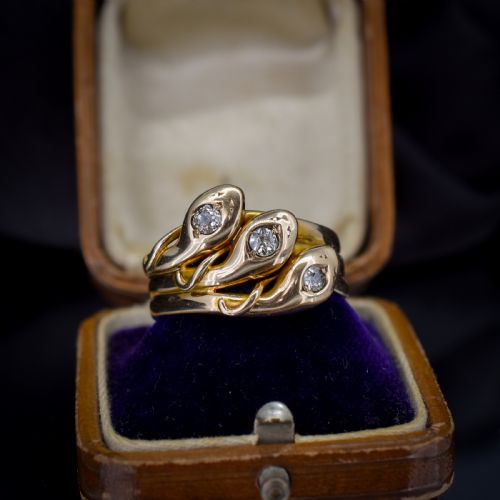
A gold diamond serpent ring represents the enduring fascination with snake motifs across the nineteenth and early twentieth centuries. These pieces appear as single, double, or triple coiled bands wrapping the finger.
The selections span the Victorian and Edwardian eras, predominantly fashioned from eighteen-carat gold and nine-carat gold. Assay office hallmarks from London, Chester, and Birmingham frequently anchor the production dates between the eighteen-nineties and the nineteen-teens.
Most iterations feature faceted diamonds or rose-cut diamonds set into the head, occasionally accompanied by sapphires or rubies.
Materials and construction
Goldsmiths worked with varying purities of yellow gold, shaping substantial banded bodies that register tactile weight on the hand. The coiled silhouettes demand precise metalwork to form overlapping tails and textured scales.
Gemstones including old cut diamonds and rose-cut diamonds are flush or grain set into the serpent heads. Accompanying stones like sapphires introduce contrasting colour into multi-headed designs.
Craftsmanship and distinction
The weight of the gold shank and the presence of clear, legible town and date hallmarks distinguish standard production from master goldsmith output.
The Gold Diamond Serpent Ring Glossary
- Old cut diamond
- A hand-faceted diamond shape typical of the nineteenth century featuring a smaller table and higher crown. This cut produces distinctive broad light reflections.
- Rose-cut diamond
- A gemstone style with a flat base and a domed crown of triangular facets resembling an unopened rosebud. It appeared frequently in the Victorian and Edwardian periods.
- Hallmark
- An official stamp applied to precious metals indicating purity, origin assay office, and year of manufacture. British pieces display these stamped marks inside the band.
- Serpent ring
- A jewellery design shaped as a coiled snake symbolising eternity and wisdom. Victorians popularised these motifs following royal engagement ring traditions.
Gold Diamond Serpent Ring: Frequently Asked Questions
How do I date a gold snake ring?
Dating relies heavily upon the British hallmarking system stamped inside the shank. Assay office marks from London, Chester, and Birmingham combined with date letters reveal the exact year of manufacture.
Stylistic shifts also help separate periods, as Victorian examples tend to feature heavy gold coiling while Edwardian versions often incorporate delicate multi-stone settings.
Are these rings comfortable to wear?
The weight of the gold band and the smooth interior profile determine everyday wearability. Many nineteenth-century rings are substantial in weight, providing a solid feel on the hand without catching.
Coiled designs wrap smoothly around the finger when sized correctly by a specialist. Low-set diamond eyes prevent snagging on clothing.
What stones are set in serpent rings?
Diamonds serve as the primary gemstone for the eyes or head of the serpent. Old cut diamonds and rose-cut diamonds appear most frequently across the listed periods.
Sapphires and rubies also accompany diamonds in double and triple snake configurations. These coloured stones add contrast to the yellow gold body.