
Antique Scroll Couch
An antique scroll couch offers sweeping lines and deep lounging comfort, bringing period elegance directly into a modern drawing room.
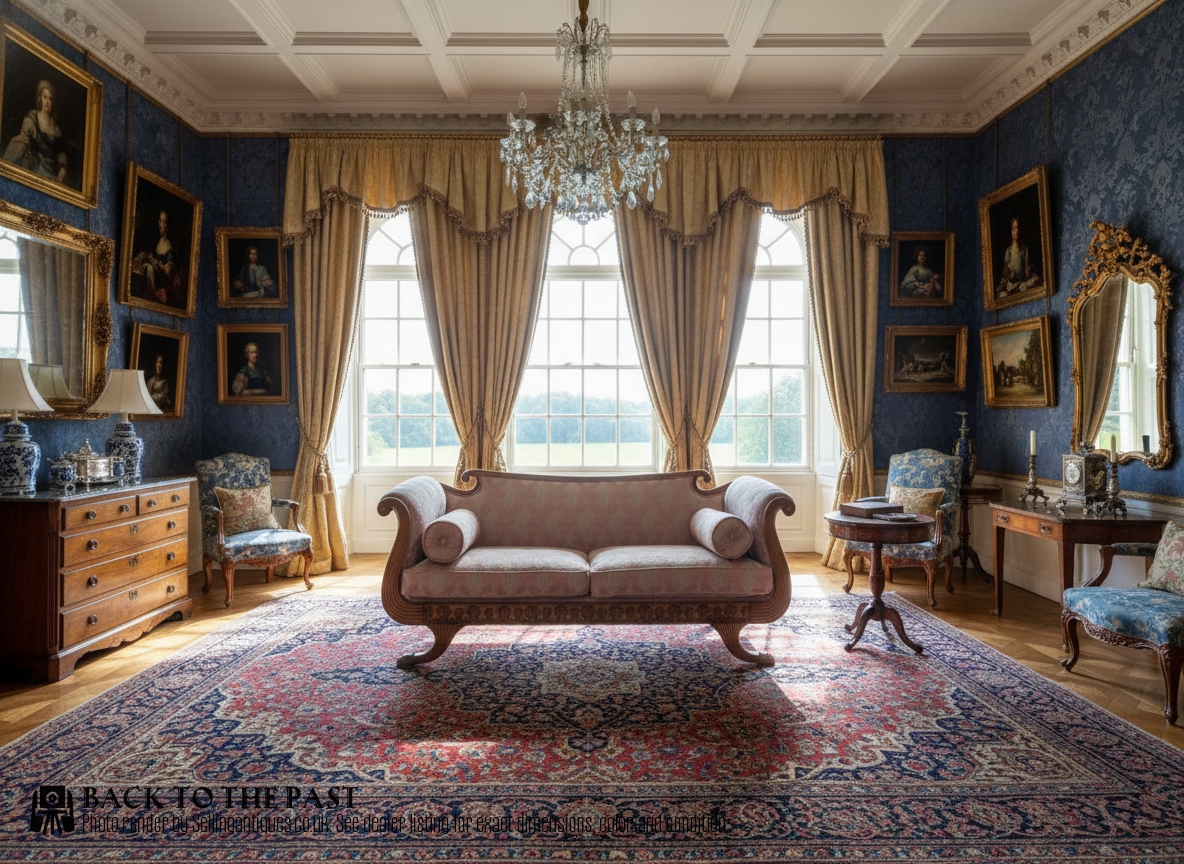
Antique Scroll Couch
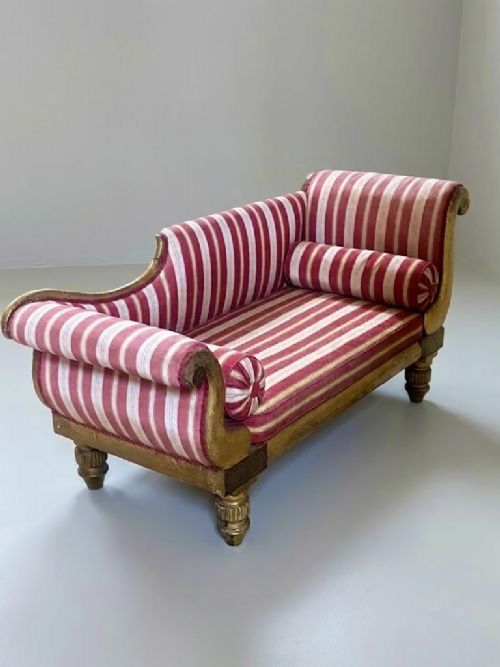
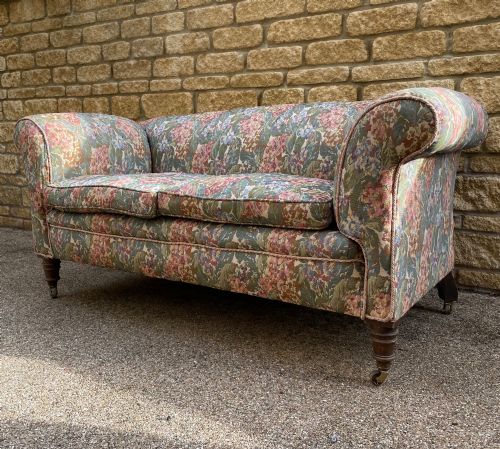
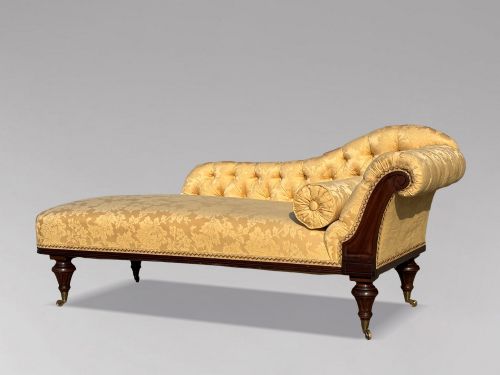
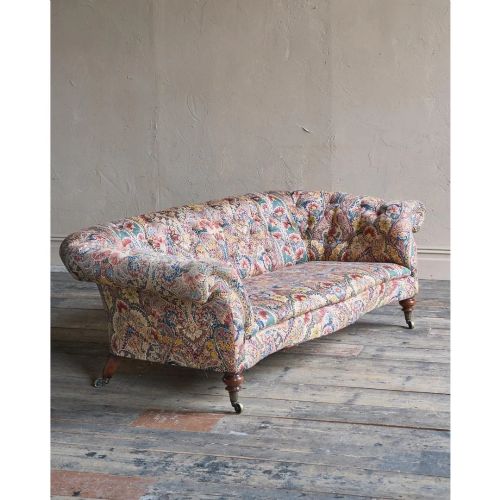
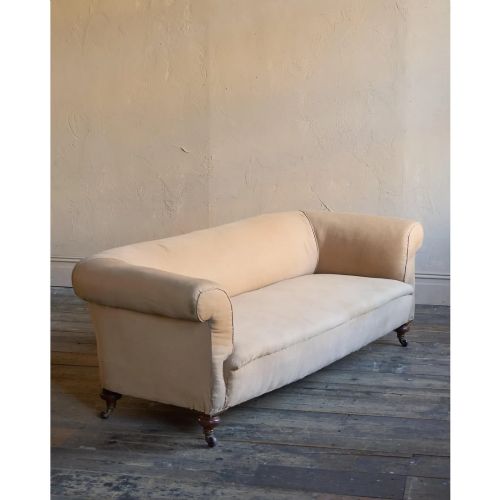
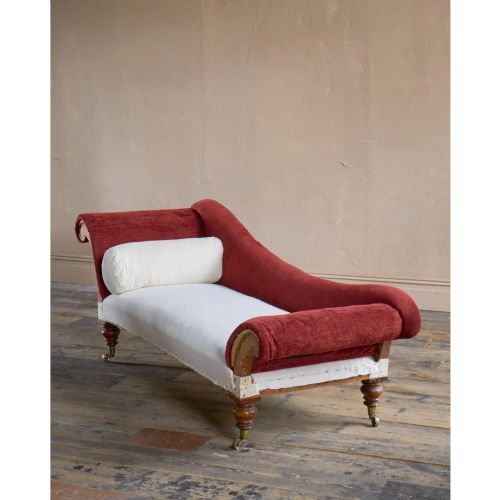
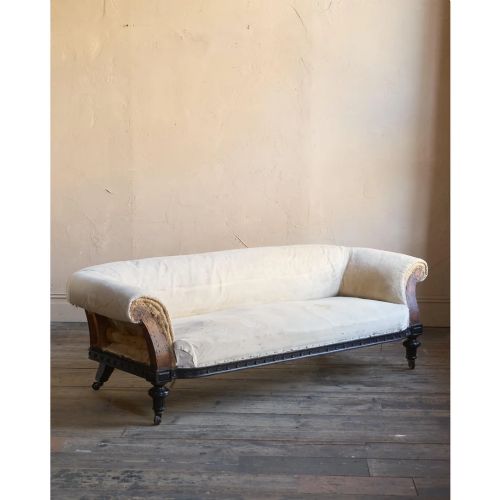
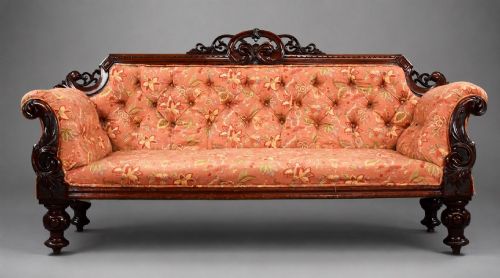
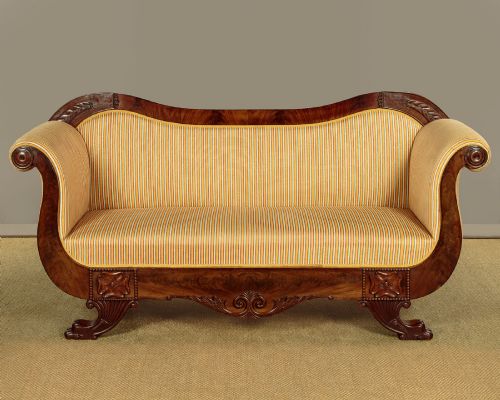
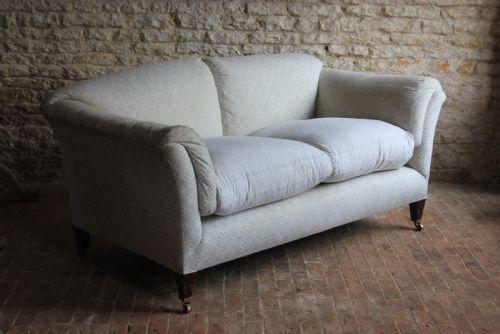
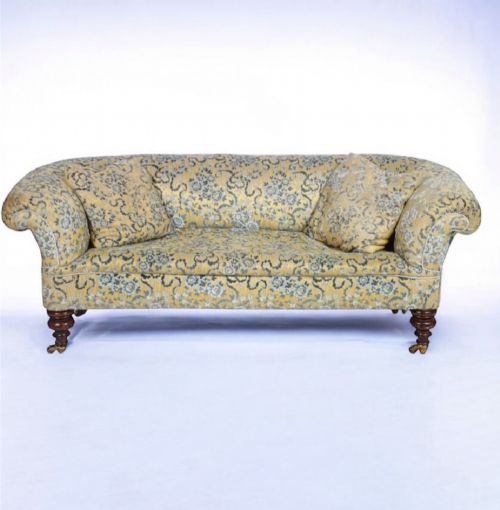
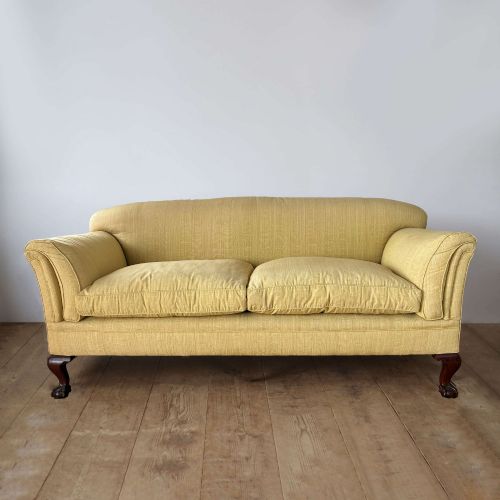
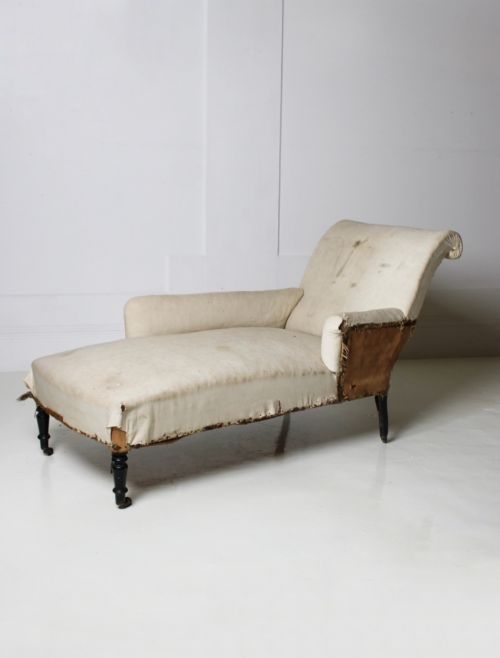
When you search for an antique scroll couch, you encounter a variety of nineteenth-century forms including daybeds, chaise longues, and settees. These pieces span the Regency, William IV, and Victorian periods, each displaying characteristic curved ends designed for reclining.
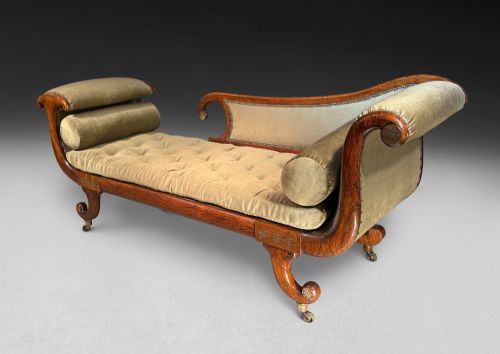
The most common examples on this page are mahogany or rosewood framed couches from the Regency and Victorian eras, frequently upholstered in velvet, silk, or modern fabrics. They serve as statement seating for drawing rooms and libraries, combining structural timber with sweeping upholstered armrests.
How they were made
Cabinet makers built the frames using dense timbers like mahogany, walnut, and rosewood, often applying simulated rosewood paint effects or brass inlay to the wood. Structural stability relied on robust joinery hidden beneath traditional upholstery.
Makers shaped the characteristic scroll ends from solid timber or steam-bent sections before stuffing the seat platforms with natural materials and covering them in patterned silk, velvet, or leather.
Listings feature mahogany, rosewood, walnut, and oak frames paired with velvet, leather, silk, and modern upholstery fabrics.
What varies in quality
The distinction between standard pieces and exceptional examples lies in the crispness of the timber carving and the elegance of the scroll proportions. Superior pieces display finely figured wood veneers, meticulous brass inlay work, and robust framing that has survived decades of use without sagging.
Makers who supplied high-end London townhouses applied greater attention to the underframe and carving detail than provincial workshops. The weight of the timber and the fluency of the curved scroll work determine the overall distinction of the couch.
Howard and Sons·Holland and Sons
The Antique Scroll Couch Glossary
- Scroll end
- A characteristic curving wooden or upholstered armrest that rolls outward at the end of the sofa. This shape defines the silhouette of Regency and William IV seating.
- Chaise longue
- An elongated chair or daybed designed for reclining with a single backrest and one or two raised ends. These pieces appeared frequently in nineteenth-century country house interiors.
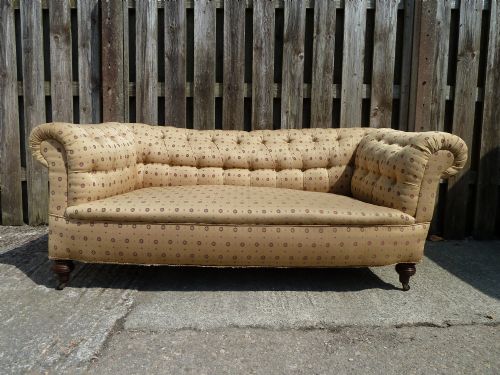
- Chesterfield
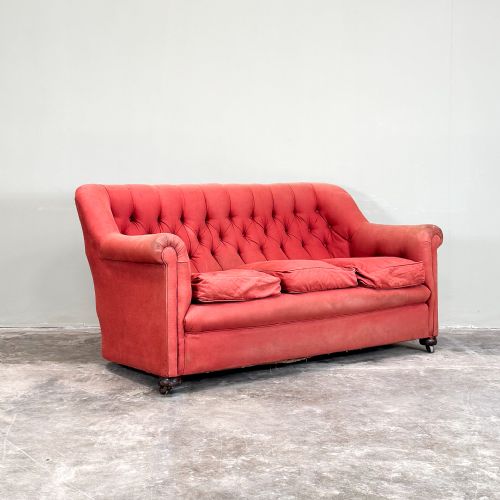
- A deep-buttoned upholstered sofa traditionally featuring arms and back of the same height. Victorian examples in leather or fabric remain enduringly popular.
- Simulated rosewood
- A painted timber finish mimicking the dark grain and rich colour of genuine rosewood. Cabinet makers used this technique on secondary woods during the Regency period.
- Giltwood
- Timber coated with a thin layer of gold leaf to create a brilliant decorative surface. This finish appears on high-status Regency and Victorian seating.
Antique Scroll Couch: Frequently Asked Questions
How do I date a scroll couch?
Dating relies on timber choices, leg styles, and the curve of the scroll. Regency pieces often utilise mahogany or simulated rosewood with brass inlay.
Victorian iterations introduce heavier carved mahogany or walnut frames with buttoned upholstery. Comparing the joinery and overall proportions helps place the piece within its correct decade.
Can I use an antique couch daily?
These couches suit everyday sitting when the internal webbing and padding remain sound. Many historical pieces have been restuffed to modern comfort standards.
Placing the couch away from direct sunlight protects fragile silk or velvet coverings from fading. Regular gentle care preserves both the antique frame and the fabric.
How do I maintain rosewood frames?
Rosewood requires minimal intervention using a soft dry cloth to remove dust. Avoid chemical polishes that can damage antique French polish surfaces.
Maintaining a stable room temperature prevents the timber from splitting. Professional wax application once a year nourishes the grain.