


Regency Wooden Couch
A regency wooden couch offers grand classical line and robust timber construction, grounding a large room with timeless architectural presence.
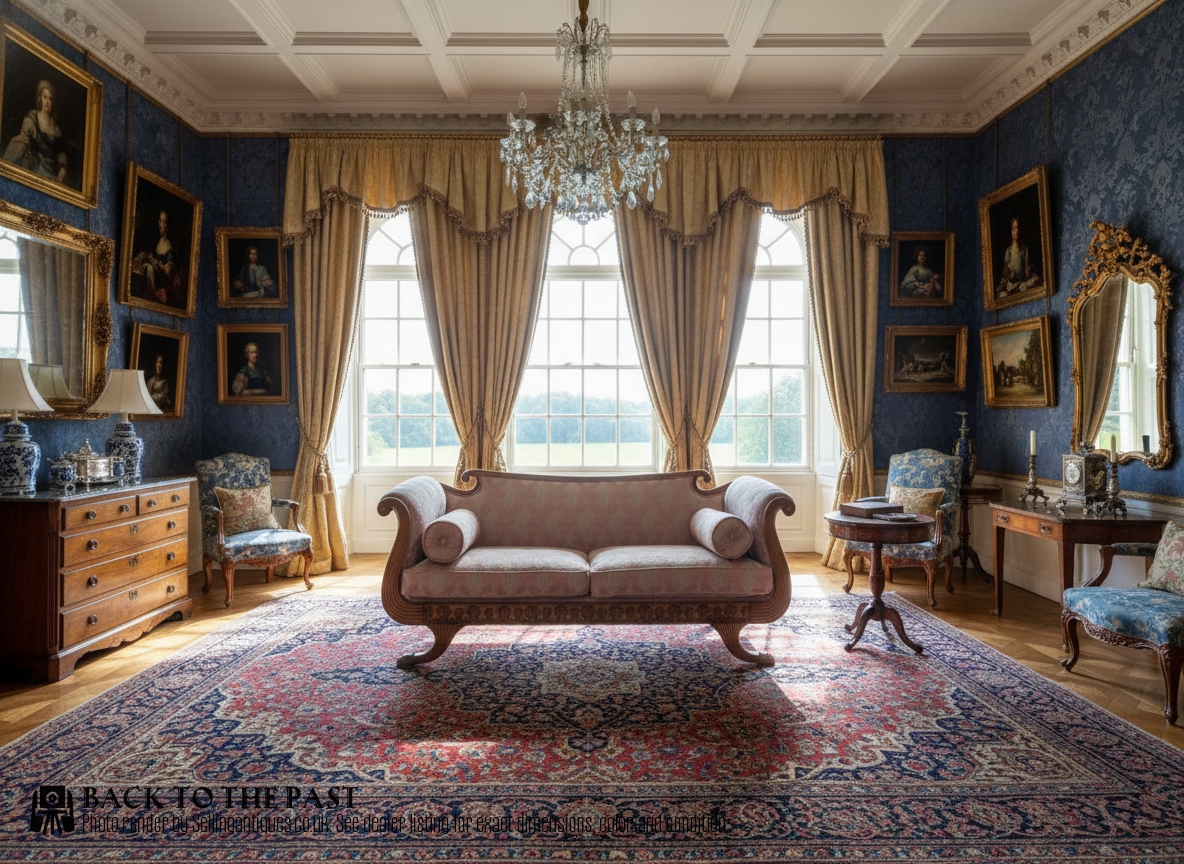
Regency Wooden Couch
A regency wooden couch combines neoclassical proportion with functional comfort, serving as a principal seating piece in period interiors. These daybeds, settees and scroll-end sofas reflect the classical revival styles of the early nineteenth century.
Most examples met on this page date from the nineteenth century, spanning Regency, William IV and early Victorian periods. Mahogany, simulated rosewood and ebonised wood dominate the forms, often accented with brass details and upholstered in fabric or hessian.
How they were made
Cabinetmakers utilised dense timbers such as mahogany, pine and walnut, frequently applying ebonising or simulated rosewood finishes to mimic exotic woods. Frames relied on sturdy joinery to support the sweeping scroll ends and substantial architectural rails.
Metal mounts in brass added structural and decorative contrast to the timber frames. Upholstery foundations incorporated hessian and fabric, while some Anglo-Indian variants featured woven cane panels.
Listings feature nineteenth-century pieces spanning Regency, William IV and early Victorian periods, constructed in mahogany, walnut and ebonised wood.
What varies in quality
The sophistication of the timber figure and the precision of the carved scroll-ends dictate the tier of a piece. Finer examples display richly grained mahogany or skillful ebonised finishes rather than plain painted surfaces.
Structural integrity and the originality of the wooden frame separate ordinary utility items from grand country house pieces. Subtle details like giltwood highlights or integrated brass mounts elevate the standing of a couch.
Thomas Hope
The Regency Wooden Couch Glossary
- Regency
- A British design period spanning the early nineteenth century defined by classical Greco-Roman motifs. It draws heavily on ancient architectural forms.
- Scroll-End
- A furniture arm or terminal rolled outward in a tight spiral curve. This shape forms the hallmark silhouette of many nineteenth-century couches.
- Simulated Rosewood
- A painted or stained wood finish imitating the dark grain and reddish hues of genuine rosewood. Cabinetmakers used this technique on secondary timbers like pine.
- Ebonised Wood
- Timber treated with stain or polish to resemble expensive ebony. It creates a stark, dramatic dark surface popular in classical revival furniture.
- Récamier
- A type of daybed with two raised scrolled ends, named after the French socialite painted by Jacques-Louis David. It suits reclining rather than upright sitting.
Regency Wooden Couch: Frequently Asked Questions
What is a regency wooden couch?
A regency wooden couch is a nineteenth-century seating form designed for reclining, featuring classical architectural lines and exposed timber frames.
These pieces encompass daybeds, settees, and scroll-end sofas influenced by ancient Greek and Roman furniture styles.
How do I use a daybed today?
A daybed works effectively as a statement piece in a study, drawing room, or large hallway, providing both seating and a place to recline.
Because of their finished backs and scroll ends, they often look best placed freestanding against a wall or dividing a generous space.
How do I tell Regency from William IV?
Regency pieces tend to feature lighter, more refined classical lines with delicate brass inlay and slender supports.
William IV furniture generally appears heavier and more robust, displaying bolder scrollwork and denser mahogany timbers.
What woods were used?
Mahogany and walnut served as the primary structural and decorative timbers for finer frames, while pine acted as a secondary wood.
Cabinetmakers also applied ebonised finishes and simulated grain techniques to achieve exotic appearances.