
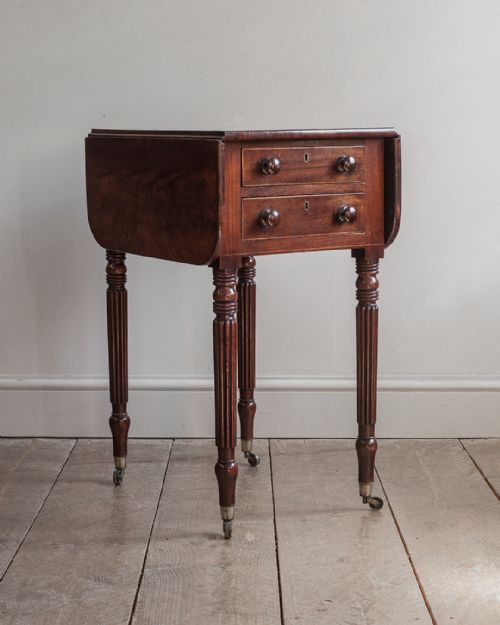
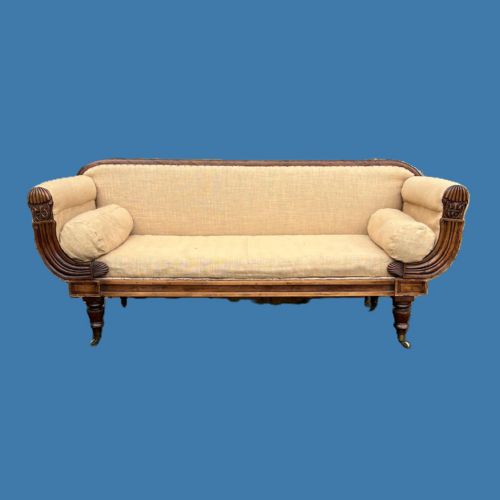


Reeded Leg Sofa
A reeded leg sofa brings classical proportion and linear detail into a room, offering the elegance of the Regency period.
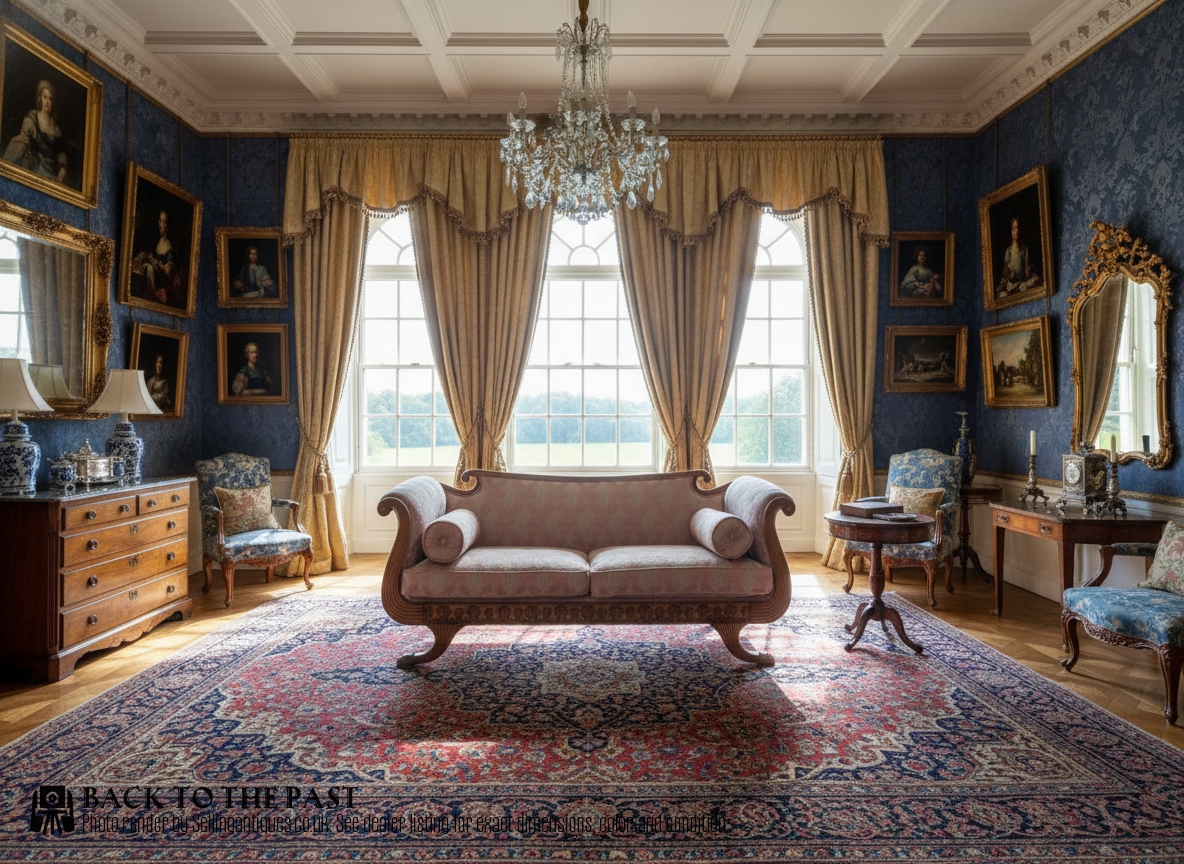
Reeded Leg Sofa
A reeded leg sofa belongs to the furniture traditions of the Regency, George IV, and William IV eras, emerging alongside related seating and centre tables. These pieces combine architectural lines with comfortable upholstery resting on timber supports.
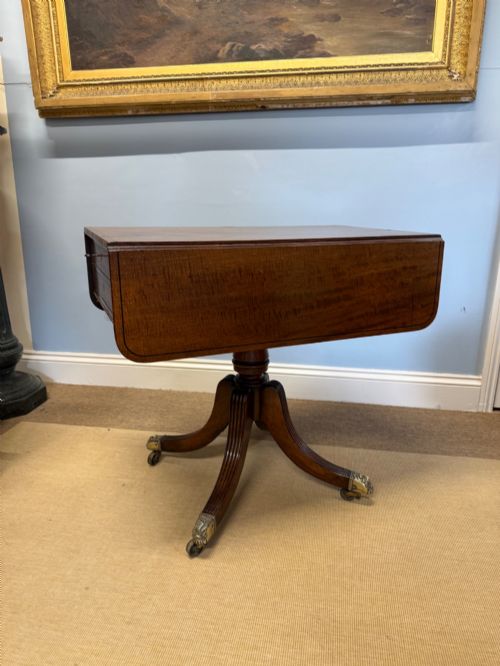
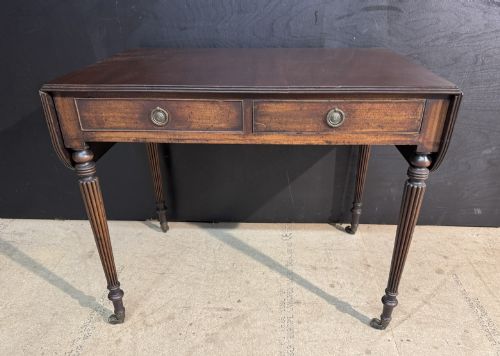
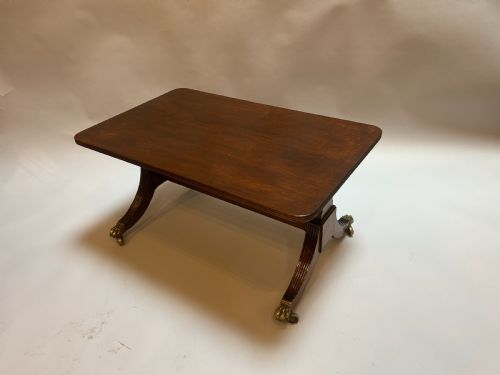
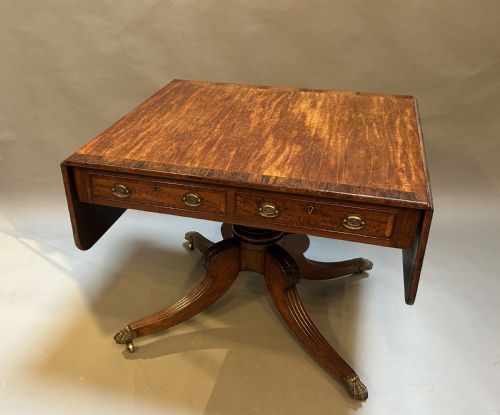
The versions met on this page span authentic early nineteenth-century examples and later revivals, executed in mahogany and simulated rosewood. Buyers encounter day beds, campaign sofas, and couches carrying the characteristic carved vertical grooves on the legs.
Assessing quality and craftsmanship
Quality rests upon the crispness of the hand-carved reeding on the legs and the choice of figured timber for the frame. Sharp, deeply cut mouldings distinguish superior pieces from softer, later revivals.
Proportion and structural integrity define the higher end of the range, where the joinery remains tight and the secondary timbers match the primary show woods. The subtlety of the turned or splayed supports reveals the hand of a skilled workshop.
Some nineteenth-century campaign sofas were built to pack flat into wooden crates for officers travelling across the empire.
Thomas Hope·William Trotter
The Reeded Leg Sofa Glossary
- Reeding
- A decorative moulding consisting of parallel convex strips resembling bundled reeds. This technique adds vertical texture to legs and pilasters.
- Simulated rosewood
- A painted or stained wood finish designed to imitate the rich dark grain of genuine rosewood. It was common during the Regency period.
- Campaign sofa
- A portable form of seating designed for travel and military use. These pieces often feature folding frames and sturdy timber construction.
- Day bed
- An elongated seat intended for reclining during the day, combining the characteristics of a sofa and a bed.
Reeded Leg Sofa: Frequently Asked Questions
How do I care for a vintage sofa?
Keep timber surfaces polished with traditional beeswax and avoid placing the piece near direct heat sources or strong sunlight to protect the wood grain.
Vacuum upholstered areas gently using a soft brush attachment and address any structural adjustments with a specialist restorer.
Are these sofas comfortable for daily use?
Original pieces often feature firmer traditional stuffing compared to modern seating, designed for upright posture and formal entertaining.
Many examples have been updated with modern interior padding while retaining their historic wooden frames.
How can I tell a Regency sofa from a revival piece?
Examine the construction methods, secondary timbers, and tool marks on the underside of the frame for signs of early nineteenth-century handcrafting.
Revival pieces from later periods typically display machine tooling and different timber preparation techniques.
What is the history of reeded legs?
Reeded legs drew inspiration from classical Greek and Roman architecture, becoming a defining feature of Regency and George IV furniture design.
Cabinet makers used the motif to lighten heavy timber forms and introduce vertical rhythm.