



Antique Screen Divider
An antique screen divider partitions space with art, bringing texture, pattern and history directly into a room.
Antique Screen Divider
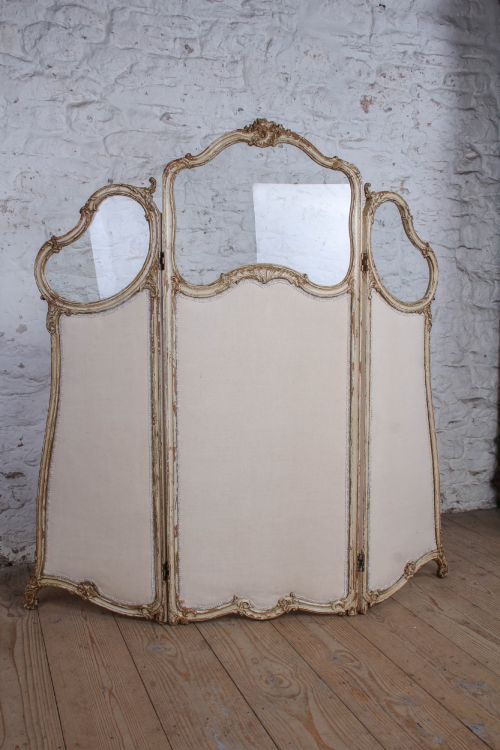
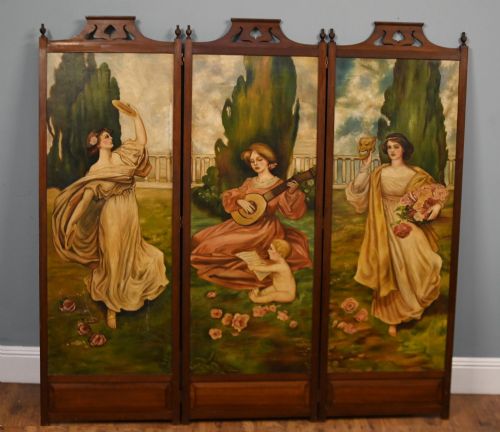
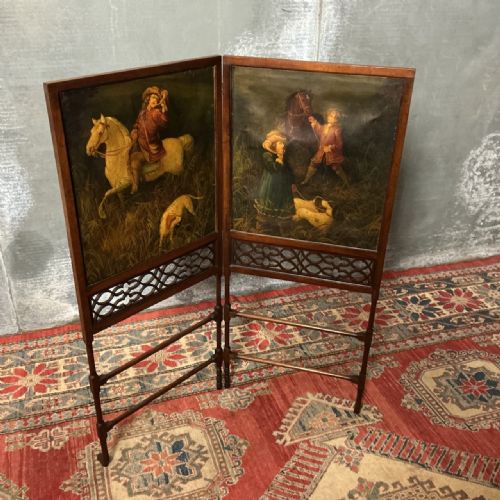
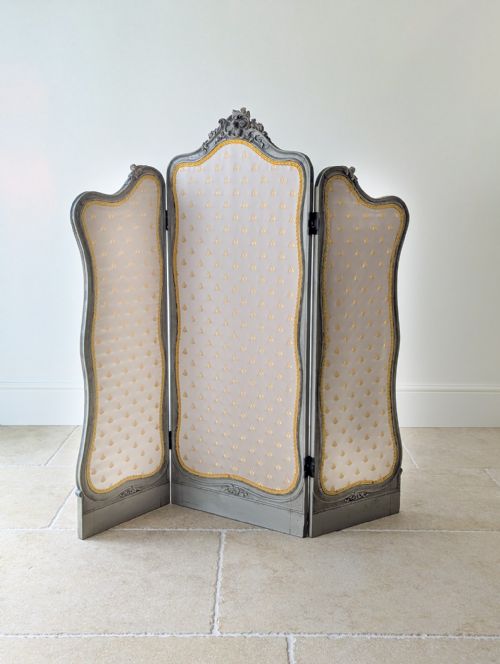
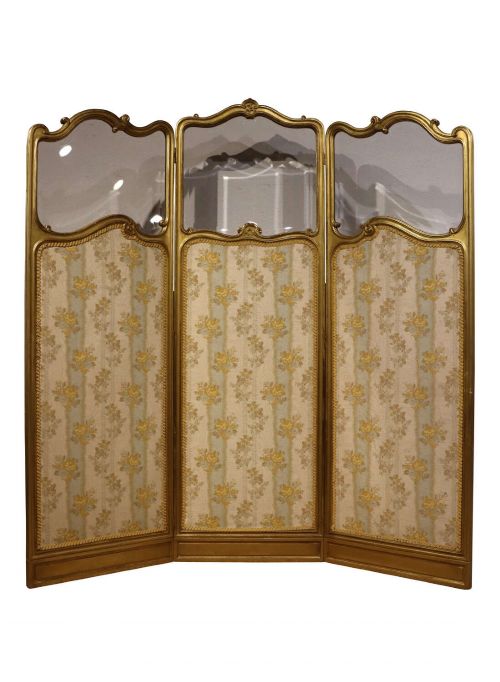
An antique screen divider is a hinged folding panel structure designed to partition interior spaces, create privacy, or temper drafts. The selection includes tall multi-fold room dividers, dressing screens, modesty screens, and smaller tabletop or fire screens.
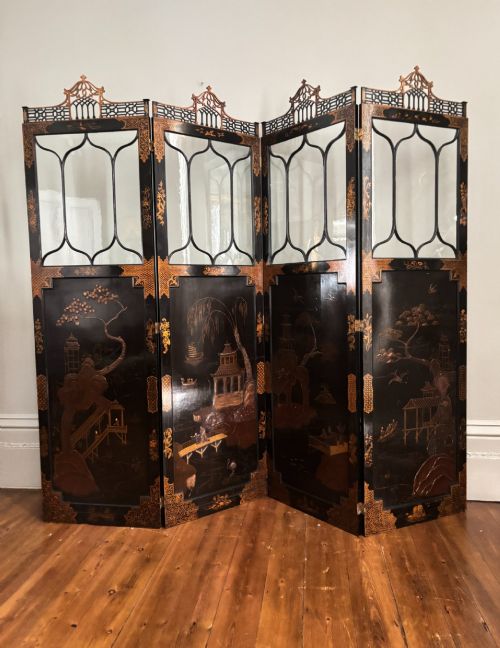
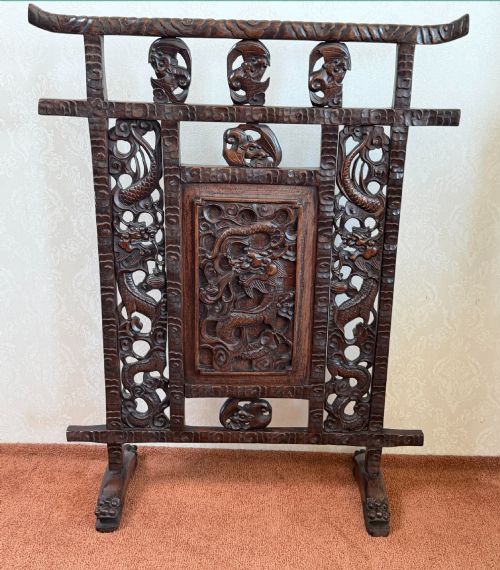
The pieces appearing on this page span from the eighteenth century through the early twentieth century, taking forms such as Chinese Coromandel lacquer panels, Victorian scrap work designs, and French giltwood frames. Folding screens and privacy screens dominate the selection, built with multiple leaves or panels.
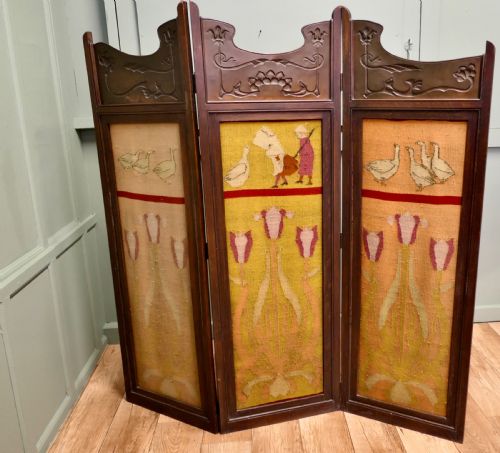
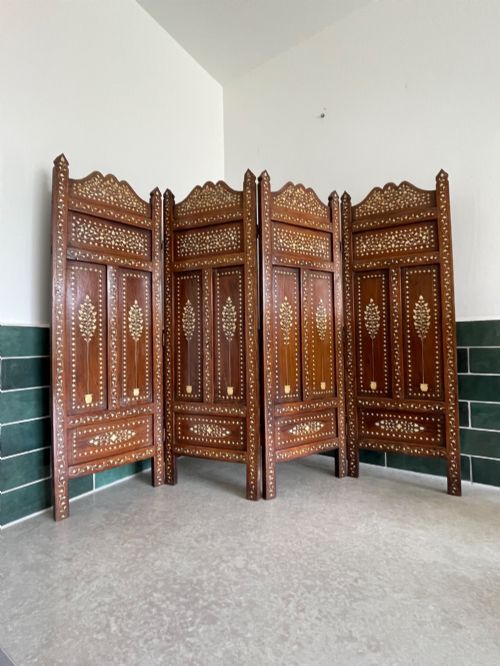
Makers and craftsmen utilised diverse global vocabularies, ranging from British Regency needlepoint and Edwardian inlaid mahogany to Japanese textile panels and Indian padauk woodwork. Each piece reflects the interior planning and decorative taste of its specific period of origin.
Materials and construction
Makers constructed frames from timbers such as mahogany, walnut, oak, padauk, and general hardwood, often adding brass hinges to join the folding panels together. Some examples incorporate giltwood, copper, or painted wooden structures to support the decorative elements within each leaf.
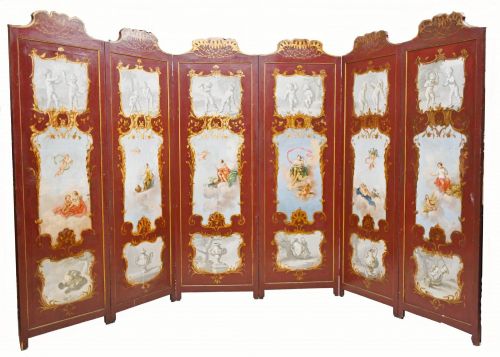
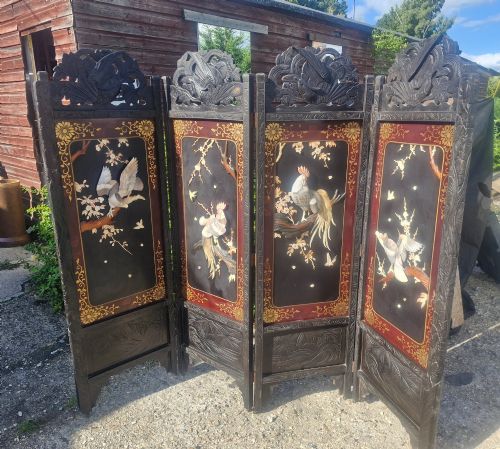
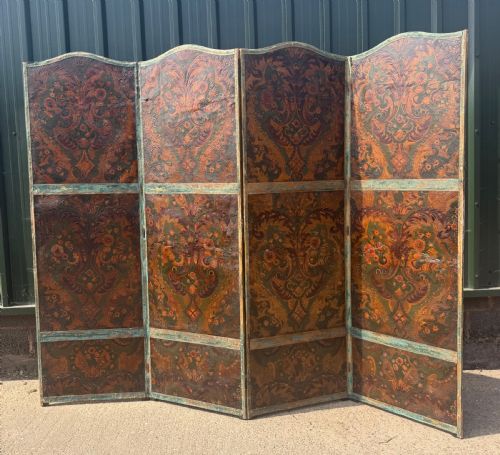
Surfaces received elaborate treatments including hand-painted leather, oil paintings, silk panels, canvas, wool needlepoint, and black or polychrome lacquer. Carved bone figures, hardstone mounts, and deep woodwork define the ornamentation across the diverse regional traditions represented.
Antique Screen Divider Retail Price Guide 2026
Typical asking prices for screen divider among the pieces listed under this phrase on Sellingantiques today, from the lower quarter to the upper quarter. They describe what is for sale here now, not the wider market.
Listings feature folding screens from the 18th, 19th, and early 20th centuries, spanning Victorian, Edwardian, Regency, and Qing Dynasty eras.
What determines quality
Quality rests in the execution of the surface artistry and the integrity of the structural joinery across each panel. Hand-painted leather, deep carving on Coromandel lacquer, and precise inlay distinguish finer examples from standard production pieces.
The complexity of the folding mechanism and the substance of the primary wood frame dictate durability. Pieces featuring heavy hardwoods, bevelled glass, or detailed needlepoint demonstrate greater investment by the original makers.
WILLIAM MORRIS
The Antique Screen Divider Glossary
- Coromandel
- A type of Chinese black lacquer work where designs are incised into the surface and filled with pigments or gold. It provides a dense, multi-layered finish on folding screens.
- Mashrabiya
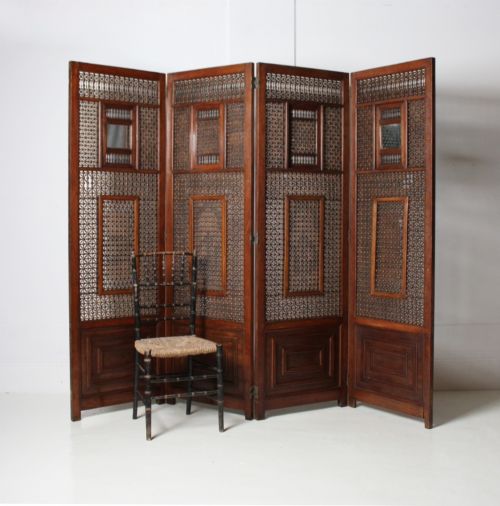
- An architectural wooden screen formed of turned wooden elements arranged in intricate geometric patterns. It originates from Middle Eastern traditions and allows ventilation while providing privacy.
- Modesty screen
- A small folding screen historically used in interiors to provide localized privacy, often positioned near dressing areas. They typically feature painted panels or fabric inserts.
- Scrap work
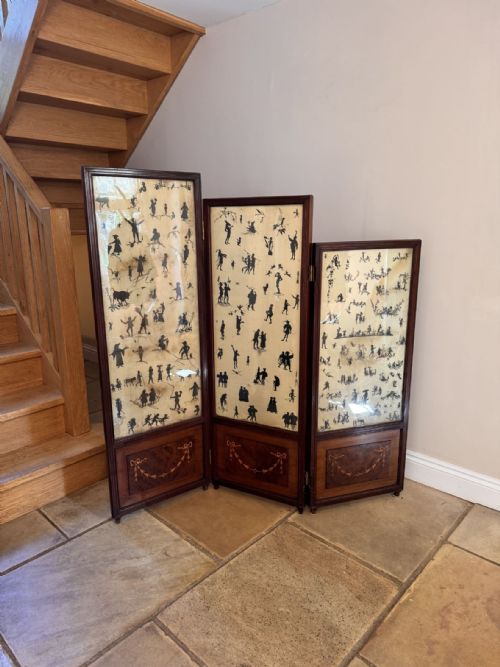
- A decorative technique popular in the nineteenth century involving the application of paper cutouts, prints, or scraps onto a panel surface. The entire composition is then sealed with varnish.
- Fire screen
- A low-standing screen placed in front of an empty fireplace during warmer months to block the hearth view. Many examples incorporate needlepoint, embroidery, or painted panels.
Antique Screen Divider: Frequently Asked Questions
How were antique screen dividers used historically?
These screens partitioned large rooms, sheltered occupants from drafts near fireplaces, and provided privacy for dressing in bedchambers. Their portability allowed owners to alter room layouts and create intimate spaces on demand.
In larger houses, screens directed foot traffic and shielded doors. Table screens functioned as decorative desktop items or miniature partitions.
What materials appear on these dividers?
Construction materials include hardwoods such as mahogany, walnut, oak, and padauk, alongside structural brass and giltwood. Panel inserts feature leather, canvas, silk, wool needlepoint, and paper scrap work.
Asian pieces frequently employ black lacquer, bone, and hardstone mounts. European variants rely heavily on oil paintings and hand-painted textiles.
How do I distinguish eighteenth-century from Victorian screens?
Eighteenth-century examples often feature deep Chinese Coromandel lacquer or hand-painted Dutch and Spanish leather panels with chinoiserie motifs. They emphasise classical proportions and restrained joinery.
Victorian pieces tend toward eclectic styling, incorporating heavy scrap work, Pre-Raphaelite influences, and revival aesthetics. Materials during the nineteenth century also include more varied paper, fabric, and brass elements.
Where should I place a folding screen today?
Folding screens work effectively in open-plan spaces to define separate zones like a home office or dining area. They also function as decorative backdrops against plain walls in bedrooms or hallways.
Placement should account for natural light to protect delicate materials like painted leather or silk panels from fading. Ensure the folding hinges remain free to move without straining the frame.