






Antique Scandinavian Bureau
An antique scandinavian bureau brings structured Northern European storage and writing space into a room through clean proportion and layered timber.
Antique Scandinavian Bureau
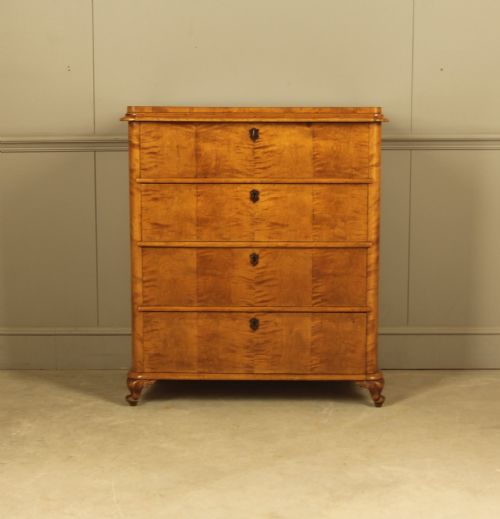
When you search for an antique scandinavian bureau, you encounter tall cabinet bookcases, secretaires, and writing desks originating across Sweden, Norway, and Denmark. These pieces range from eighteenth-century oak and painted pine examples to nineteenth-century Biedermeier and Empire revival forms in birch, masur birch, and burr walnut.
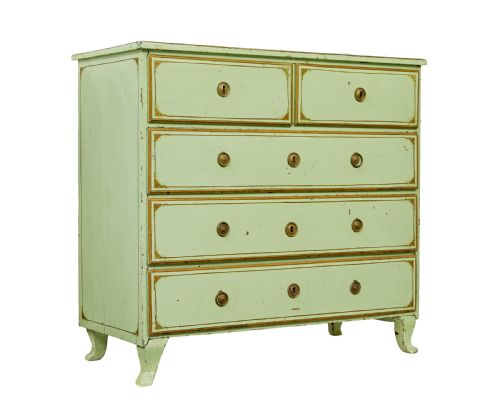
The pieces on this page lean heavily towards nineteenth-century Swedish birch and painted pine constructions, alongside earlier eighteenth-century Gustavian and baroque revival designs. Many combine a sloping fall-front writing flap with internal fitted drawers, sitting above tiered chests of drawers or enclosed bookcase upper sections.
Form follows functional domestic need, balancing display shelves and secure desk compartments with deep storage drawers. The regional styles incorporate distinct local interpretations of neoclassical, baroque, and empire movements adapted to domestic Scandinavian spaces.
What varies in quality
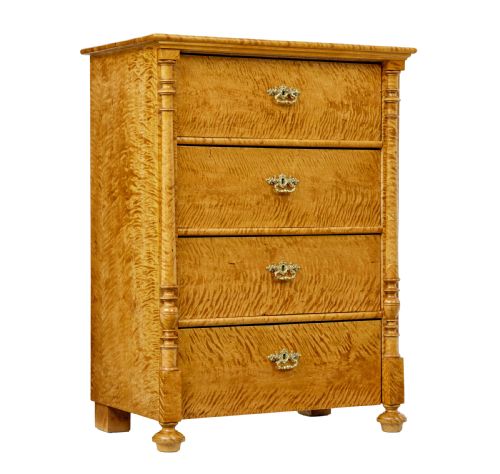
Quality rests in the selection and matching of timber veneers, where highly figured masur, flame, or tiger birch exhibits deep optical movement across the grain. Simpler painted pine pieces rely instead on the crispness of surviving historic paint layers and balanced proportions.
Construction detail distinguishes workshop output, particularly in the precision of internal pigeonholes, secret compartments, and dovetailed drawer boxes. The integration of revival styles, whether Gustavian neoclassical or Empire, reveals the maker's adherence to classical restraint and architectural balance.
Current listings feature nineteenth-century birch and painted pine examples alongside eighteenth-century Gustavian and Norwegian oak pieces.
The Antique Scandinavian Bureau Glossary
- Secretaire
- A desk featuring a concealed writing drawer or a fold-down flap that reveals a fitted interior of small drawers and pigeonholes. It provides a dedicated writing space while maintaining the clean exterior lines of a chest of drawers.
- Gustavian
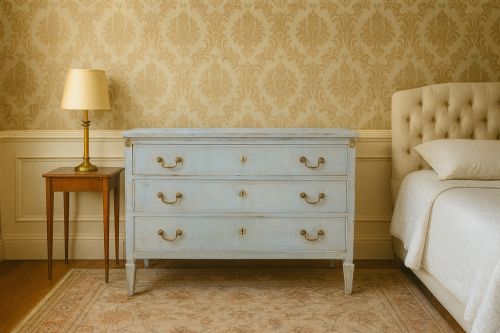
- The Swedish neoclassical style spanning the late eighteenth century, characterised by restrained symmetry, fluted columns, and pale painted finishes. It draws inspiration from French Louis XVI design filtered through a northern sensibility.
- Masur Birch
- A decorative timber featuring intricate, swirling grain patterns created by natural growth distortions in birch trees. Cabinetmakers prized this wood for its distinctive appearance on prominent drawer fronts.
- Bureau Bookcase
- A dual-purpose piece combining a lower writing desk with an upper glazed or panelled cabinet for storing books. These taller structures anchor a room and offer combined display and storage.
- Biedermeier
- A central and northern European design style of the nineteenth century that prioritises comfort, utility, and clean lines over excessive ornamentation. It showcases the natural beauty of native veneers like birch and walnut.
Antique Scandinavian Bureau: Frequently Asked Questions
How do I use a bureau in a modern room?
A bureau serves as a compact workspace that closes shut to hide paperwork and laptop clutter at the end of the day. The internal compartments keep stationery organised while the surface provides a stable area for writing.
Placed in a living room, hallway, or bedroom, the piece offers vertical storage through its chest drawers or upper bookcase shelves while maintaining a neat footprint.
How do I tell Gustavian pieces apart from Biedermeier?
Gustavian pieces typically date from the late eighteenth century and feature painted finishes, neoclassical symmetry, and carved details like fluting. They lean towards light, airy aesthetics inspired by French court styles.
Biedermeier furniture belongs mostly to the nineteenth century and celebrates unpainted, polished wood surfaces such as birch and walnut. The focus shifts toward clean, architectural lines and the natural grain of the timber.
What woods were used for these bureaus?
Makers relied heavily on native Northern European timbers, primarily pine for painted furniture and birch for unpainted pieces. Pine served as a sturdy carcase wood, often finished with historical paint.
For finer surfaces, cabinetmakers selected decorative veneers including flame birch, masur birch, tiger birch, and burr walnut, alongside occasional uses of oak.