


Antique Satsuma Crackle Glaze
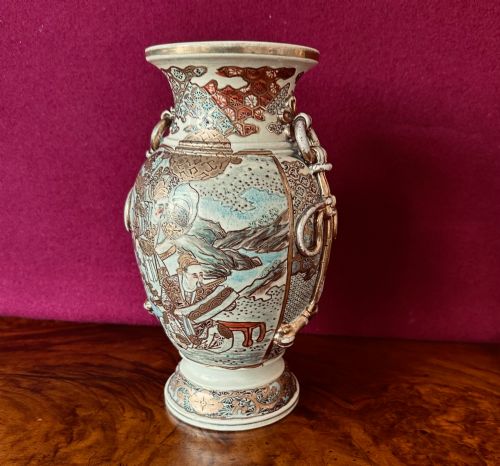
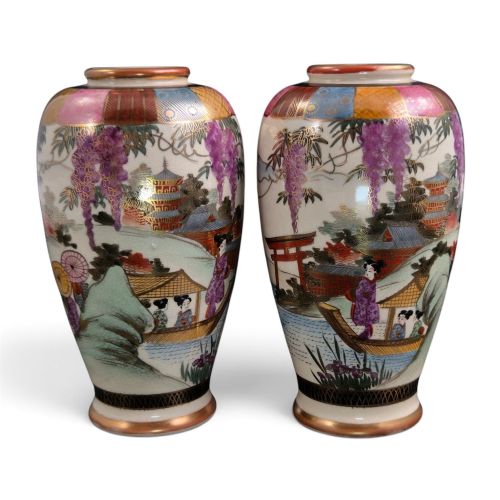
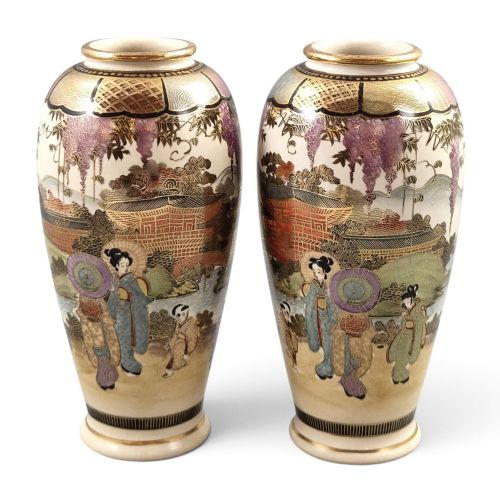
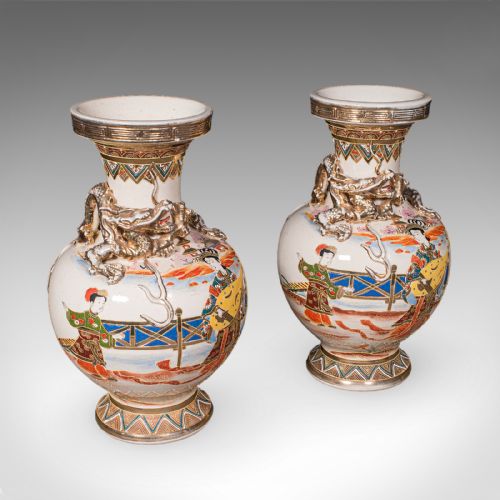
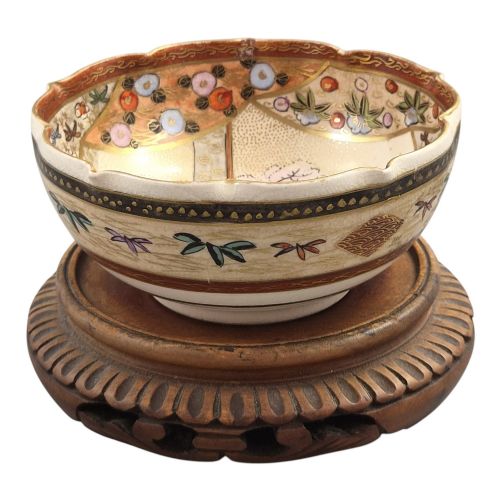
These antique satsuma crackle glaze pieces combine intricate hand-painted Japanese ceramic forms with distinctive networks of fine crazing.
Antique Satsuma Crackle Glaze
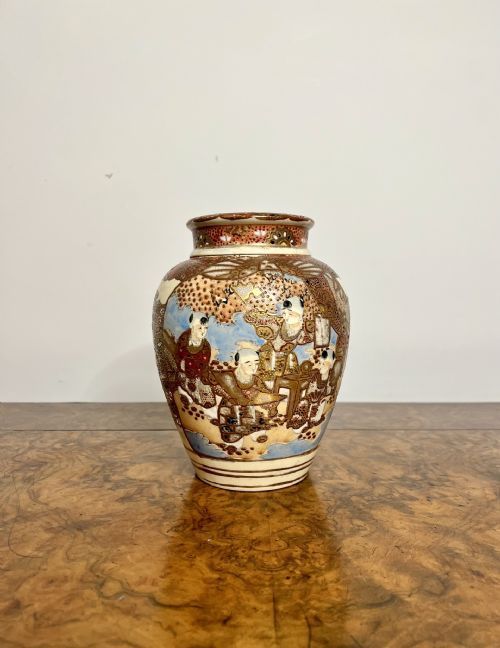
When you search for antique satsuma crackle glaze, you encounter earthenware vessels characterised by an ivory or cream body covered in a network of micro-cracks beneath the surface. The pieces appearing here span from the late nineteenth century into the early twentieth century, encompassing the Meiji, Taisho, and early Showa periods.
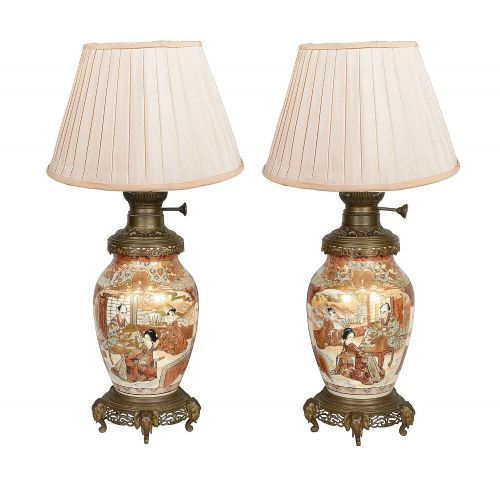
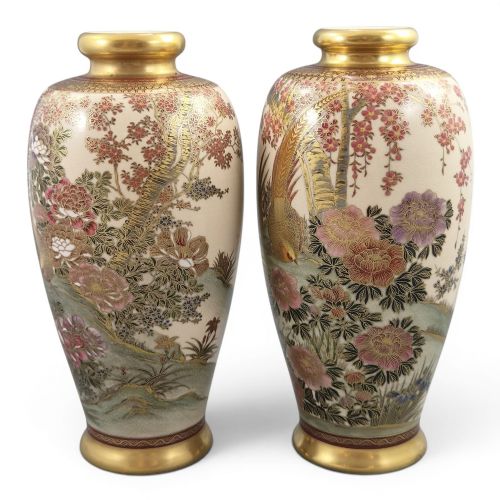
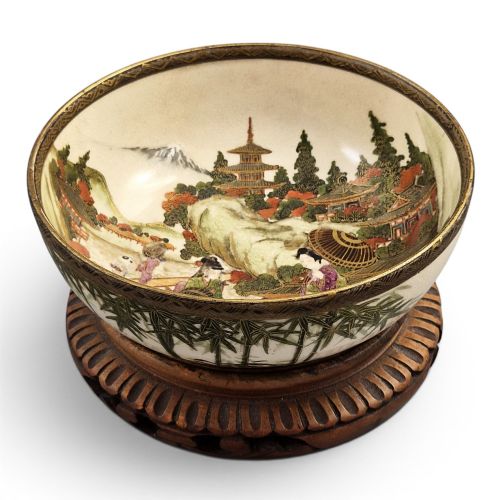
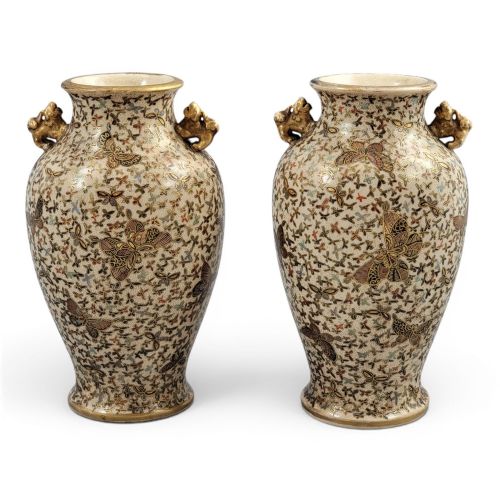
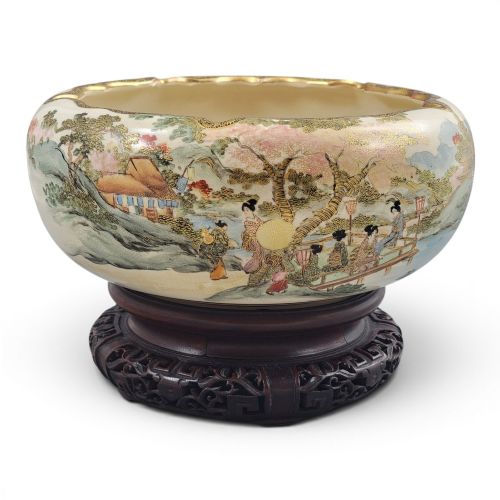
The primary forms found in this selection include baluster vases, decorative bowls, ginger jars, tea caddies, and table lamps. Many items originate from notable production centres such as Kyoto and Kobe, reflecting traditional Japanese ceramic artistry intended for both domestic use and export.
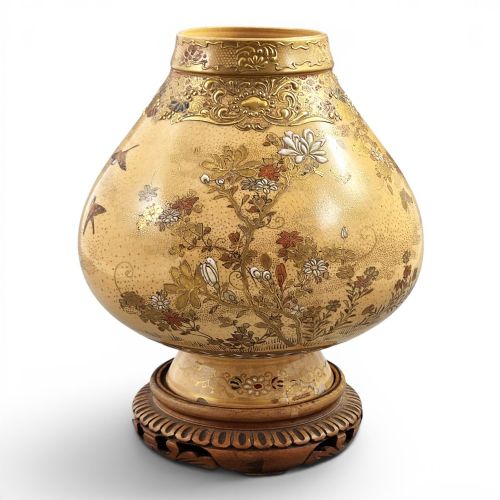
You will encounter pairs, garnitures, and individual items, often decorated with figural scenes, landscapes, butterflies, or floral motifs. The integration of cobalt grounds and intricate border patterns frequently accompanies the signature crackled glaze finish.
How they were made
Makers formed these items using a low-fired earthenware body which naturally accepted a translucent glaze prone to intentional or characteristic crazing. Artisans then applied detailed enamel pigments and gold leaf or gilt detailing over the glaze before secondary firing.
Techniques such as moriage built up raised slip decoration to give dimensionality to robes and floral elements. Wood bases occasionally accompanied larger vases and bowls to complete the finished presentation.
Listings feature earthenware forms spanning the Victorian era through the early Showa period, predominantly utilising enamel, gold leaf, and glaze.
What varies in quality
The refinement of the hand-painted brushwork dictates the distinction between standard production and masterwork output. Pieces bearing signatures from renowned studios and artists display exceptional precision in figural expressions and landscape depth.
The density and distribution of the crackle glaze interact with the richness of the gilding to establish visual harmony across the ceramic surface. Superior execution involves balanced compositions where enamels and gold leaf remain crisp and precisely applied within the borders.
Manpei·Gyokkō·Kinkōzan Workshop·Kinzan·Shizan·Ryuzan·Chosei·Tokyo Taizan·Seiko-en Chokei·Choshuzan
The Antique Satsuma Crackle Glaze Glossary
- Satsuma ware
- A type of Japanese earthenware originating from Satsuma Province, traditionally featuring a cream-coloured crackled glaze decorated with polychrome enamels and gilding. This ceramic style gained significant popularity during the Meiji period for international export.
- Moriage
- A ceramic technique where clay slip is piped onto the surface in raised dots or lines before firing and painting. This method creates a tangible, textured relief effect particularly visible on garments and floral motifs.
- Meiji Period
- The era in Japanese history spanning from 1868 to 1912, marked by the opening of trade with Western nations. Satsuma pieces from this time often exhibit elaborate detail and skilled artistry.
- Rakan
- Depictions of enlightened followers of the Buddha, frequently appearing in traditional Japanese painting and ceramic decoration. These figures are often shown in groups with distinct facial expressions.
- Koro
- A traditional Japanese incense burner, typically featuring a tripod base and a perforated cover. These ceramic vessels allowed scented smoke to drift through decorative openings.
Antique Satsuma Crackle Glaze: Frequently Asked Questions
What is satsuma crackle glaze?
Satsuma crackle glaze refers to the fine network of microscopic fissures intentionally or naturally formed in the translucent clear glaze of earthenware ceramics.
This distinct crazing pattern provides a characteristic textured background that absorbs subtle staining to highlight the delicate surface network beneath the hand-painted enamels.
How do I identify Meiji period pieces?
Meiji period pieces date between 1868 and 1912, aligning with an era of significant artistic exchange and export directed towards Western markets.
They frequently display intricate brushwork, dense gilding, and artist signatures or studio stamps on the underside.
Were these items made for export?
A substantial proportion of these decorative wares were produced specifically for international exhibitions and foreign markets during the late nineteenth and early twentieth centuries.
Consequently, many forms combined traditional Japanese iconography with decorative formats suited to European and American interiors.
How should I display these ceramics?
Display these earthenware items away from direct sunlight and dramatic temperature fluctuations to protect the enamel pigments and delicate gilding.
Stable surfaces and appropriate spacing allow the intricate hand-painted details and distinctive crackle glaze to remain clearly visible.