


Meiji Japanese Art Pottery
Meiji japanese art pottery brings together intricate earthenware, porcelain, and stoneware vessels from a transformative era of Japanese craftsmanship.
Meiji Japanese Art Pottery
Meiji japanese art pottery encompasses a diverse selection of decorative vases, bowls, jardinieres, and figural okimono created during the late nineteenth and early twentieth centuries. These objects reflect the sophisticated ceramic traditions of regional kilns operating under imperial and international influence.
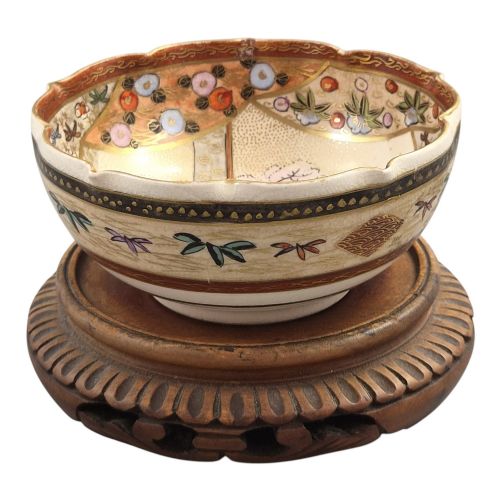
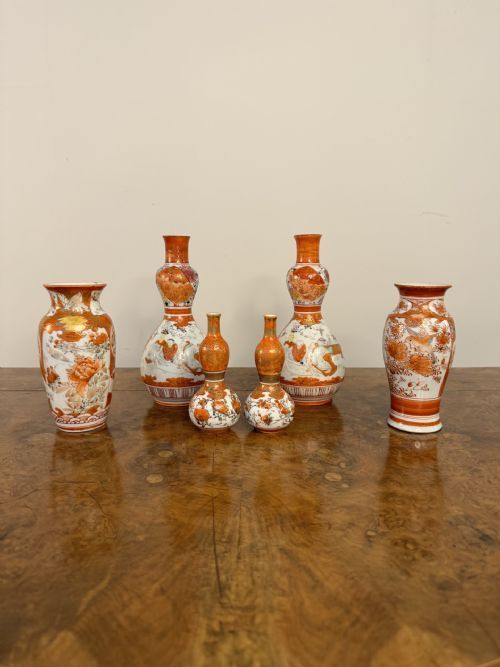
Vessels and figures frequently surface from distinct stylistic centres such as Kyoto and Yokohama, capturing the aesthetic shifts of the Meiji and Taisho periods. Buyers encounter everything from small Satsuma bowls to monumental Kutani and Sumida Gawa vases.
Materials and Technique
Potters utilised earthenware, porcelain, and heavy stoneware bodies, applying rich glazes, enamel pigments, and gold leaf to achieve complex surface textures. Flambé glazes and intricate underglaze painting required precise kiln control and skilled brushwork.
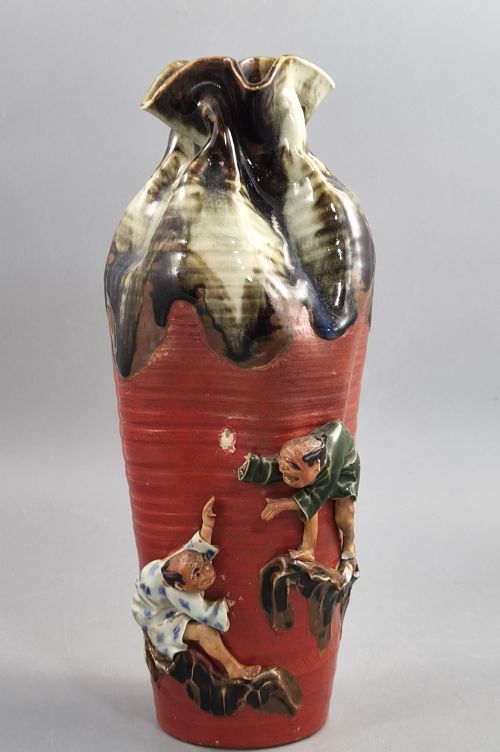
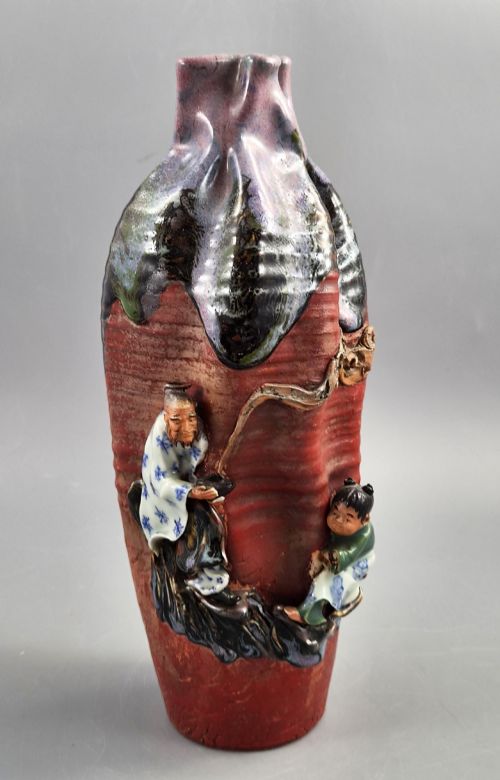
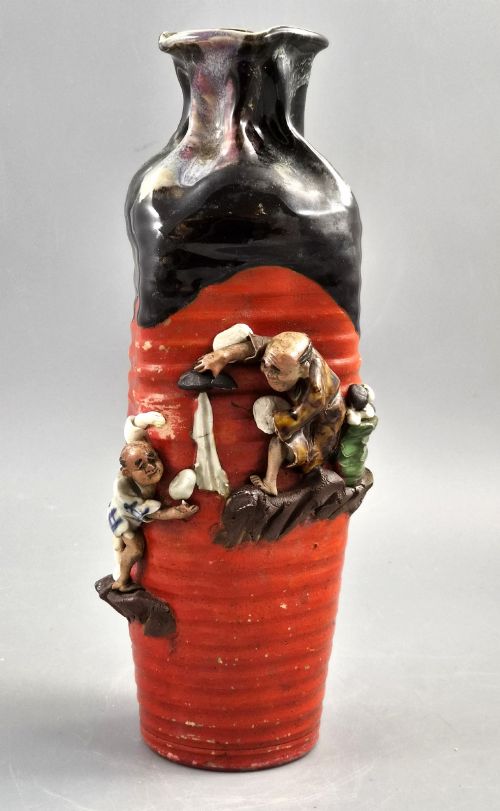
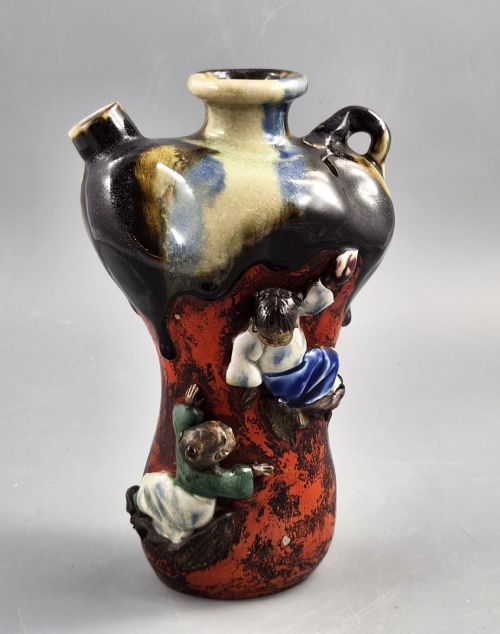
Hand-modelled additions, such as climbing figures on Sumida Gawa vessels or relief-moulded dragons on Satsuma vases, demonstrate collaborative studio practices between throwers and sculptors.
Several vases feature tiny, determined figures caught permanently mid-climb around the rim, refusing to reach the top.
Evaluating Execution
Quality rests upon the crispness of the modelling and the control of the enamel and gilt work across complex surfaces. Pieces signed by recognised makers display superior handling of form, balance, and decorative density compared to anonymous workshop output.
The integration of sculptural elements, such as applied figures or high-relief dragons, distinguishes ambitious studio pieces from standard commercial wares of the period.
Inoue Ryosai·Makuzu Kozan·Kinkozan·Hotoda·Ban ni
The Meiji Japanese Art Pottery Glossary
- Okimono
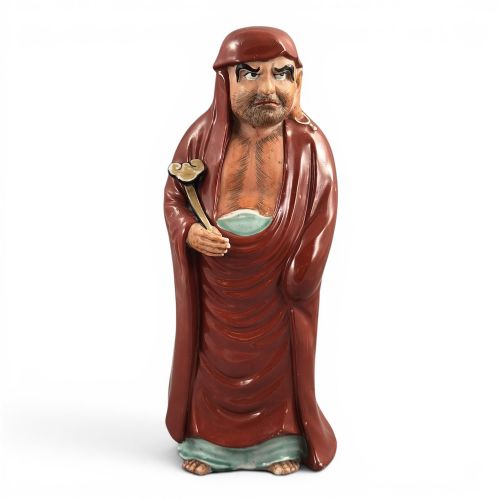
- A standalone Japanese decorative figurine designed for display on a shelf or in a tokonoma alcove. These sculptures portray deities, figures, and animals with meticulous attention to detail.
- Satsuma
- A type of earthenware originating from the Satsuma Domain, traditionally characterised by an ivory-coloured crackle glaze enriched with polychrome enamels and gilding. Kyoto workshops became prominent producers of this ware.
- Sumida Gawa
- A distinct style of pottery associated with Tokyo kilns, known for heavily textured flambe glazes and applied modelled figures climbing across the exterior of the vessel.
- Kutani
- Japanese porcelain or pottery traditionally associated with the Ishikawa prefecture, noted for bold colours and intricate pictorial designs. Pieces often feature narrative scenes or dense floral patterns.
- Suiban
- A shallow decorative basin used for holding water, often employed in floral arrangements or as a brush washer. These vessels showcase refined ceramic bodies and stable, flat bases.
Meiji Japanese Art Pottery: Frequently Asked Questions
How do I identify Satsuma pottery?
Satsuma pottery is recognised by its distinctive cream or ivory earthenware body covered in a fine network of transparent crackle glaze. This surface serves as a canvas for detailed enamel painting and gold leaf highlighting.
Many pieces bear artist or studio signatures on the base, often originating from Kyoto or Yokohama production centres during the late nineteenth century.
What is Sumida Gawa pottery?
Sumida Gawa pottery refers to distinctive ceramic pieces produced in the Tokyo area, featuring dripping flambé glazes and three-dimensional figures modelled in high relief. These vessels often depict sages, children, or mythical subjects climbing along the rims and sides.
The tactile, unglazed portions of the clay body contrast deliberately with the glossy, colourful glaze runs.
How should I display these ceramics?
These decorative vessels and figures suit stable surfaces away from direct sunlight and temperature fluctuations that might affect historic glazes. Placing them where natural light catches the gilding and enamel work enhances their visual depth.
Heavier items like jardinieres and large vases require sturdy support due to their substantial earthenware and stoneware construction.
Are these pieces signed by makers?
Many fine pieces feature painted, impressed, or incised signatures and seals identifying the studio, artist, or kiln on the underside. These marks help attribute works to notable makers active during the Meiji and Taisho periods.
Unsigned pieces remain common, reflecting the large volume of commercial and cooperative workshop output from the era.