

Antique Satsuma Ceramics
Antique satsuma ceramics bring intricate Japanese artistry into a room through finely painted earthenware decorated with enamel and gold leaf.
Antique Satsuma Ceramics
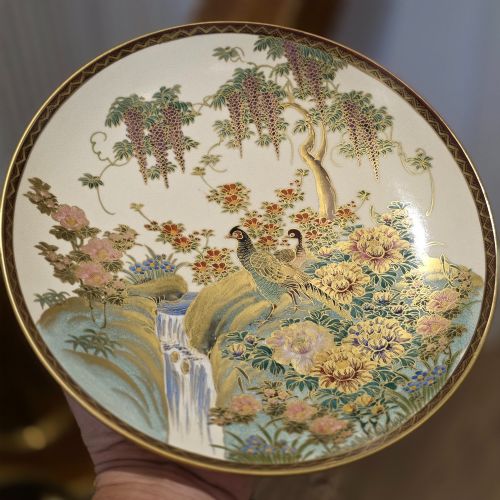
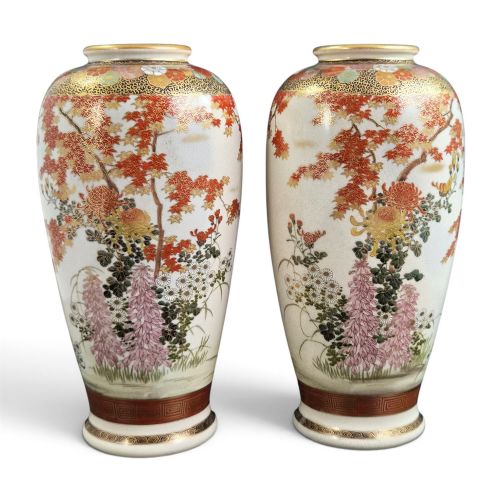
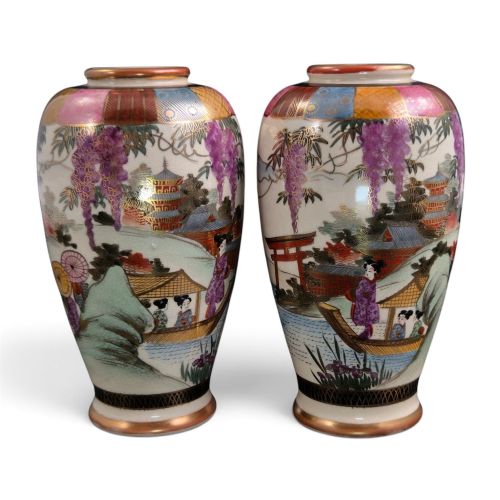
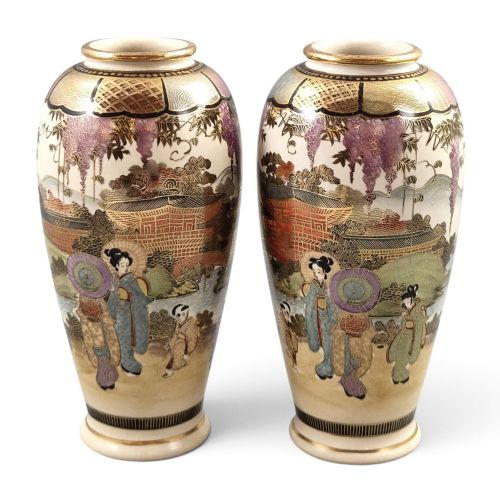
Antique satsuma ceramics comprise a distinct category of Japanese export pottery shaped into vases, bowls, jars, and figures. Collectors seek out these pieces for their dense figurative scenes and detailed floral motifs.
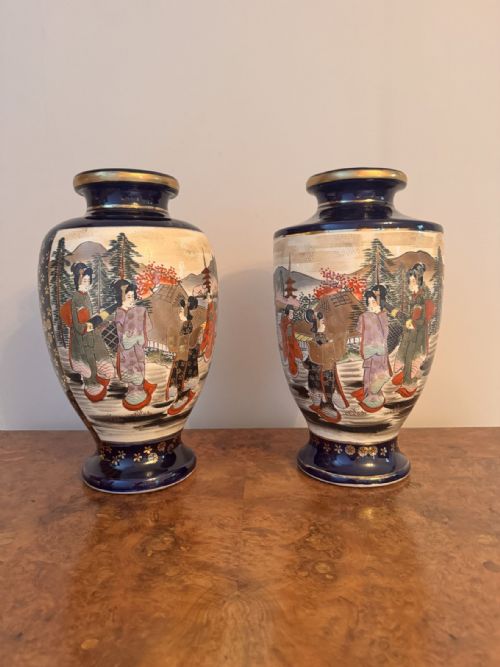
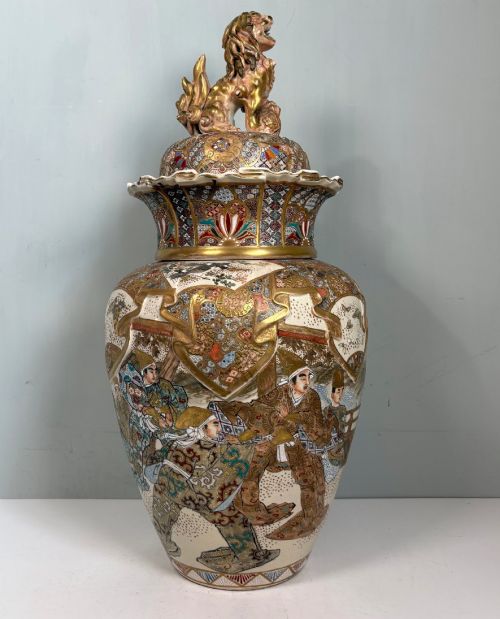
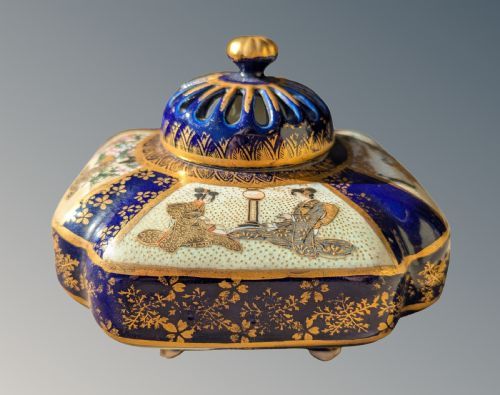
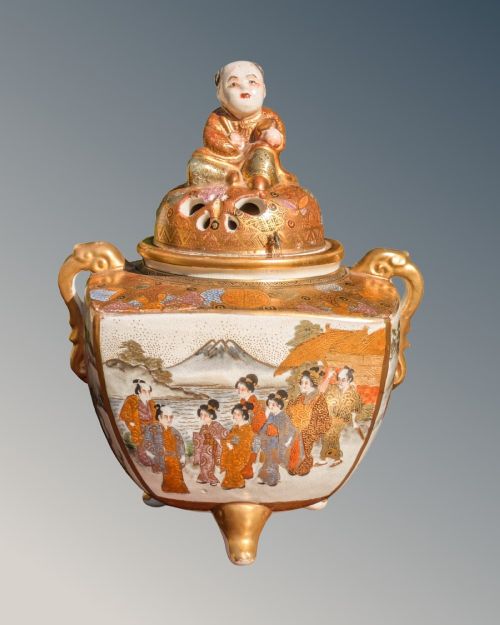
The selections encountered on this page span the nineteenth century and the early decades of the twentieth century, largely originating from the Meiji, Taisho, and Showa periods. Vases and decorative pairs dominate the selection, alongside chargers, lidded koro incense burners, and okimono figures.
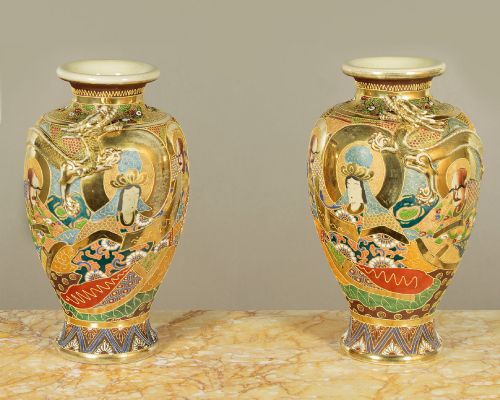
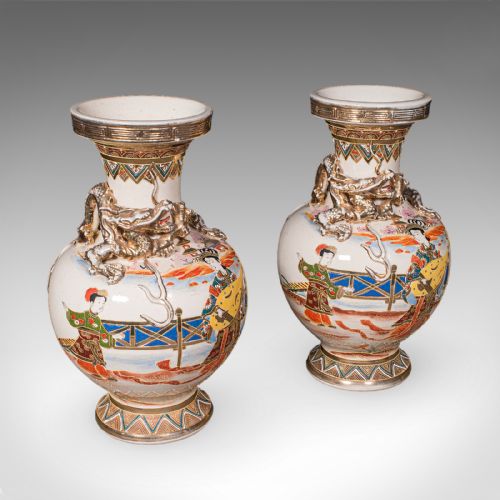
Workshops in Kyoto and Kobe produced much of the surviving output, catering to both domestic tastes and international export markets. Buyers find both baluster forms and hexagonal vessels decorated with traditional subjects such as arhats, dragons, wisteria, and thousand-butterfly patterns.
Materials and Technique
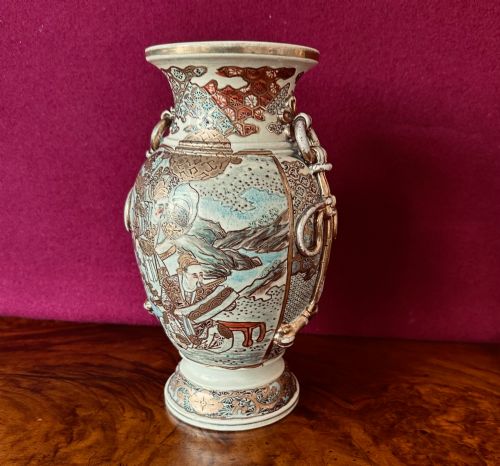
Makers shaped these wares from earthenware, applying a characteristic ivory-coloured crackle glaze that formed the pale canvas for subsequent painting. Artisans then built up intricate pictorial surfaces using polychrome enamel and raised gold leaf.
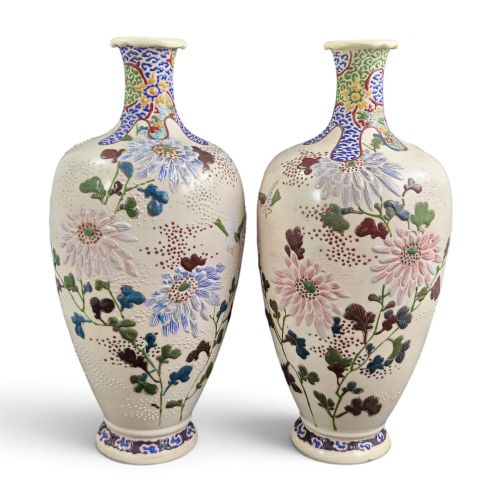
Techniques such as moriage involved trailing slip in raised dots and lines to create textured details on garments, chrysanthemums, and borders. Master workshops combined fine brushwork with heavy gilding to achieve the layered richness seen on large chargers, ginger jars, and plates.
Several Satsuma vases depict ancient sages accompanied by dragons, proving that even immortals occasionally needed a formidable pet.
Assessing Quality and Execution
Quality in antique satsuma ceramics rests upon the precision of the brushwork and the restraint of the composition. Finer pieces display meticulously rendered facial expressions on figures and cleanly applied moriage work that enhances rather than clutters the design.
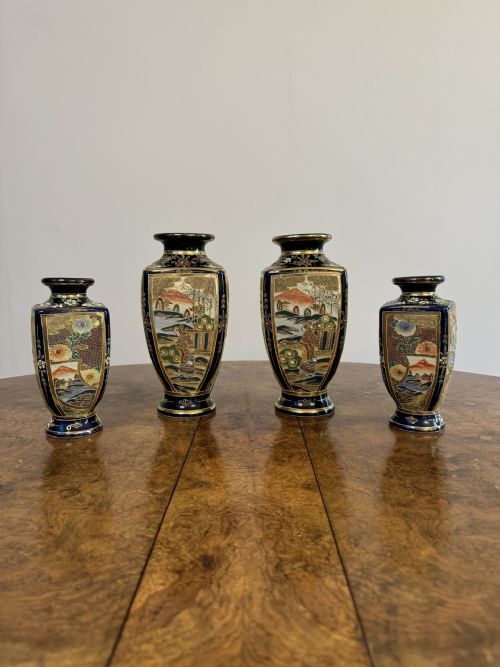
The application of gold leaf and enamel also distinguishes standard export output from the work of celebrated makers. Superior examples maintain crisp lines and balanced proportions across large surfaces such as garniture sets, temple jars, and tall baluster vases.
Kinkozan·Koshida·Hotoda·Manpei·Kozan·Shizan·Kinzan·Toshozan·Chikusai·Makuzu Kozan II
The Antique Satsuma Ceramics Glossary
- Moriage
- A decorative technique where slip is piped onto the earthenware body to create raised, textured patterns before glazing and enamelling.
- Koro
- A traditional Japanese incense burner, typically fitted with a pierced lid and resting on three or more small feet.
- Okimono
- A small decorative figurine or carving intended for display on a tokonoma alcove or tabletop.
- Garniture
- A matching set of vases or jars designed to be displayed together as a decorative unit on a mantelpiece or cabinet.
- Baluster
- A vase form with a rounded body that tapers toward the neck, resembling a traditional architectural support.
Antique Satsuma Ceramics: Frequently Asked Questions
How do I care for antique satsuma ceramics?
Dust these pieces gently with a soft, dry brush to protect the delicate enamel and gold leaf layers. Avoid using water, chemical cleaners, or abrasive cloths that can damage the soft earthenware body and the historic glaze.
Keep the ceramics out of direct sunlight to prevent fading in the polychrome enamels. Display them on stable surfaces away from high traffic areas where vibrations might cause a vase or bowl to slip.
Were these pieces made for export?
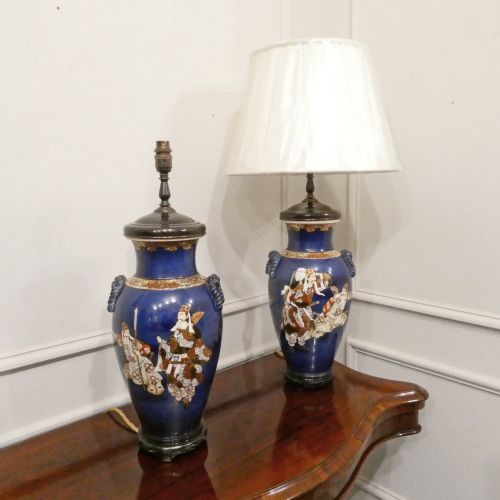
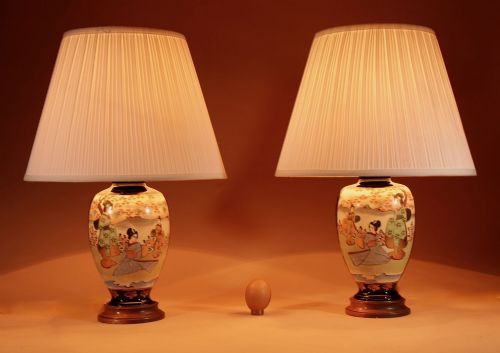
Many satsuma ceramics from the late nineteenth and early twentieth centuries were produced specifically for Western markets following the reopening of Japan. International buyers favoured ornate decorative schemes, leading to the creation of large vases, garniture sets, and elaborate table lamps.
At the same time, certain workshops continued to supply domestic collectors with smaller items like hanami bowls and incense burners. This dual production explains the variety of forms found on the market today.
How can I tell the Meiji period pieces apart?
Meiji period satsuma ceramics typically display dense, highly detailed painting executed with exceptional precision. Master workshops during this era often incorporated signature cartouches on the base alongside complex figural scenes involving arhats or court figures.
Later pieces from the Taisho and Showa periods sometimes adopt simpler compositions or heavier geometric framing. Comparing the fineness of the moriage work and the crispness of the gilding helps clarify the date of production.
What is the crackle glaze on satsuma ware?
The crackle glaze is a deliberate stylistic feature resulting from differential cooling rates between the clay body and the clear glaze. This network of fine microscopic lines gives the surface an ivory tone and a soft texture.
Over decades, subtle staining can settle into these tiny fissures from handling and age. This natural patination is characteristic of genuine nineteenth-century earthenware and forms part of the physical history of the object.