


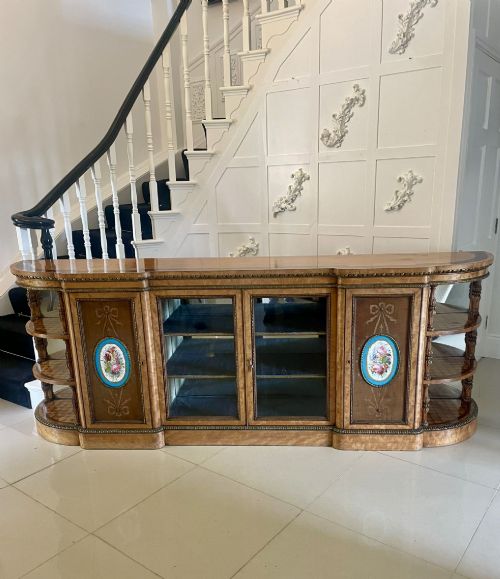
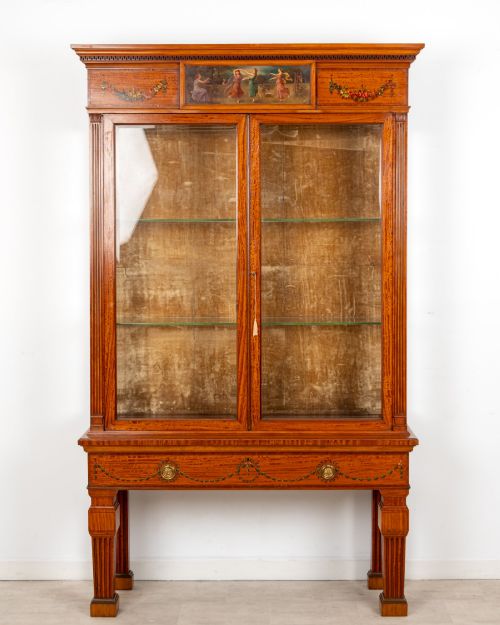
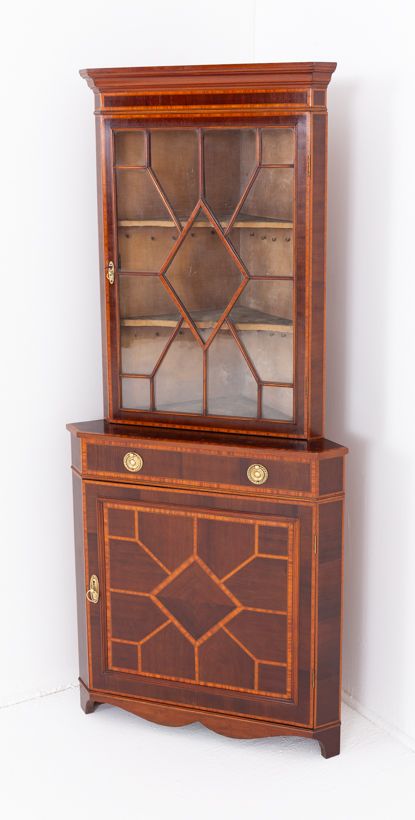
Antique Satinwood Vitrine
An antique satinwood vitrine brings a pale, luminous golden timber and careful glass display to a room, showing off small collections with exceptional polish.
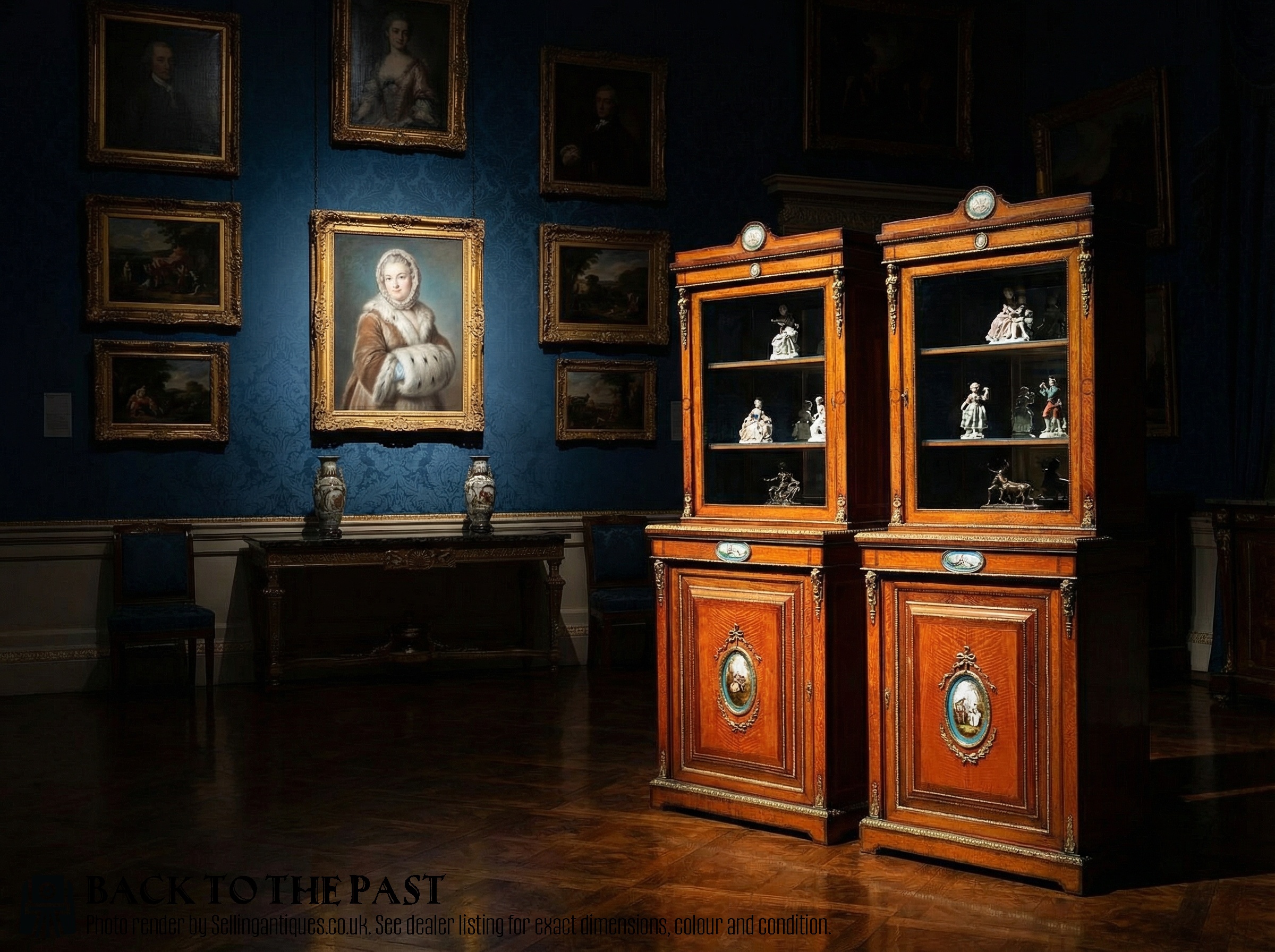
Antique Satinwood Vitrine
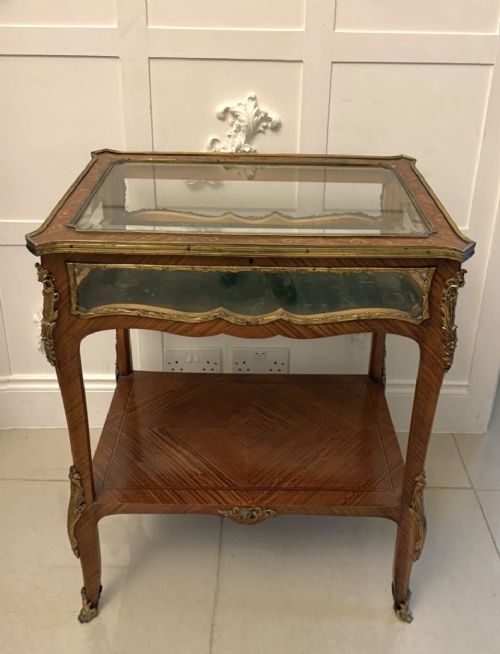
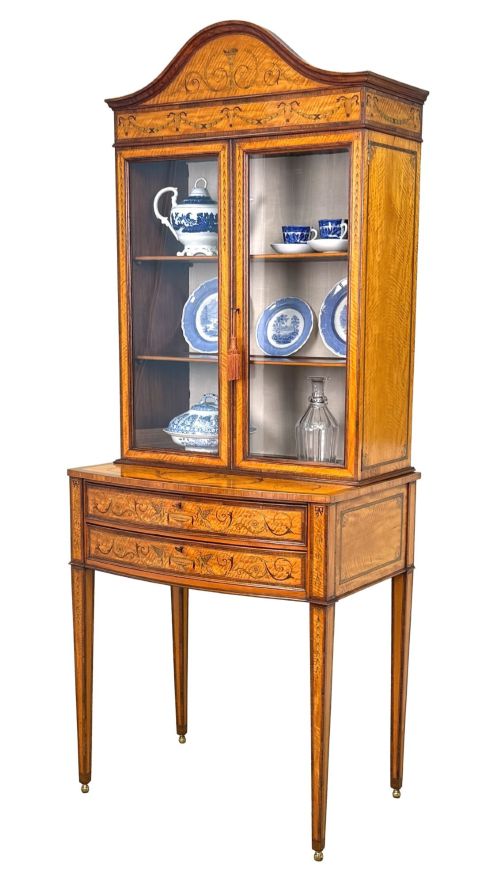
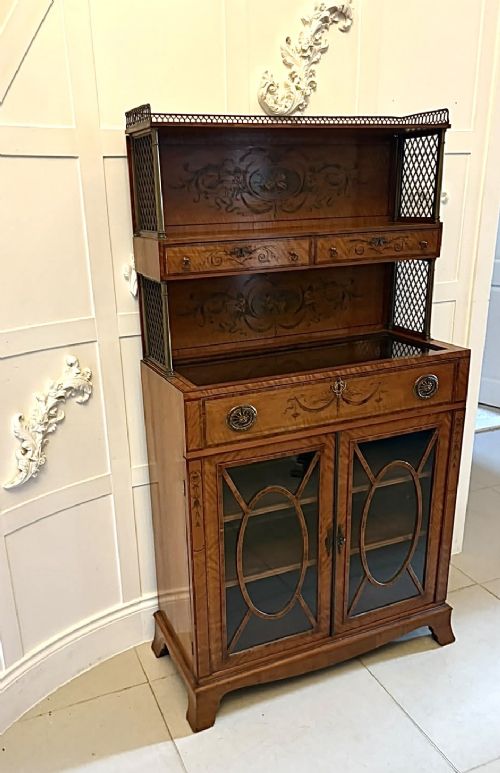
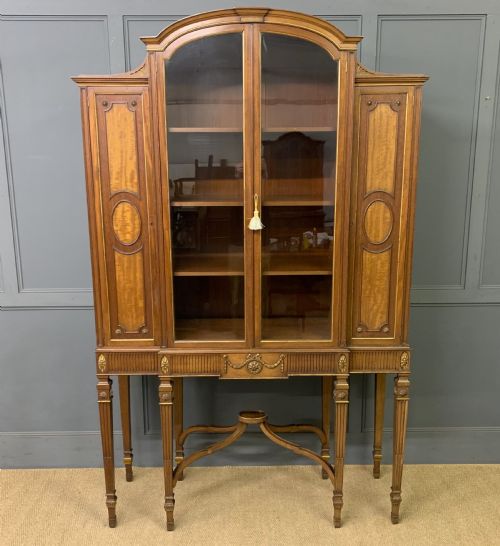
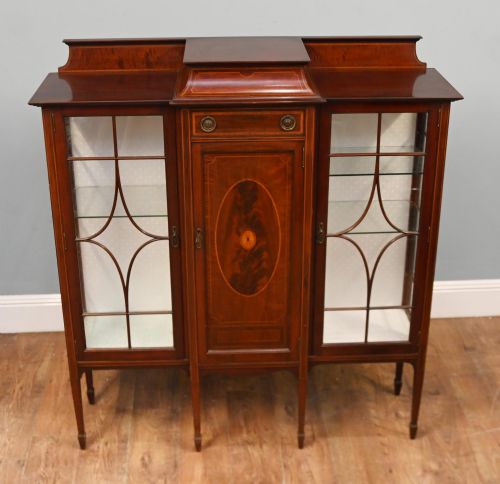
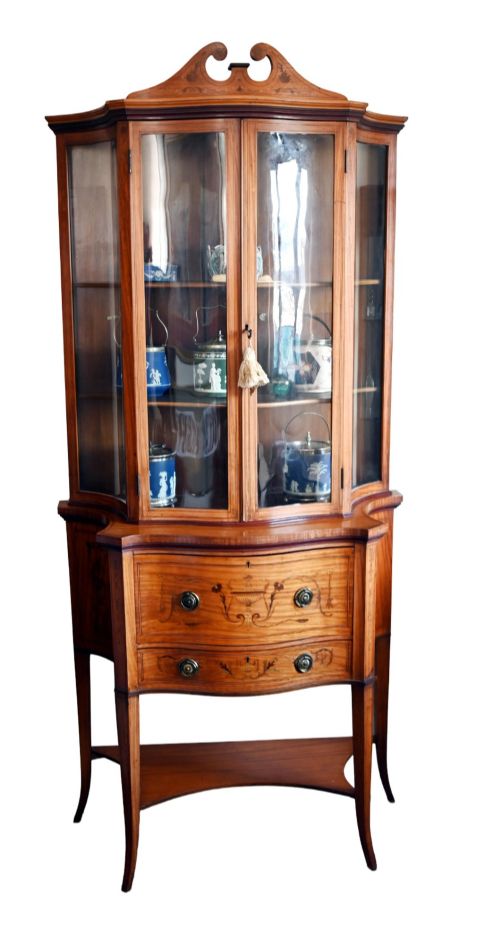
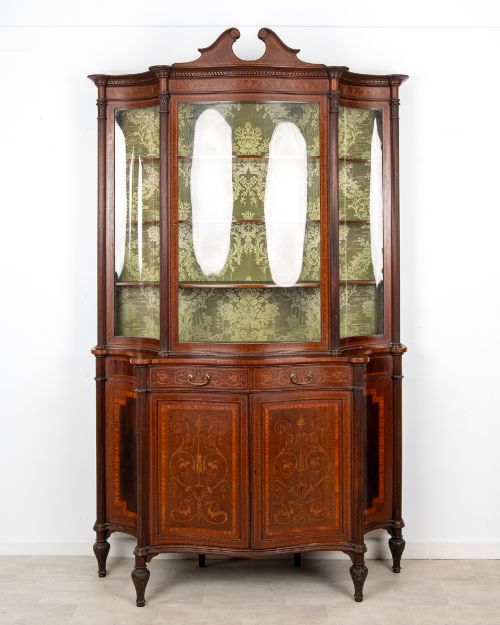
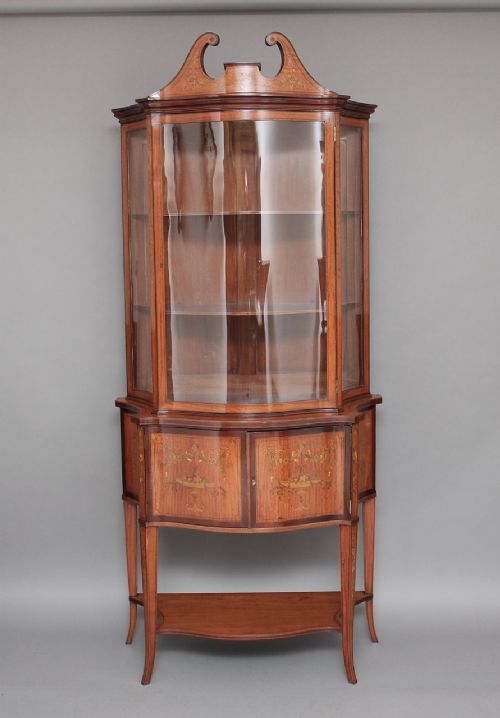
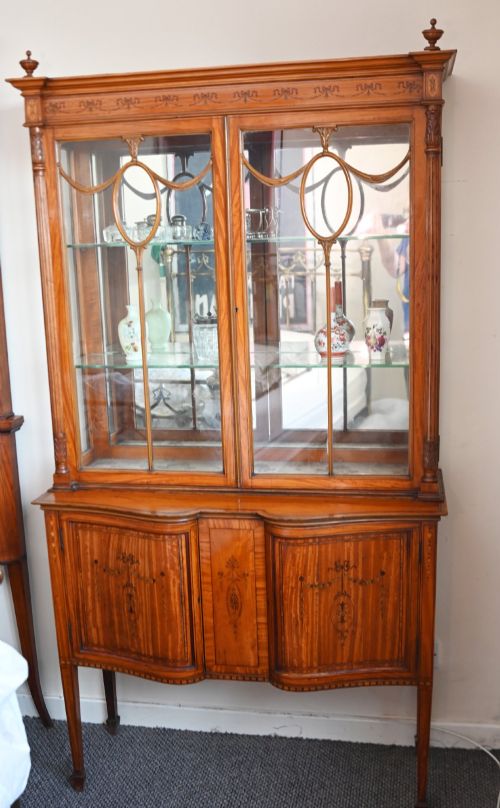
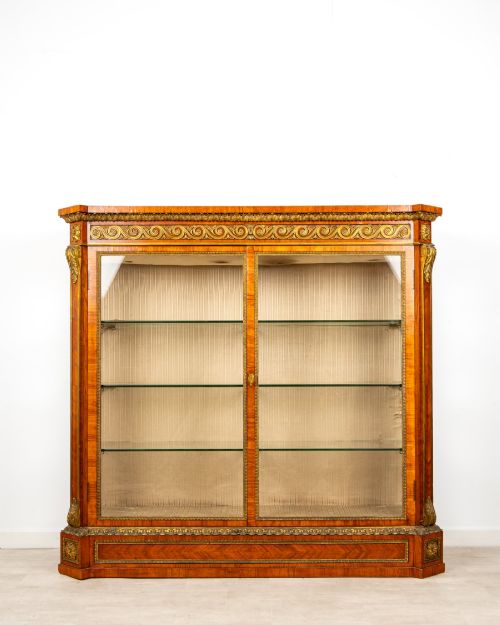
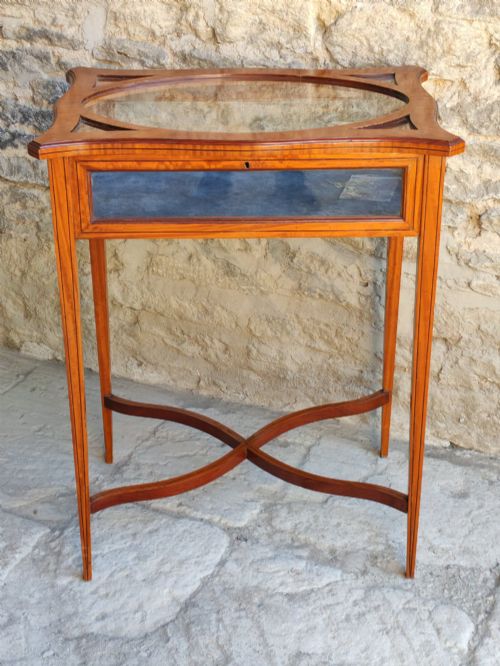
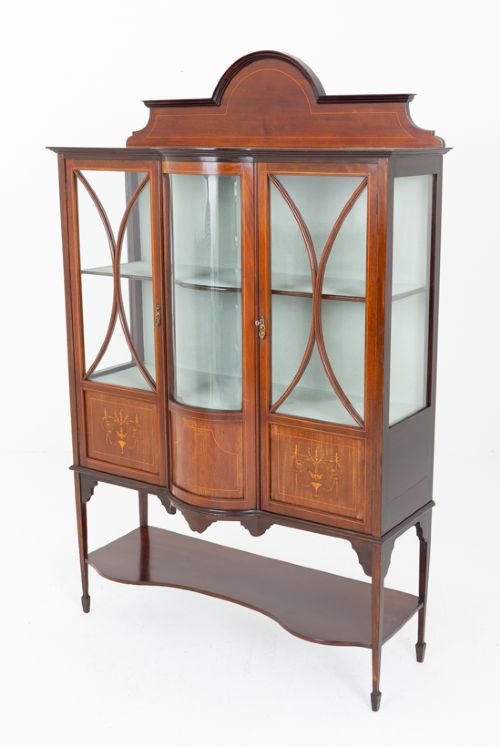
When searching for an antique satinwood vitrine, buyers encounter pieces primarily from the Victorian and Edwardian eras, spanning the latter half of the nineteenth century into the early twentieth century. The selection ranges from upright display cabinets and corner units to low bijouterie tables and bow-fronted credenzas.
The dominant aesthetic draws heavily on the Sheraton Revival and Louis XVI Revival styles, often incorporating delicate painted motifs or contrasting mahogany banding. Most examples serve to protect and exhibit curated objects behind glazed doors or glass tabletops.
Materials and construction methods
Cabinetmakers utilised rich satinwood veneers over sturdy foundational timbers like mahogany, often embellishing surfaces with intricate marquetry, fruitwood inlay, and painted details. Structural elegance was maintained through slender framing and glazed panels designed to maximise light penetration.
Metal mounts in ormolu, brass, or gilt-bronze frequently accent the corners, borders, and lockplates, while interiors lined with fabric, velvet, or mirror glass provide a reflective backdrop for displayed items.
Antique Satinwood Vitrine Retail Price Guide 2026
Typical asking prices for satinwood vitrine among the pieces listed under this phrase on Sellingantiques today, from the lower quarter to the upper quarter. They describe what is for sale here now, not the wider market.
Some Edwardian bijouterie tables were built with hinged glass lids so a lady could inspect her rings without getting up.
Distinctions in craftsmanship and design
The hierarchy of quality rests on the crispness of the marquetry, the choice of timber figuring, and the pedigree of the workshop responsible for the construction. Pieces bearing documented signatures or attributions to prominent makers command greater interest due to superior joinery and refined proportions.
Subtleties such as hand-painted panels, fire-gilt bronze mounts rather than plated brass, and complex curved glass door fronts elevate an example above standard commercial production.
Hampton & Sons·Edwards & Roberts·H. J. Hatfield & Sons·Maple & Co.·James Hicks·Jewell of Holborn
The Antique Satinwood Vitrine Glossary
- Satinwood
- A lustrous tropical timber prized for its golden sheen and smooth grain, frequently used as a fine veneer on high-status furniture.
- Vitrine
- A glass-fronted cabinet or table designed specifically for the display of curiosities, porcelain, and precious objects.
- Marquetry
- Decorative veneer work arranged in pictorial or geometric patterns using various coloured woods and shell.
- Bijouterie table
- A shallow glazed display table, often standing on slender legs, traditionally utilised for holding jewellery and small ornaments.
- Ormolu
- Gilded bronze mounts and decorative trimmings applied to furniture during the eighteenth and nineteenth centuries.
- Sheraton Revival
- A late nineteenth and early twentieth-century design movement inspired by the neoclassical furniture of George Sheraton.
Antique Satinwood Vitrine: Frequently Asked Questions
What is a vitrine?
A vitrine is a glazed display cabinet or table built to exhibit and protect small decorative objects, porcelain, and silver.
The glass panels on the sides and doors allow light to enter from multiple angles, illuminating the collection held within.
Where should I place a vitrine?
These cabinets suit reception rooms, drawing rooms, or hallways where natural light can strike the polished satinwood surface and pass through the glass.
Positioning the piece away from direct sunlight protects both the timber finish and the fabric lining inside.
How do I date an antique vitrine?
Dating relies on identifying stylistic revivals, construction techniques, and materials characteristic of the Victorian or Edwardian periods.
Maker marks, lock stamps, and the specific type of brassware or inlay also help narrow down the decade of manufacture.
How do I care for satinwood furniture?
Satinwood requires gentle dusting with a soft, dry cloth and protection from excessive heat and humidity to prevent veneer splitting.
Occasional application of appropriate wax preserves the luminous golden tone without building up a heavy, cloudy film.