

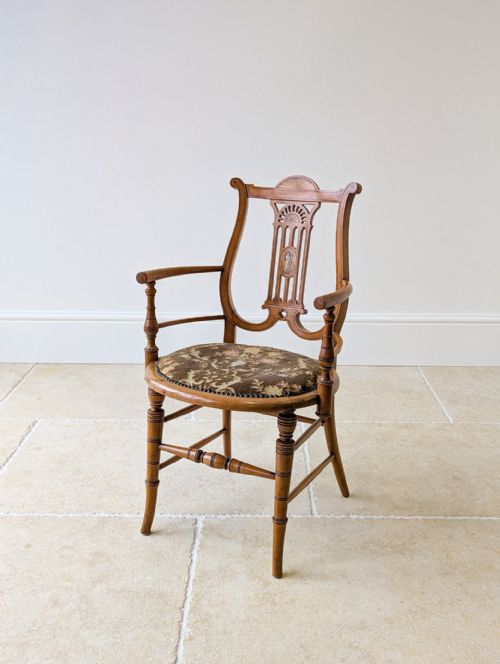
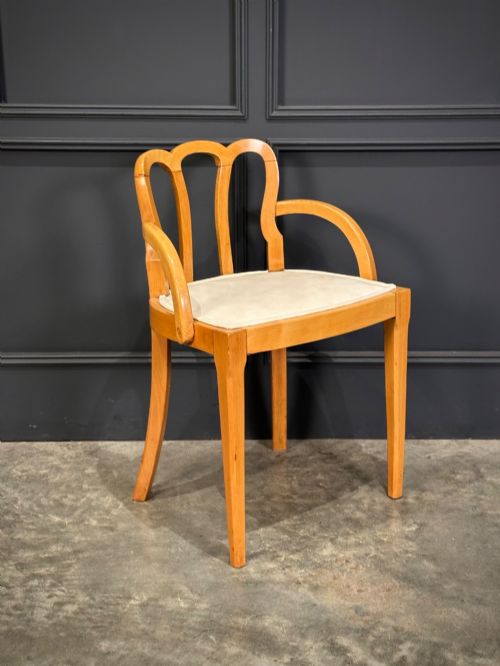

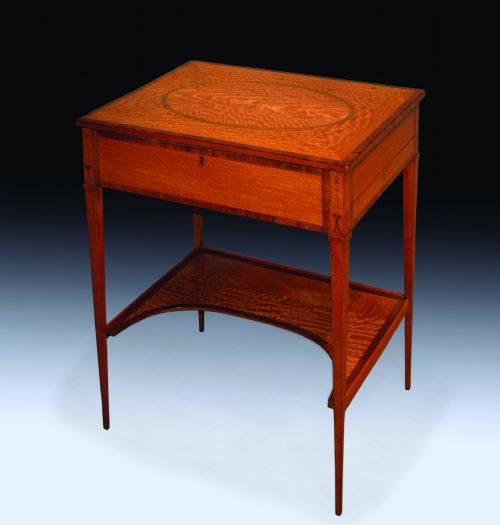
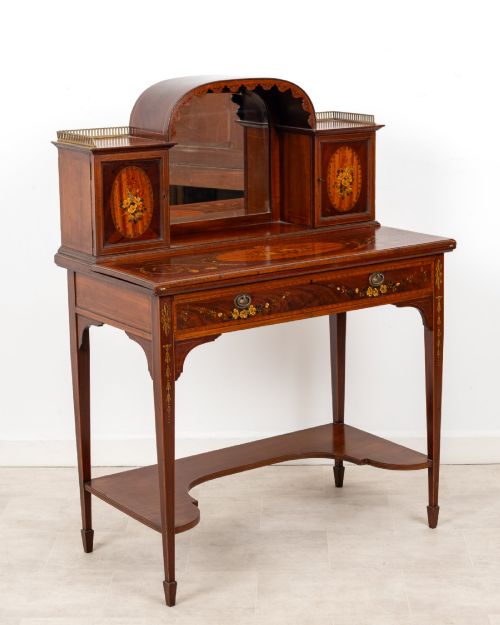
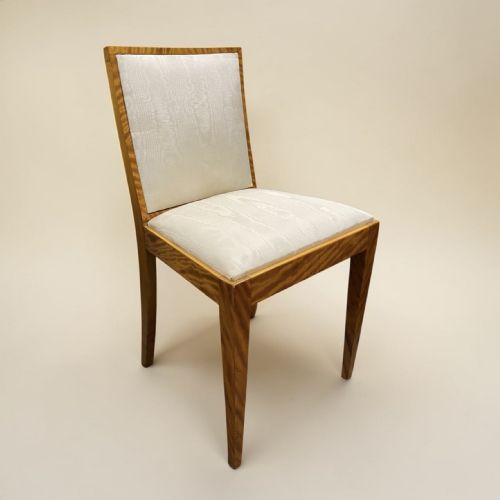


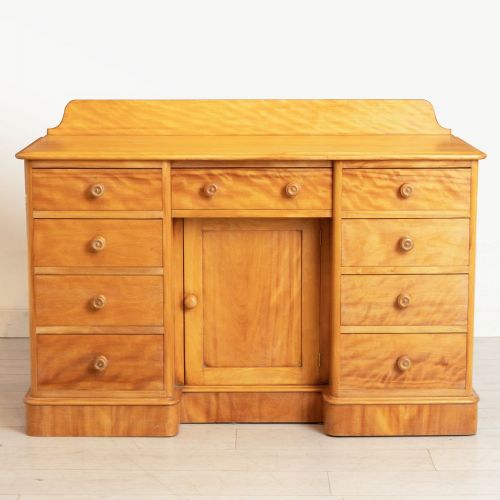
Antique Satinwood Vanity
An antique satinwood vanity brings light golden timber and refined marquetry into a bedroom, offering a dedicated surface for morning routines.

Antique Satinwood Vanity
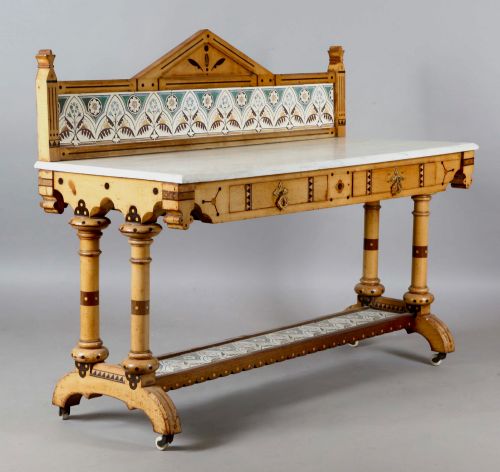
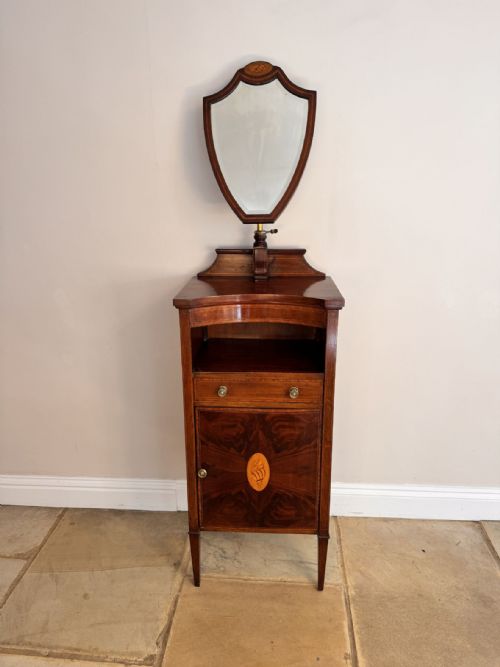
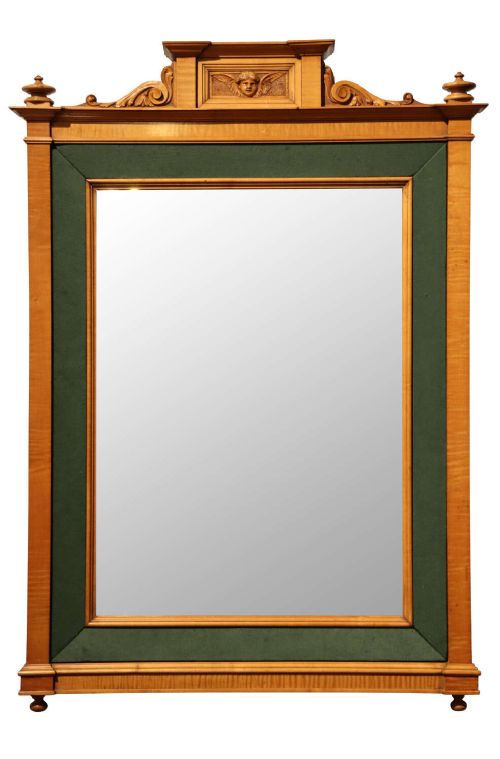
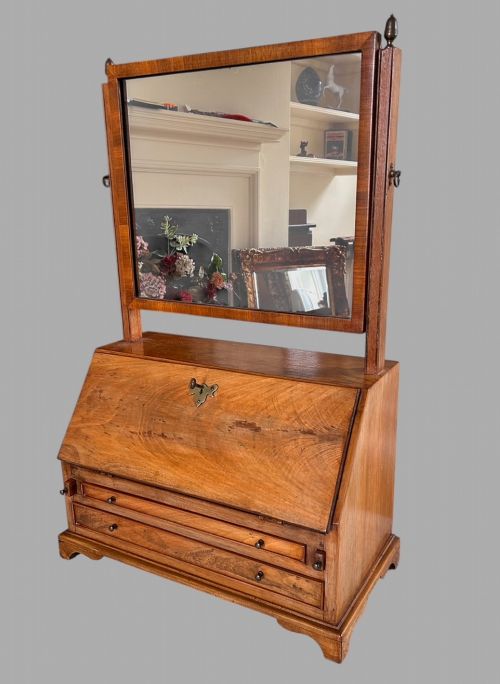
An antique satinwood vanity encompasses dressing tables, writing desks with mirrored superstructures, and washstands produced across the eighteenth, nineteenth, and early twentieth centuries. These pieces combine functional storage with decorative surfaces, frequently incorporating folding mirrors or fitted interior compartments.
The versions most commonly encountered on this page date from the Victorian and Edwardian periods, alongside Sheraton Revival and Art Deco examples. Makers utilised the pale, shimmering grain of satinwood alongside mahogany, satin birch, and brass hardware to create refined bedroom furniture.
Formations range from large kneehole dressing tables with inlaid details to compact table-top bureaus and washstands designed for marble tops. Each variation serves the fundamental purpose of personal grooming and correspondence within the domestic interior.
How they were made
Cabinet makers constructed these vanities using solid and veneered timbers, pairing satinwood with supportive secondary woods like mahogany. Surfaces often received elaborate marquetry, hand-painted floral motifs, and contrasting stringing lines to accentuate the golden grain.
Hardware components such as hinges, handles, and castors typically utilise cast brass, while structural elements rely on traditional dovetail joinery for drawers. Mirrored superstructures incorporate bevelled mirror glass supported by adjustable pivoting brass arms.
Antique Satinwood Vanity Retail Price Guide 2026
Typical asking prices for satinwood vanity among the pieces listed under this phrase on Sellingantiques today, from the lower quarter to the upper quarter. They describe what is for sale here now, not the wider market.
Several vanities include secret rising compartments designed for morning correspondence and hidden trinkets.
What varies in quality
The refinement of the marquetry and the crispness of the hand-painted details separate standard production from superior pieces. Workshops that employed skilled artisans achieved tight, seamless veneer matching and balanced composition across curved drawer fronts and kidney-shaped surfaces.
Structural integrity and the retention of original fitted interiors dictate the standing of a vanity. Pieces that preserve their original brass hardware, internal velvet linings, and matching seating components retain greater integrity than those altered over time.
Bath Cabinet Makers·Mappin & Webb·Edwards & Roberts·Gillows·Collinson and Lock·Harry and Lou Epstein
The Antique Satinwood Vanity Glossary
- Satinwood
- A durable tropical timber known for its lustrous, yellow-gold appearance and reflective grain. It was frequently used as a fine veneer on eighteenth and nineteenth-century case furniture.
- Marquetry
- The art of applying decorative pieces of veneer to a structural structure to form pictorial or geometric designs. Craftsmen used various tinted woods to achieve tonal depth.
- Superstructure
- A smaller set of shelves, drawers, or mirrors mounted upon the main flat surface of a desk or dressing table. This addition provided extra storage and a pivoting mirror.
- Kneehole
- A central recessed space beneath a desk or dressing table designed to accommodate the user's legs while sitting. It is typically flanked by banks of smaller drawers.
- Stringing
- Thin inlay lines of contrasting wood used to outline panels, drawer fronts, and table tops. This technique defines geometric boundaries on classical and revival furniture.
Antique Satinwood Vanity: Frequently Asked Questions
How do I care for satinwood?
Protect the timber from direct sunlight to prevent the golden finish from darkening or fading over time. Apply a microcrystalline wax periodically to nourish the surface and buff gently with a soft cloth.
Avoid placing damp items or unsealed glassware directly on the polished wood to prevent water rings. Use coasters and felt pads beneath any decorative objects displayed on the dressing surface.
Are mirrors original to the vanity?
Examine the silvering behind the glass and the mounting screws to determine if the mirror plate contemporary to the frame. Older mirrors frequently exhibit slight oxidisation spots and uneven thickness.
Original mirrors are secured with traditional glazier's points or old wooden beads rather than modern fixings. The wood surrounding the mirror plate should match the wear and patina of the base table.
How do I identify Sheraton Revival style?
Sheraton Revival pieces replicate the neoclassical elegance of the late eighteenth century, featuring tapered legs and symmetrical proportions. Look for delicate satinwood veneers accented by contrasting stringing and painted floral swags.
This aesthetic experienced a major resurgence during the late Victorian and Edwardian eras. Cabinet makers adapted classical forms to suit contemporary bedroom and writing requirements.
Can I use a vanity as a desk?
Many dressing tables and ladies writing desks feature comfortable kneehole clearances and stable writing surfaces suitable for daily correspondence. Models fitted with superstructure compartments offer convenient organisation for stationery.
Ensure the working height aligns comfortably with a matching bedroom chair or stool. Protect antique writing surfaces with a blotter or leather pad during heavy use.