



Antique Satinwood Armoire
An antique satinwood armoire brings pale timber grain and generous bedroom storage, spanning eras from George III to Art Deco.
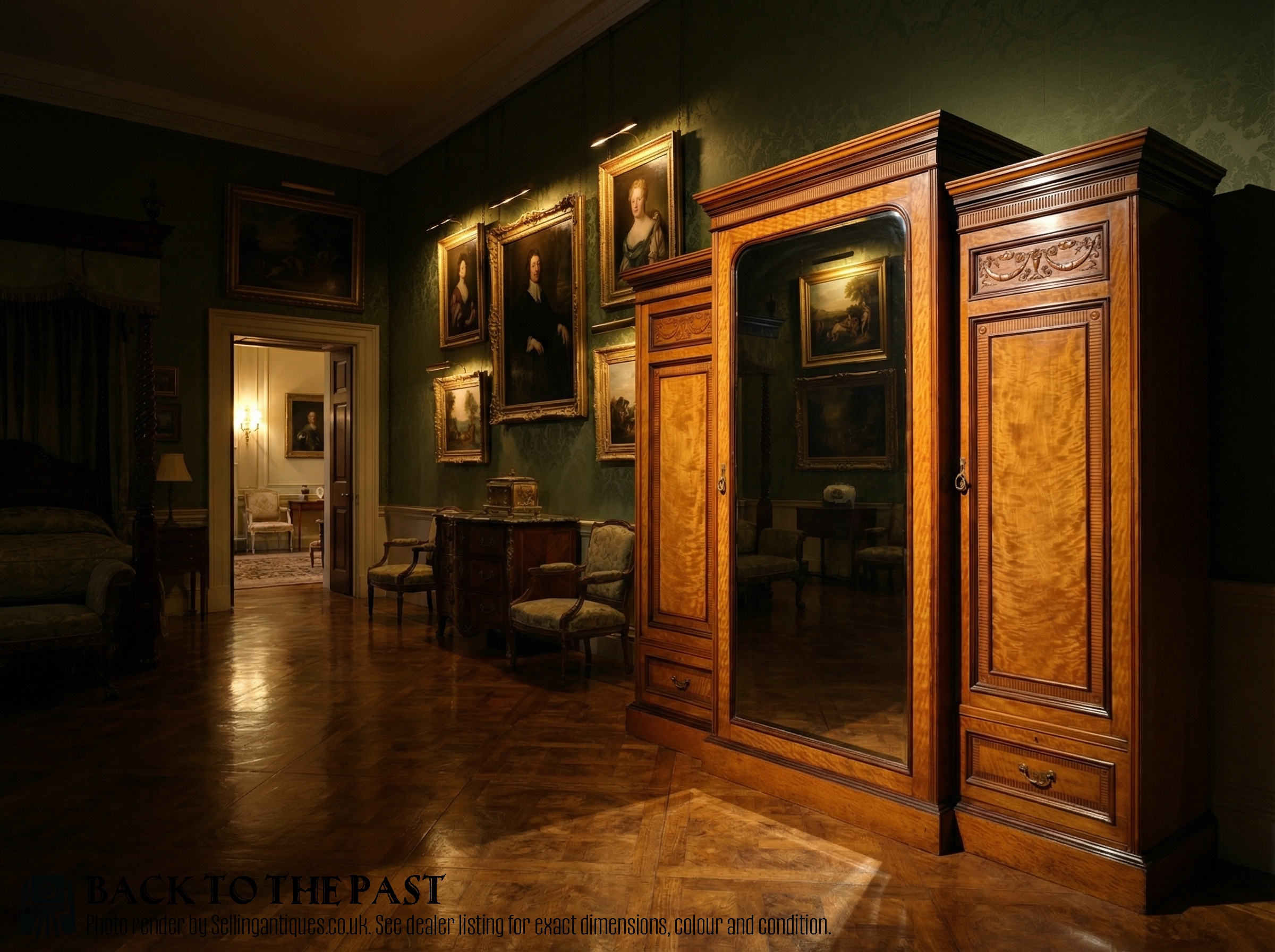
Antique Satinwood Armoire
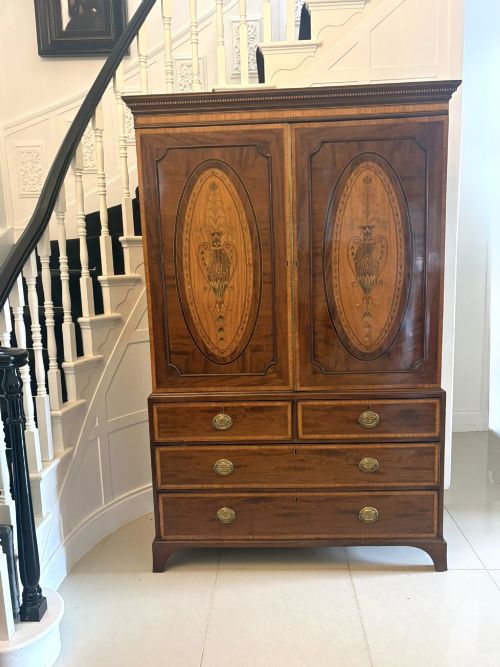
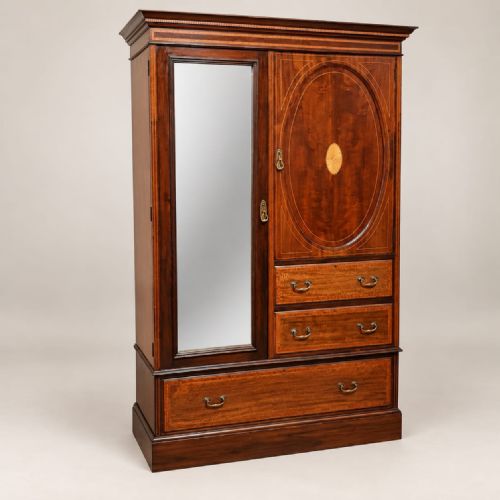
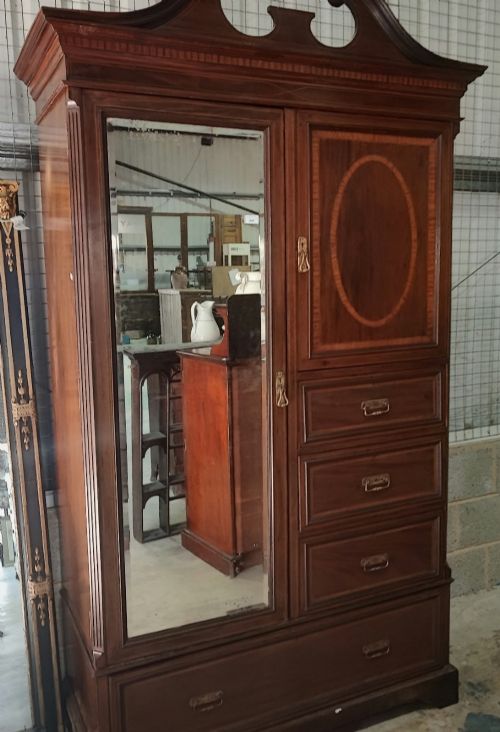
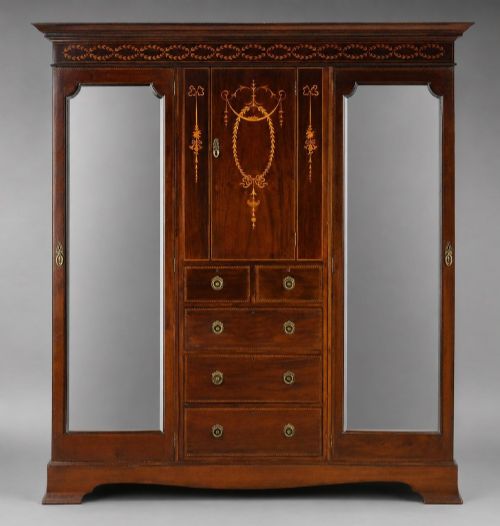
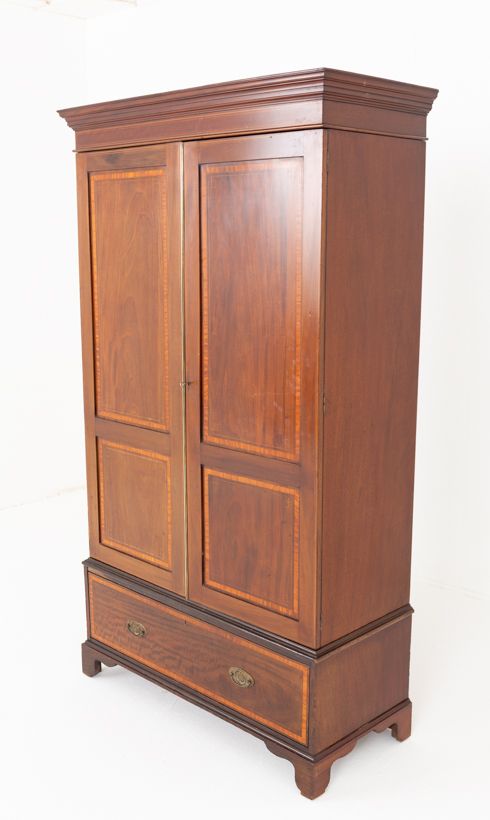
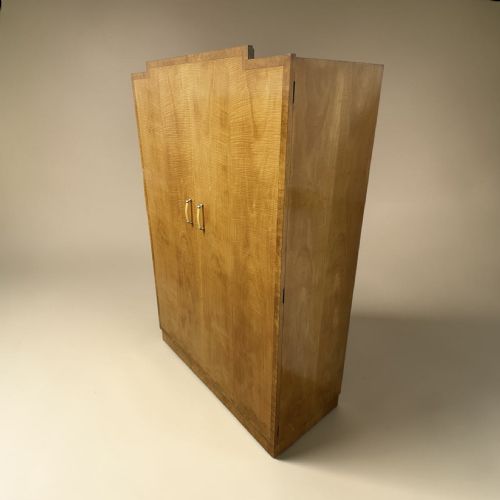
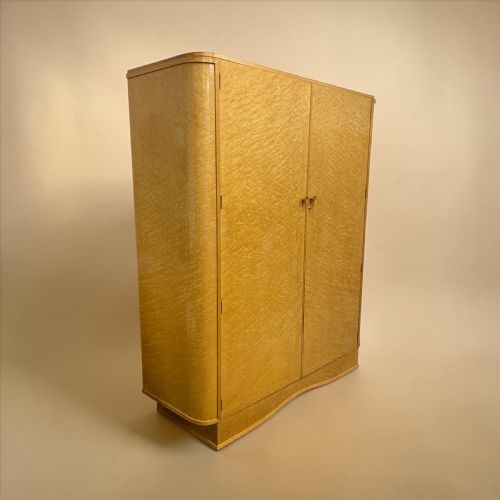
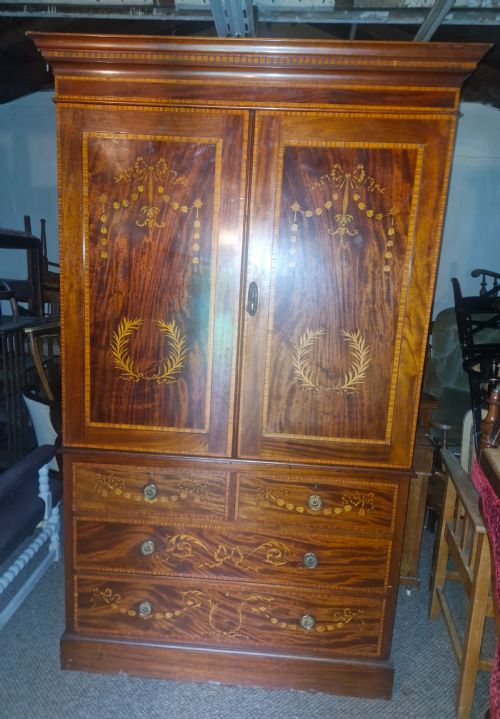
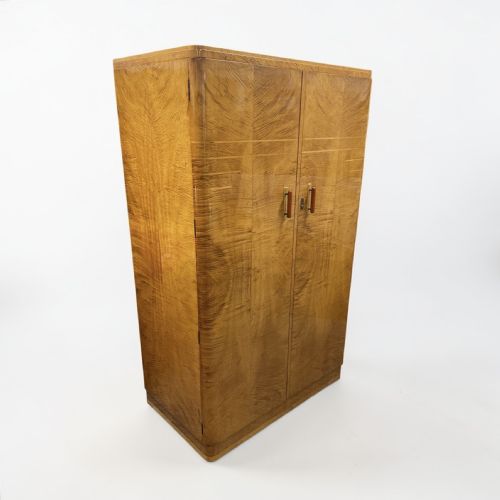
When you search for an antique satinwood armoire, you encounter substantial clothes storage solutions that range from Georgian linen presses to Edwardian triple wardrobes and Art Deco cabinets. These pieces serve primarily to store garments and linens while introducing significant architectural presence to a bedroom through grand proportions and pale timber surfaces.
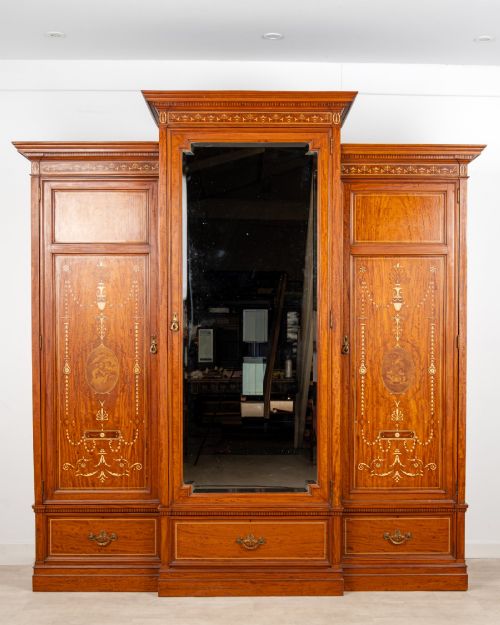
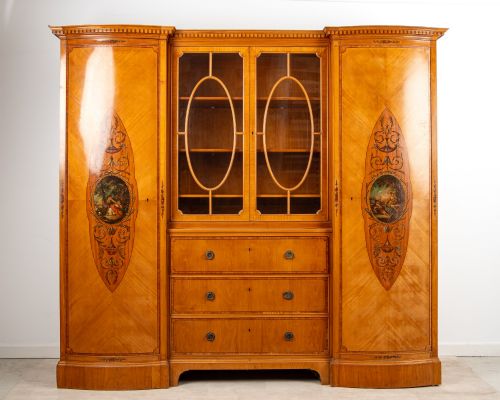
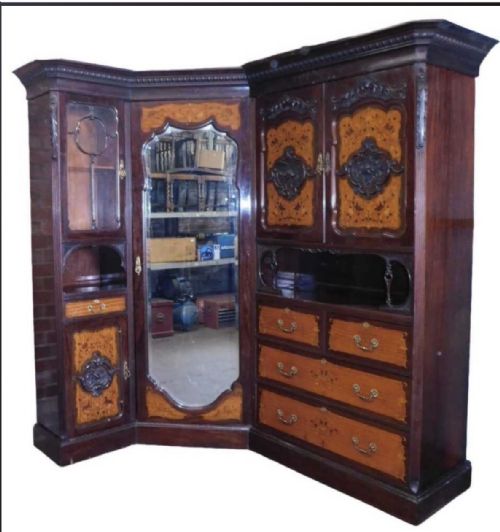
The pieces on this page lean heavily towards the Edwardian period and the late nineteenth century, alongside earlier George III examples and later Art Deco designs. You will frequently find them realised as compactums, triple wardrobes, and breakfront fitted units combining hanging space with internal drawers and shelves.
Materials and construction methods
Cabinet makers built these wardrobes using solid timbers and secondary woods like mahogany, overlaid with figured satinwood veneers or constructed from satin birch. Surfaces were frequently embellished with contrasting stringing in boxwood, ebony, and rosewood, alongside hand-painted panels and marquetry motifs.
Structural hardware relied on brass for handles, hinges, and hanging fittings, while larger formats incorporated bevelled mirror glass into the door panels. Carved details such as swan-neck pediments appear on Georgian press cupboards, contrasting with the geometric lines of later twentieth-century pieces.
Listings feature satinwood combined with mahogany, rosewood, and boxwood across periods spanning George III to Art Deco.
Distinctions in craftsmanship and design
Quality in these wardrobes rests on the selection of the satinwood veneer and the precision of the contrasting inlay work. Finer examples display symmetrical grain patterns across large door surfaces, whilst simpler pieces rely on plain painted finishes or standard mahogany carcasses banded with satinwood.
Interior configuration also dictates distinction, separating standard hanging spaces from fully fitted compactums that incorporate linen slides, partitioned drawers, and mirrored compartments. Maker attribution further elevates certain pieces, particularly those bearing stamps or signatures from established cabinet makers.
Edwards and Roberts·Druce & Co·Jean Faure·Maples & Co
The Antique Satinwood Armoire Glossary
- Linen Press
- A tall piece of furniture featuring upper sliding trays for folded textiles above a base section of larger drawers. Earlier Georgian versions were frequently updated to serve as wardrobes.
- Marquetry
- The art of applying decorative pieces of veneer to a structure to form intricate pictorial designs or geometric patterns. Makers utilised contrasting woods like boxwood and rosewood to achieve tonal depth.
- Breakfront
- A cabinet design where the central section projects forward from the flanking wings. This architectural arrangement creates shadow lines and visual weight.
- Stringing
- Thin inlaid lines of contrasting timber used to outline panels and drawers on a cabinet front. This linear detail defines the edges of satinwood veneers.
Antique Satinwood Armoire: Frequently Asked Questions
How do I fit a large armoire in a modern bedroom?
Many Edwardian and Victorian wardrobes were built as modular or breakfront pieces that can be disassembled into sections for transport and room placement. Check the internal depth and height specifications carefully before delivery to ensure adequate clearance.
Positioning the piece away from direct sunlight preserves the pale golden tone of the satinwood veneer and prevents the polished surfaces from drying out over time.
What is the difference between an armoire and a compactum?
An armoire typically refers to a large freestanding wardrobe with doors enclosing hanging space or shelves, originating from continental and British cabinet traditions.
A compactum is a more complex multi-functional wardrobe that combines hanging compartments with banks of internal drawers, shelves, and sometimes sliding linen trays within one unified structure.
How should I care for satinwood veneer?
Maintain satinwood surfaces by dusting regularly with a soft, dry cloth and avoiding silicone-based polishes that build up over time. Natural wax applied sparingly helps nourish the timber and protect the polished finish.
Keep the furniture away from radiators and damp walls to prevent the delicate veneers from lifting or splitting across the grain.
Are these wardrobes suitable for modern hangers?
Older wardrobes often feature shallower interior depths or wooden hanging rails positioned front-to-back rather than side-to-side. You may need to use narrower coat hangers or install modern brass rails to accommodate contemporary garments.
Measure the internal clearance from the back panel to the inside of the door before attempting to hang standard adult clothing.