

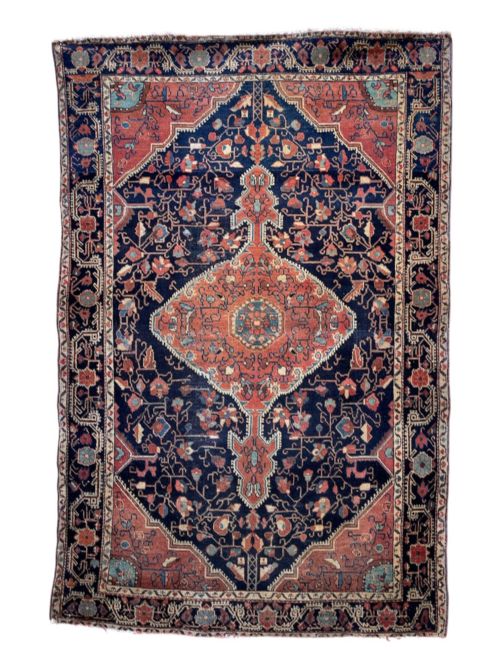
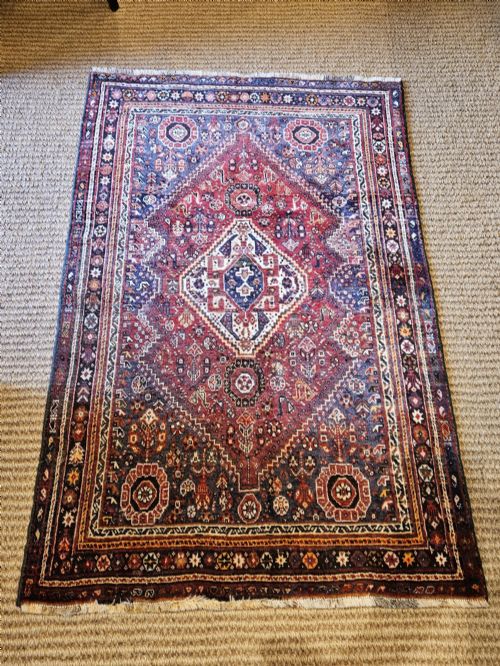
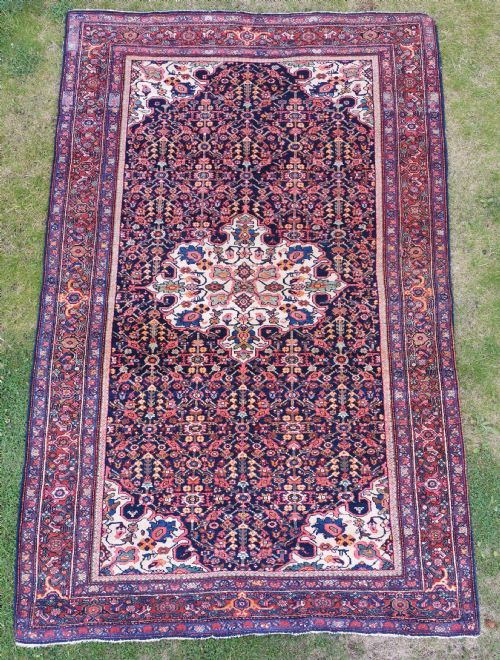

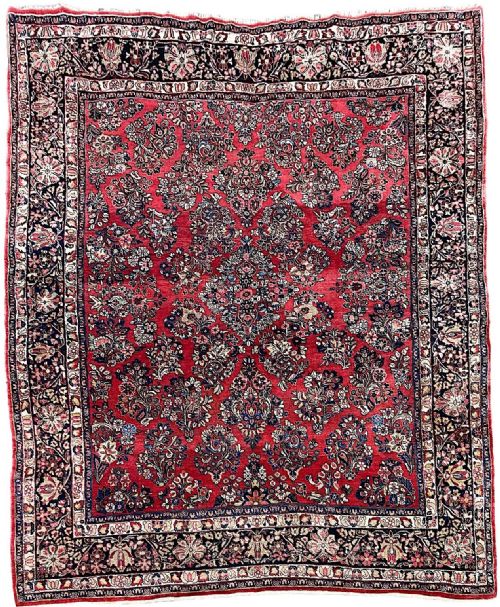


Antique Sarouk Carpet
An antique sarouk carpet brings dense Persian pattern and rich wool into a room, offering deep colour and traditional village craftsmanship from West Persia.
Antique Sarouk Carpet
An antique sarouk carpet represents traditional West Persian weaving, originating primarily from villages and workshops across the region including Jozan and Mohajeran. These textiles span room-sized large carpets, square formats, and remarkably long narrow runners suited to hallways.
The pieces encountered most frequently on this page date from the late nineteenth century through to the nineteen-thirties. Buyers seek these items for their enduring traditional Persian layouts, village character, and ability to anchor large living spaces.
Materials and construction
The foundation relies on sturdy cotton warps and wefts, providing a stable grid that supports dense wool pile. Artisans knotted hand-spun wool onto this cotton base to create durable floor coverings designed for heavy use.
Weaving techniques incorporate fine knotting variations, producing both standard room sizes and exceptionally slender runners. Natural dye methods yield the characteristic soft colours, rust backgrounds, and pomegranate motifs found across the region.
Antique Sarouk Carpet Retail Price Guide 2026
Typical asking prices for sarouk carpet among the pieces listed under this phrase on Sellingantiques today, from the lower quarter to the upper quarter. They describe what is for sale here now, not the wider market.
Listings feature items dated from eighteen seventy through to nineteen thirty, constructed from wool and cotton in West Persia.
Defining quality in weaving
Quality rests in the density of the weave and the precision of the knotting, where finer execution yields greater clarity in floral and boteh motifs. The handle of the wool and the depth of the palette distinguish standard village production from exceptionally fine workshop pieces.
Proportion and scale also separate examples, ranging from compact village scatter rugs to massive room-sized carpets and elongated narrow runners. The integrity of the cotton foundation and the harmonious settling of soft colours complete the distinction between ordinary and superior pieces.
The Antique Sarouk Carpet Glossary
- Sarouk
- A style of Persian carpet originating from West Persia, known for durable wool construction and traditional floral patterns.
- Ferahan
- A related West Persian weaving style often associated with finer nineteenth-century village and workshop production.
- Jozan
- A specific village origin within the Sarouk region noted for distinctive local rug designs and robust construction.
- Mohajeran
- A village source renowned for producing large room-sized carpets with deep piles and traditional Persian aesthetics.
- Boteh
- An almond-shaped or paisley motif frequently utilised in the traditional design vocabulary of these Persian rugs.
- Runner
- A long, narrow carpet format specifically proportioned for hallways and corridors.
Antique Sarouk Carpet: Frequently Asked Questions
Where were antique sarouk carpets made?
These carpets originate from West Persia, specifically from villages and districts such as Jozan and Mohajeran. Local weavers utilised regional wool and traditional techniques to produce distinctive floor coverings.
Production spanned the nineteenth and early twentieth centuries, creating a rich variety of formats from small village rugs to massive room-sized carpets.
How do I use a narrow runner?
Narrow runners are specifically proportioned for hallways, corridors, and long spaces where standard rectangular rugs will not fit. Their elongated dimensions guide movement through a home while adding traditional Persian pattern to transition areas.
Positioning a runner requires allowing enough floor clearance on either side to showcase the border designs and the cotton foundation edges.
What is a boteh design?
The boteh is an almond-shaped or paisley motif that appears frequently in Persian weaving. It represents a traditional symbol of life and eternity within the design vocabulary of these carpets.
Weavers arranged these motifs across the field in rows or balanced sprays, often combined with floral elements and pomegranate details.
How do I date an older sarouk?
Dating relies on stylistic shifts, structural evidence, and dye characteristics observed across nineteenth and twentieth-century examples. Earlier pieces often exhibit Ferahan influences and finer wool handling, while nineteen-twenties specimens show traditional village layouts with soft colours.
Examining the weave density and the specific village attribution helps place a piece within its proper historical window.