







Antique Sarkoy Kilim
An antique sarkoy kilim brings flat-woven Balkan folk art into a room, offering geometric patterns and soft colours gathered from traditional weaving traditions.
Antique Sarkoy Kilim
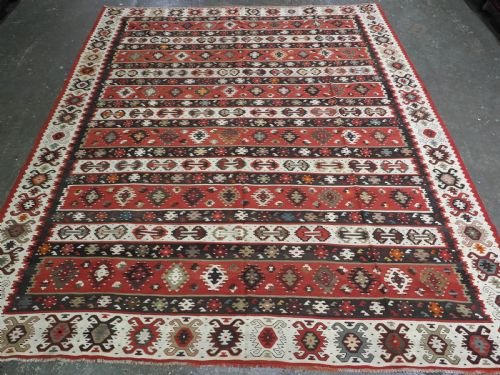
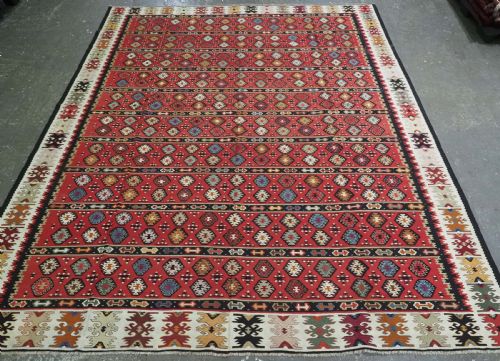
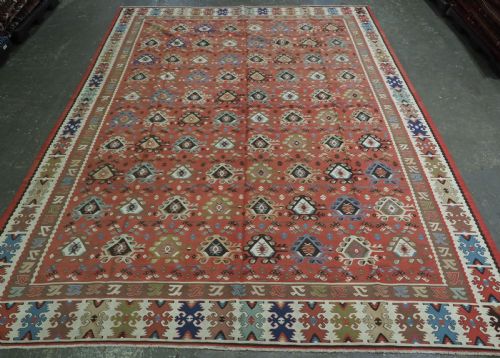
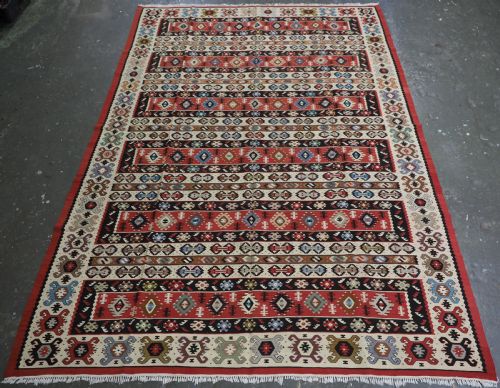
An antique sarkoy kilim is a flat-woven textile originating from Balkan folk art traditions, often associated with Pirot styles. These rugs appear in formats such as area rugs, large room sizes, and specific smaller formats.
The pieces on this page span several decades, stretching from the late nineteenth century through to the nineteen-thirties. Buyers most frequently encounter examples from the nineteen-twenties displaying classic, banded, or repeat medallion designs.
Designs range from flowering trees and lattice patterns to traditional repeat motifs. Certain examples arrive woven in multiple parts, reflecting regional construction methods.
How they were made
These textiles are constructed primarily using wool and cotton materials, employing flat-weave techniques common to Balkan and Anatolian traditions. The reliance on natural fibres contributes to the soft texture and durability of each rug.
Weavers utilised traditional slit-tapisserie methods to build sharp geometric edges and distinct colour boundaries. Larger formats were occasionally constructed by weaving sections separately and joining them together.
Listings span periods from the late nineteenth century through to the nineteen-thirties, constructed primarily from wool and cotton.
What varies in quality
Quality in these flat-weaves rests upon the complexity of the design and the preservation of the palette. Pieces featuring scarce lattice or flowering tree layouts sit apart from standard repeat patterns.
Colour retention plays a major role, with warm soft tones, powder blue grounds, and outstanding dyed hues elevating the visual impact. The precision of the weave across large room sizes also dictates the distinction of individual pieces.
The Antique Sarkoy Kilim Glossary
- Kilim
- A flat-woven carpet or rug produced without a pile. These textiles rely on interlocking weft threads to create smooth surfaces and geometric patterns.
- Sarkoy
- A regional designation associated with traditional woven rugs and carpets from the Balkan sphere. These pieces often share design motifs with Pirot weaving.
- Pirot
- A historic centre of rug-making known for detailed geometric flat-weaves. Pieces from this tradition often align closely with sarkoy styles.
- Balkan Folk Art
- A traditional aesthetic category encompassing regional textile designs and domestic craft methods. It defines the cultural origins of these flat-weaves.
- Banded Design
- A decorative layout organised into horizontal bands or stripes. This structure often incorporates alternating geometric motifs.
Antique Sarkoy Kilim: Frequently Asked Questions
What is an antique sarkoy kilim?
An antique sarkoy kilim is a flat-woven textile rooted in Balkan folk art traditions. These rugs combine wool and cotton materials to form geometric and pictorial patterns.
They serve as decorative floor coverings that bring traditional craft into domestic spaces. Most examples date from the late nineteenth century to the early twentieth century.
How were sarkoy kilims used?
These flat-weaves were traditionally utilised as floor rugs, area carpets, and room-sized floor coverings in homes. Their lack of a pile made them practical for seasonal use and easy to transport.
Today, collectors place them on floors or hang them as textiles to preserve their detailed patterns. Their flat structure suits spaces where heavy pile carpets might prove cumbersome.
How do I live with a sarkoy kilim?
Living with these textiles involves placing them in low-traffic areas or mounting them securely to protect the historic fibres. Pairing them with a quality underlay helps prevent slipping on hard floors.
Keeping them away from direct sunlight preserves the soft reds, powder blues, and warm hues found in the wool and cotton. Gentle vacuuming without a rotating brush maintains the flat weave.
How can I tell different designs apart?
Designs vary from classic repeat medallions and banded layouts to scarce lattice arrangements and flowering trees. Examining the arrangement of motifs reveals whether a piece follows a standard Balkan pattern or a rarer pictorial format.
Some pieces also display regional links to Pirot weaving through specific border styles and geometric construction. Large room sizes often utilise repeat patterns to maintain visual balance across the wider surface.