
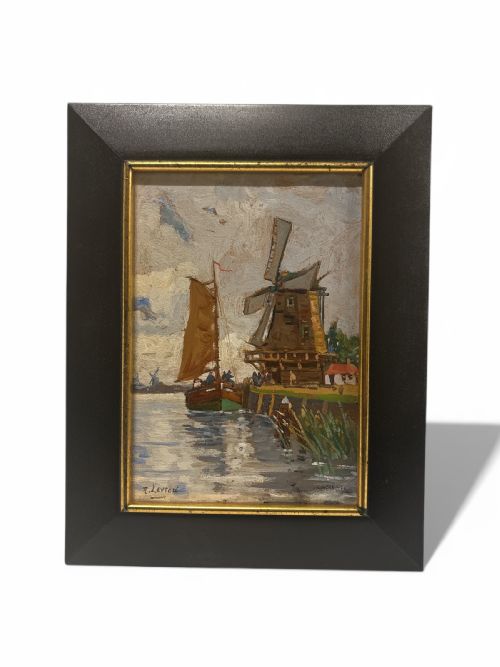


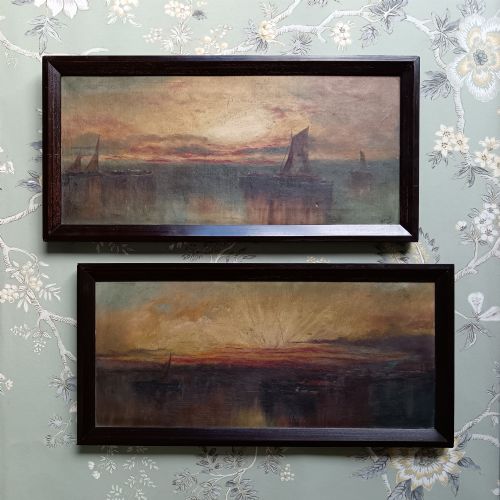

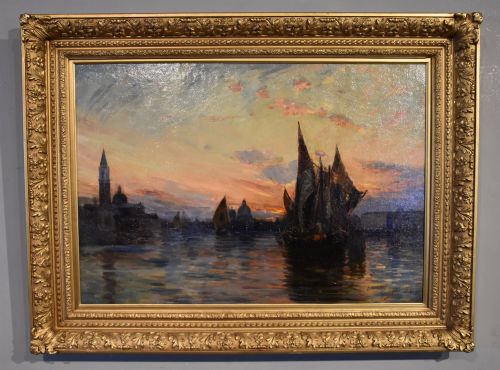
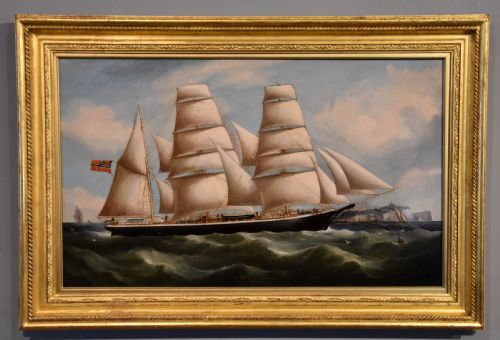


Antique Sailboat Oil Artwork
These antique sailboat oil artworks capture maritime history on canvas, bringing coastal light and nineteenth-century vessel studies directly into your interior.
Antique Sailboat Oil Artwork
An antique sailboat oil artwork presents marine and coastal subjects rendered in oil paint on canvas or wooden board. These pieces focus on maritime scenes, ranging from quiet river landscapes and harbour views to dramatic open sea crossings.
The selections span the nineteenth century through the mid-twentieth century, encompassing Victorian maritime scenes, British Impressionism, and continental European works. Buyers encounter both signed works by known artists and accomplished compositions from the British and French schools.
Framed examples frequently retain their period gilt wood and gesso frames, which complement the maritime subject matter. Common compositions depict fishing boats, commercial barques, and wind-driven vessels navigating coastal waters and international ports.
Materials and construction methods
Artists painted these works primarily with oil paint applied to stretched canvas or prepared wooden boards. The medium allowed painters to build texture through visible brushstrokes and blend tones for atmospheric effects like sunset glow or moonlit water.
Frames utilise wood finished with gesso and gilt, providing structural support and decorative framing for the paintings. Giltwood frames often show hand-applied moulding details characteristic of period framing workshops.
Several canvases record specific named vessels, turning a simple seascape into a detailed portrait of a nineteenth-century barque at sea.
Assessing quality in marine painting
Quality rests upon the artist's handling of light, water movement, and atmospheric perspective. Superior paintings demonstrate confident brushwork and accurate nautical rigging that reveal a deep understanding of maritime subjects.
The condition of the original paint layer and the presence of a period-matching gilt wood frame influence the overall integrity of the piece. Works that retain their untouched surface texture command greater interest from collectors.
Thomas Hodgson Liddell·Richard B. Spencer·Louis Suire·Adrian Van Porten·Edward Seago·Hendrik Willebrord Jansen·Jane Vivian·George Henry Knight·John Callow·Gustave de Breanski·Paul Jean Clays·Charles Euphrasie Kuwasseg·Johan Jens Neumann·Bertram Priestman·John William Gilroy·William Edward Webb·Samuel Bough
The Antique Sailboat Oil Artwork Glossary
- Oil on Canvas
- A traditional painting medium where oil paints are applied to a woven fabric stretched across a wooden frame. This combination allows for rich colour depth and lasting durability.
- Gilt Wood
- Wood treated with a thin layer of gold leaf or metallic powder, commonly used for ornate period picture frames. It adds a warm reflective border around the artwork.
- Gesso
- A plaster-like mixture applied to wood or canvas as a base for painting or as a smooth ground for gilding. It creates a solid foundation for intricate frame mouldings.
- Marine Art
- Artistic works that focus on or draw main inspiration from the sea, ships, and coastal environments. This genre includes historical vessel portraits and moody coastal watercolours and oils.
- Post-Impressionism
- An art movement extending French Impressionism while rejecting its limitations, emphasising symbolic content and heavier brushwork. Artists in this style explored bolder colours and structural forms.
Antique Sailboat Oil Artwork: Frequently Asked Questions
Where should I hang a marine oil painting?
These works suit studies, living rooms, and hallways where natural light enhances the oil pigments without causing direct solar damage. Avoid placing canvases near radiators or damp exterior walls.
Securing the frame with proper picture hooks ensures the weight of the wood and gesso is safely supported.
How do I date an antique sailboat painting?
Stylistic clues such as the cut of the sails, the hull design of the vessels, and the clothing of any figures provide initial chronological markers. Canvas stamps, stretcher construction, and framing materials offer further confirmation.
Signatures and exhibition labels on the reverse of the board or canvas often point to specific active years of the artist.
Are period frames original to the artwork?
Many nineteenth and early twentieth-century paintings retain their contemporary gilt wood or gesso frames, which match the age of the canvas. Minor chips and wear on the gilding usually confirm period authenticity.
Framing styles shifted across decades, allowing experts to compare moulding profiles against the estimated creation date of the marine scene.