






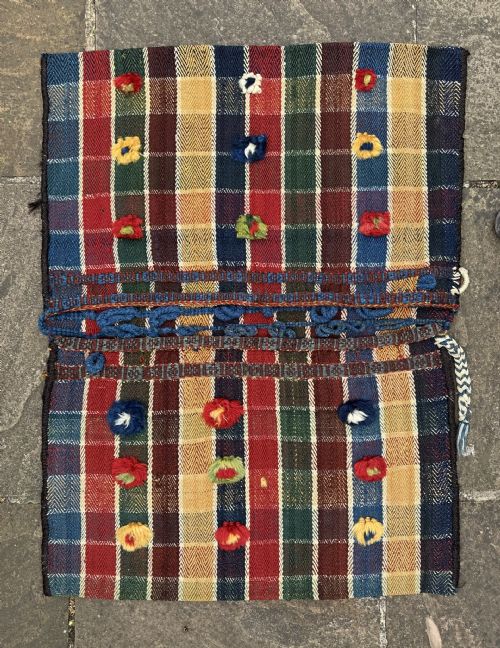
Antique Saddle Bag
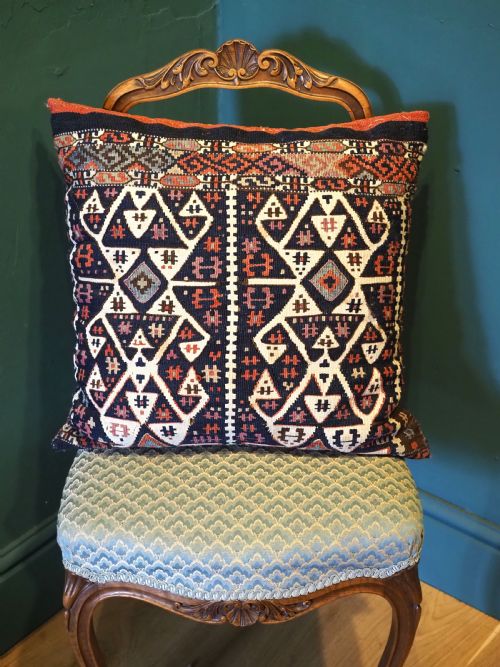
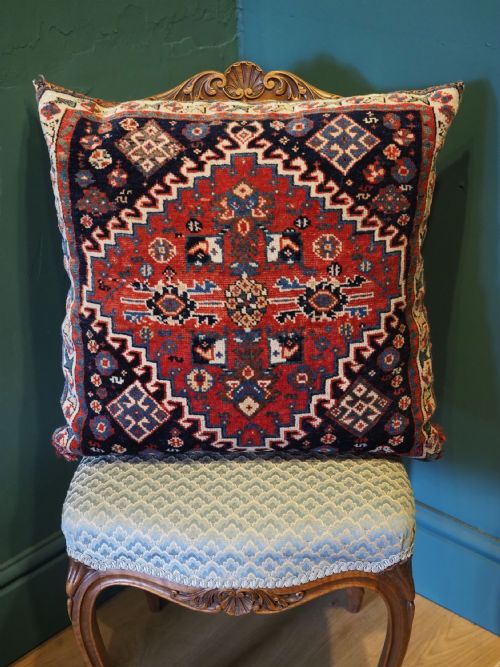
An antique saddle bag brings nomadic textile traditions into a modern interior as a cushion, rug or wall hanging.
Antique Saddle Bag
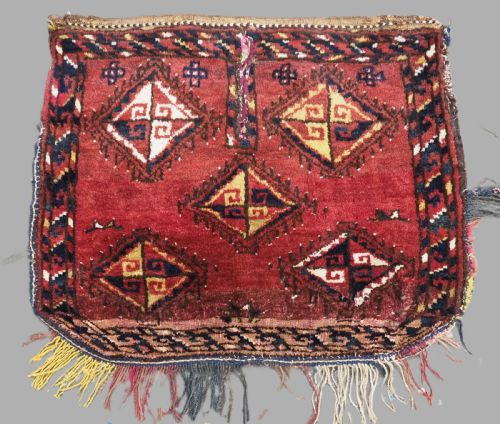
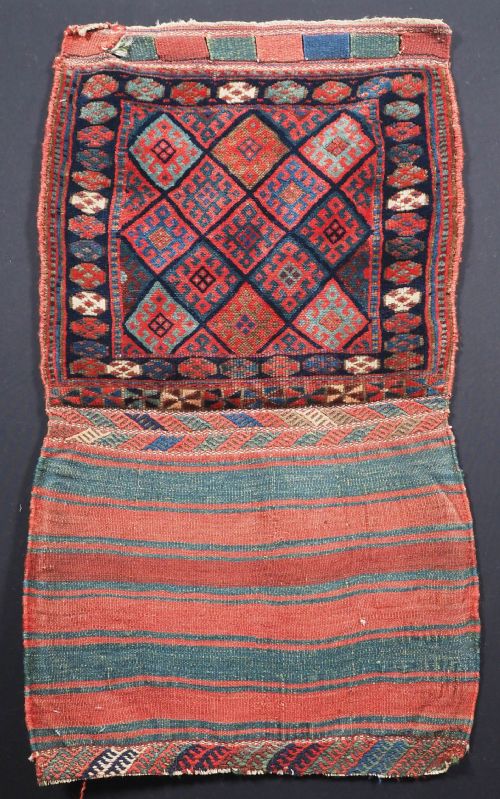
An antique saddle bag originates from pastoral and nomadic groups across Persia, Anatolia, the Caucasus and Central Asia, woven for practical transport on animals. These textiles appear as complete double pouches with plain weave backs, single bag faces, or converted items adapted into cushions and pillows.
The inventory on this page consists largely of nineteenth-century tribal weaving from specific groups such as the Qashqai, Shahsavan, Afshar and Luri. Pieces range from flat-woven kilim and sumac structures to pile-woven carpet faces featuring traditional geometric and boteh motifs.
How they were made
Weavers relied principally on hand-spun wool for the pile and foundation, often incorporating cotton and metal threads for structural support or decorative emphasis. Natural dyes derived from plants and minerals provided the rich palette seen across these nomadic textiles.
Construction techniques varied by region and tribe, encompassing intricate sumac wrapping, flat-woven kilim interlacing, and dense Turkish or Persian knotting. Many examples were designed as paired pouches, known as khorjin or heybe, joined by a central web.
Antique Saddle Bag Retail Price Guide 2026
Typical asking prices for saddle bag among the pieces listed under this phrase on Sellingantiques today, from the lower quarter to the upper quarter. They describe what is for sale here now, not the wider market.
Listings feature nineteenth-century nomadic textiles primarily in wool, cotton, and natural dyes from Persian, Caucasian, and Anatolian tribal origins.
What varies in quality
Quality rests in the density of the weave, the handling of the wool, and the depth achieved through natural dyeing methods. Superior examples display lustrous, resilient wool and precise execution of complex tribal patterns without structural distortion.
Condition and completeness also define the standing of a piece, distinguishing intact double bags with original plain weave backs from isolated bag faces or later cushion conversions. The clarity of the drawing and the saturation of colour separate standard utility work from master tribal expressions.
Qashqai Nomads·Shahsavan Tribes·Afshar Weavers·Luri Tribes·Tekke Turkmen
The Antique Saddle Bag Glossary
- Khorjin
- The traditional Persian term for a double-pouch saddle bag designed to be loaded onto pack animals. These items were essential possessions for nomadic migration and trade.
- Sumac
- A supplementary weft-wrap weaving technique that produces a durable, textured surface without knotting. This method allows for sharp diagonal lines and intricate geometric patterns.
- Kilim
- A flat-woven textile produced by tightly interweaving warp and weft strands without creating a pile. This technique results in a lightweight fabric utilised for both travel bags and floor coverings.
- Chuval
- A large storage bag produced by Turkmen tribes, often featuring prominent gul motifs. These pieces served domestic storage functions within the yurt.
- Gul
- A repeating medallion pattern utilised across Central Asian and Turkmen tribal weaving. Each design often signifies a specific tribal lineage or clan affiliation.
Antique Saddle Bag: Frequently Asked Questions
What is an antique saddle bag?
An antique saddle bag is a functional textile woven by nomadic and village tribes for transporting goods on horses, donkeys or camels. These pieces typically feature durable wool construction and distinct regional patterns.
Over time, many surviving examples have been separated from their original pairs or converted into decorative cushions and wall hangings while retaining their tribal character.
How were saddle bags used?
Nomadic families utilised these double pouches for storing household items, grain, and personal belongings during seasonal migrations. They were slung across the backs of pack animals as practical transport containers.
When stationary, the bags served as storage containers inside tents and dwellings, reflecting the wealth and artistic identity of the weaver's family.
How do I live with one?
These textiles adapt easily to contemporary interiors as floor rugs, small wall hangings, or stuffed cushion covers. Their robust wool construction handles moderate foot traffic or daily use when placed thoughtfully.
Protecting the wool from direct, prolonged sunlight preserves the natural dyes and prevents the fibres from drying out over time.
How do I tell tribal styles apart?
Tribal styles differ through specific colour palettes, structural techniques, and repeating geometric motifs unique to each region. For instance, Shahsavan pieces often feature crisp sumac weaving, while Afshar work displays distinctive boteh motifs.
Examining the edge finishes, wool quality, and knotting structure provides further clues to the specific Persian, Caucasian, or Anatolian origin of the textile.