


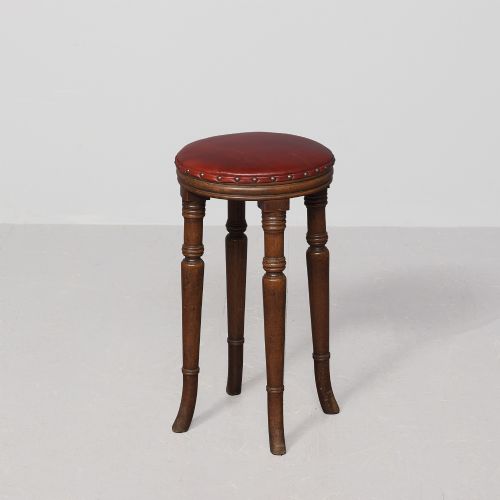


Antique Round Footstool
An antique round footstool brings small-scale period character to a room, offering tactile upholstery and turn-of-the-century timber frames.
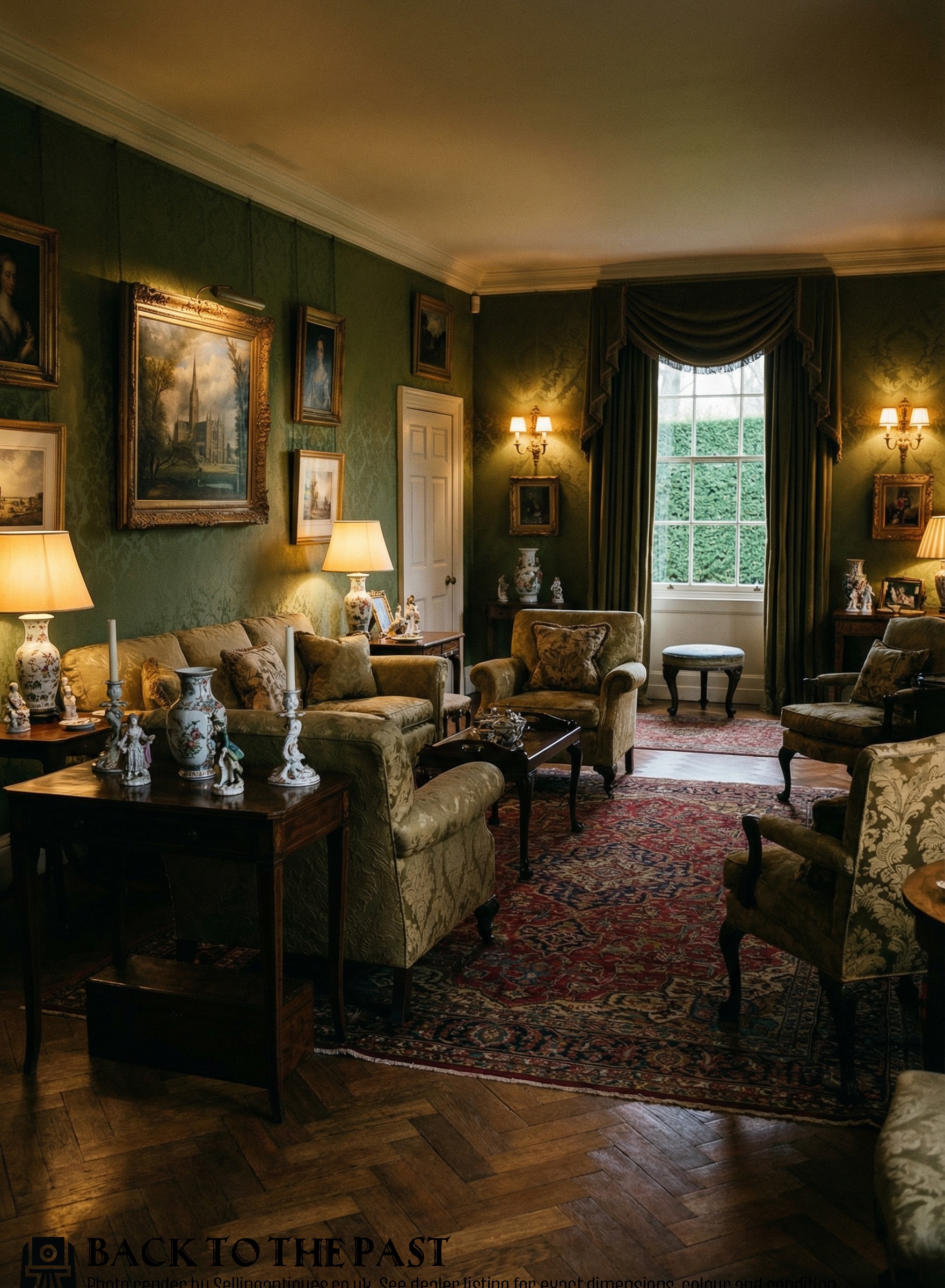
Antique Round Footstool
An antique round footstool is a compact domestic seating piece designed for resting feet or low seating near a hearth. Buyers searching for an antique round footstool encounter varied forms ranging from rustic country timbers to formal upholstered salon pieces.
The selection includes Victorian walnut frames, vernacular elm seats, and French nineteenth-century designs. Most examples found here date from the nineteenth century, spanning George III circular forms to Art Deco variants.
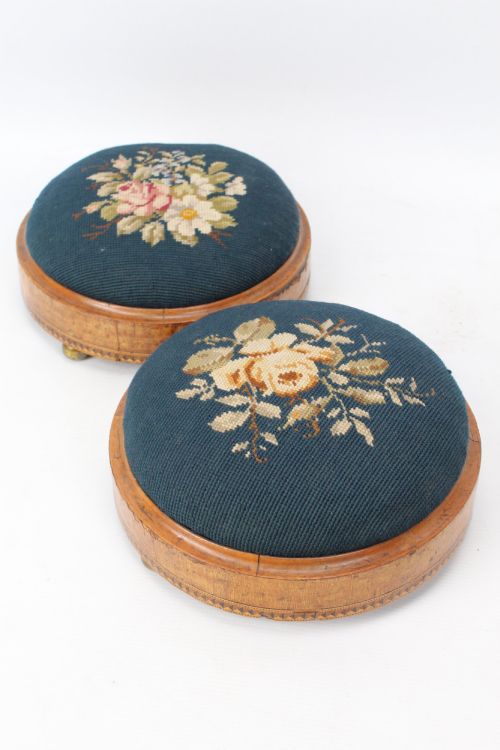
Makers utilised woods such as oak, walnut, elm, and hardwood for the structural bases. Upholstery treatments involve velvet, calico, needlepoint, kilim tapestry, and red silk.
How they were made
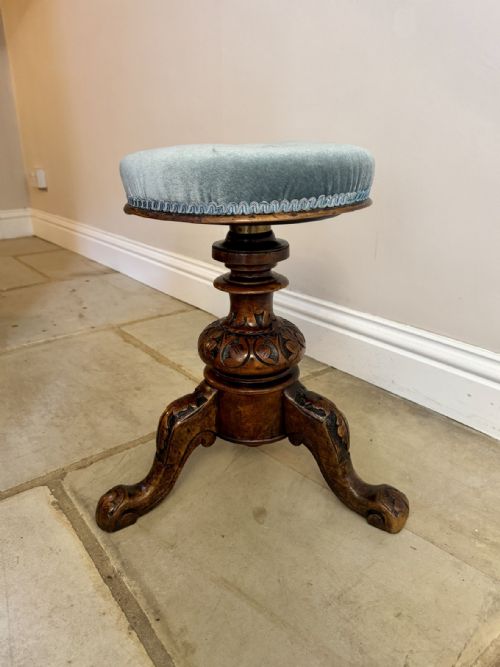
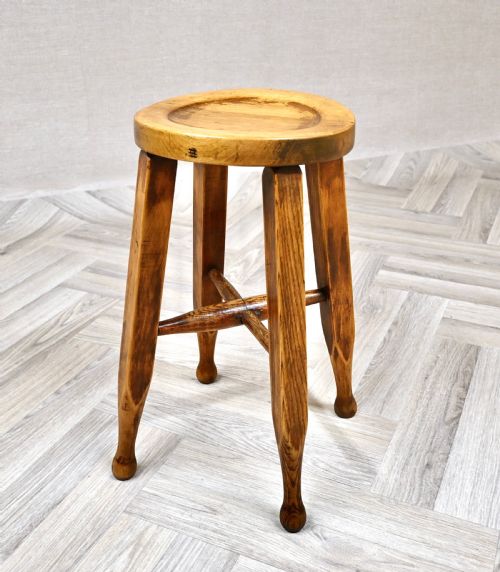
Makers constructed the timber frames using hardwoods like walnut, oak, and elm, often employing turned legs or carved wooden structures. Structural integrity relied on traditional joinery methods suited to domestic furniture of the period.
Upholstered versions combined internal padding with textile coverings such as velvet, silk, needlepoint, or tapestry. Detail work frequently incorporated decorative elements like deep buttoning, bead work, and inlaid Tunbridge ware.
The listings here feature walnut, oak, elm, and diverse textiles including velvet, silk, and tapestry across the nineteenth century.
What varies in quality
The distinction between standard domestic seating and finer examples rests in the depth of timber carving and the sophistication of the frame design. Carved walnut frames and inlaid woodwork indicate superior craftsmanship compared to plain vernacular timbers.
Upholstery finish also dictates quality, with complex needlepoint, geometric kilim tapestries, and detailed deep buttoning elevating a piece above simple fabric coverings. The preservation of original textiles and authentic feet adds to the standing of the piece.
The Antique Round Footstool Glossary
- Tunbridge ware
- A form of decorative woodwork characterised by tiny mosaic wooden tesserae forming pictorial or geometric patterns. It appears inlaid into the surfaces of small nineteenth-century wooden items.
- Needlepoint
- A type of counted thread embroidery stitched onto an open-weave canvas foundation. This textile technique creates durable and decorative covers for antique footstool tops.
- Windsor
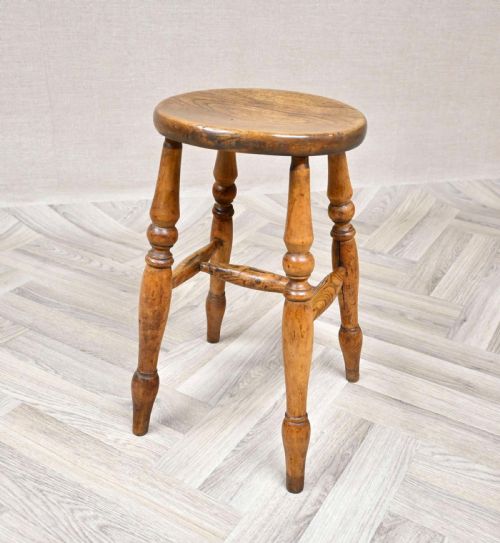
- A traditional chair and stool construction method where spindles and legs are fitted directly into a thick sculpted wooden seat. These pieces utilise woods such as elm and native hardwoods.
- Bun feet
- Low, rounded wooden supports shaped like small buns or spheres. They frequently lift low stools and footstools slightly above the floor.
- Kilim tapestry
- A flat-woven textile produced by interweaving warp and weft threads to create geometric patterns. Such textiles provide hard-wearing upholstery for period seating.
Antique Round Footstool: Frequently Asked Questions
What is an antique round footstool?
An antique round footstool is a small, circular piece of domestic seating designed primarily for resting feet or low seating.
These pieces reflect the design tastes of periods ranging from the Georgian era through the Victorian age into Art Deco.
How were antique round footstools used?
They served beside armchairs and by hearths to support the feet of seated occupants during colder months.
Their compact size allowed them to be moved easily around period living spaces as needed.
What woods are found in these stools?
Common structural timbers include walnut, oak, elm, and general hardwoods.
Some examples feature decorative inlays or carved wooden frames rather than plain turned legs.
How do I identify a Victorian footstool?
Victorian examples often feature carved walnut frames, deep buttoning, or elaborate needlepoint and tapestry upholstery.
They frequently display darker polished timber finishes and ornate decorative detailing characteristic of the nineteenth century.