
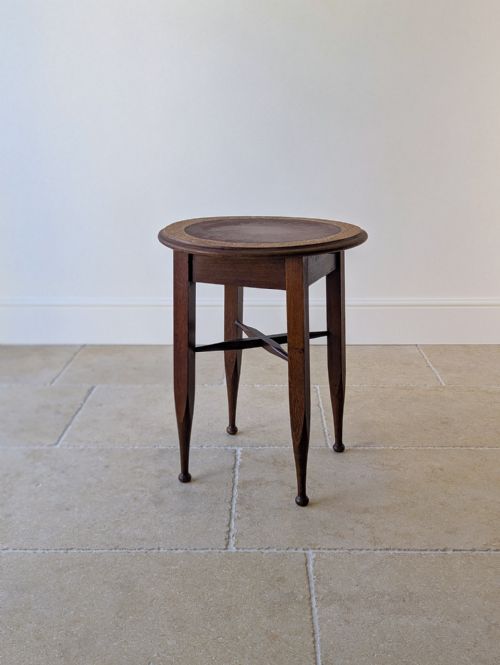


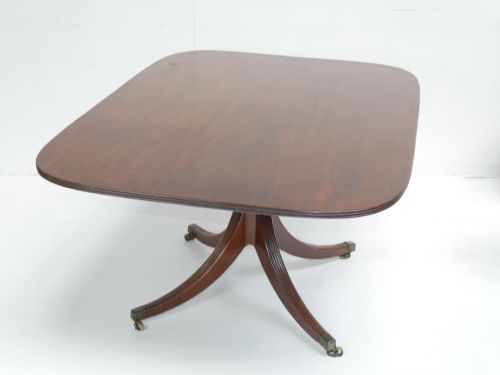


Antique Round Corner Table
These antique round corner table pieces offer practical surfaces with softened edges, combining period craftsmanship with versatile domestic utility.
Antique Round Corner Table
An antique round corner table brings practical domestic utility and softer geometric lines to a room, appearing in forms from dining tables to smaller occasional pieces. When you search for an antique round corner table, you encounter diverse formats including tilt-top dining pieces, fold-over games tables, and pedestal desks.
The pieces span multiple periods from the eighteenth century through to the early twentieth century, showing influences from Georgian, Victorian, Edwardian, and Art Deco aesthetics. Mahogany and oak dominate the construction, often enhanced with brass hardware or leather inserts depending on the specific function of the table.
How they were made
Cabinet makers utilised solid timbers such as mahogany and oak alongside burr walnut veneers to construct these tables, often mounting tops onto central pedestals or sturdy legs. Joinery methods relied on traditional techniques to ensure stability, particularly for tilt-top mechanisms and fold-over leaves.
Surfaces were finished to highlight natural grain patterns, while specialised forms like games tables incorporated baize or leather playing surfaces within the wooden framework.
Some tilt-top tables doubled as impromptu shields against draughts when tilted vertically beside the hearth.
What varies in quality
The distinction between standard examples and superior pieces rests upon the choice of timber figure, such as highly figured mahogany or burr walnut veneer, which elevates the visual impact. Finer workmanship shows in the precise execution of the rounded corners and the smooth operation of moving elements like tilt-top hinges and fold-over leaves.
Proportion and architectural balance also separate workshop output, where pieces designed with classical restraint command greater appreciation than simpler utilitarian variants.
The Antique Round Corner Table Glossary
- Tilt-top table
- A table featuring a mechanism that allows the surface to pivot to a vertical position when not in use. This clever design saved valuable floor space in historical rooms.
- Fold-over table
- A dual-purpose surface equipped with a hinged leaf that unfolds to double the top area, frequently utilised for card games or dining. It often conceals a storage well underneath.
- Pedestal desk
- A sturdy writing table supported by two side columns or pedestals containing drawers. These pieces often incorporate inset leather writing surfaces.
- Occasional table
- A smaller, movable table designed for specific, intermittent tasks such as holding a lamp or displaying decorative objects. They represent the lighter side of period furniture design.
Antique Round Corner Table: Frequently Asked Questions
What rooms suit an antique round corner table?
These tables adapt easily to living rooms, studies, and dining spaces due to their softened edge profiles. The variety in scale from small occasional pieces to large dining formats ensures a suitable fit.
Smaller lamp and games tables tuck neatly beside seating arrangements, while pedestal dining variants anchor a central room layout effectively.
How do I identify a tilt-top mechanism?
The top pivots on a birdcage or catch mechanism attached to a central pillar, allowing the surface to lie flat or stand upright. This design originated to save floor space in domestic interiors.
Examining the underside reveals the wooden or brass catch responsible for locking the surface securely in the horizontal position.
What is burr walnut veneer?
Burr walnut veneer consists of thin slices of highly figured wood grain taken from tree growths, applied over a stable secondary timber base. This technique creates complex, swirling patterns across the tabletop.
Craftsmen utilised this material during periods like the Art Deco era to achieve striking visual depth on prominent furniture surfaces.
Are these tables suitable for daily use?
Period tables constructed from solid hardwoods and robust veneers handle everyday activities well when treated with standard furniture care. Their historical construction methods prioritise lasting structural integrity.
Using coasters and placemats helps protect polished mahogany and oak surfaces from moisture and heat during routine domestic employment.