





Antique Rosewood Server
An antique rosewood server brings dense tropical grain and formal presence to a room, offering both display surface and enclosed storage.
Antique Rosewood Server
When searching for an antique rosewood server, buyers encounter forms spanning the nineteenth century, including Regency, William IV, and Victorian periods. These pieces serve primarily as sideboards, chiffoniers, and console tables, functioning as both storage and display surfaces within formal dining or living spaces.
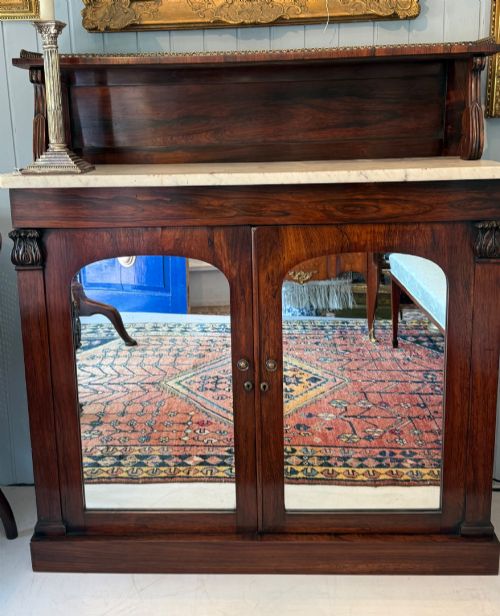
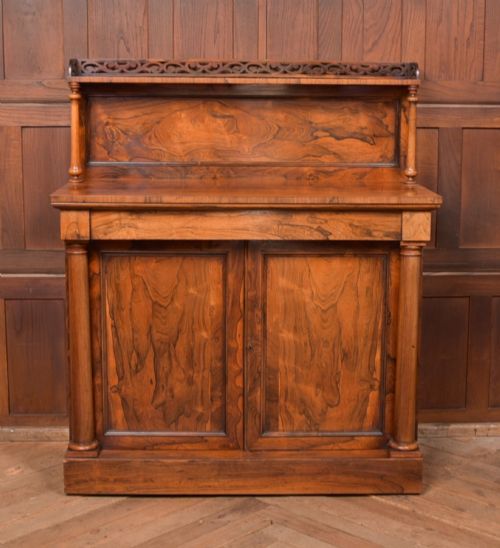
The versions most frequently met on this page are chiffoniers and sideboards executed in rich rosewood. They often incorporate brass inlay, mirrored backs, or marble tops, reflecting the decorative tastes of the nineteenth century from Regency elegance to later Victorian production.
How they were made
These pieces rely heavily on solid and veneered rosewood applied to stable secondary timbers, often accented with contrasting boxwood or gleaming brass inlay. Cabinetmakers utilised traditional joinery techniques to construct the carcasses of sideboards and chiffoniers, ensuring stability for heavy marble tops or mirrored superstructures.
Surface finishing involved meticulous hand polishing to bring out the deep, dark grain patterns characteristic of rosewood. Metal elements such as brass grilles, stringing, and handles were carefully fitted into recessed channels within the timber.
Antique Rosewood Server Retail Price Guide 2026
Typical asking prices for rosewood server among the pieces listed under this phrase on Sellingantiques today, from the lower quarter to the upper quarter. They describe what is for sale here now, not the wider market.
Listings feature pieces spanning the nineteenth century, with materials including rosewood, marble, brass, and mahogany across sideboards, chiffoniers, and console tables.
What varies in quality
Quality in these pieces rests upon the selection and matching of the rosewood veneer across the primary surfaces. Superior examples demonstrate continuous grain patterns and precise execution of inlay work, whether in brass or lighter woods.
The integrity of the structural carcass and the quality of secondary materials, such as solid marble tops or integrated mirror glass, distinguish standard production from exhibition pieces. Finer workshops invested greater detail in carved elements and internal drawer construction.
The Antique Rosewood Server Glossary
- Chiffonier
- A low sideboard or cabinet featuring shelves or a mirrored back above the main surface. This form gained popularity during the Regency and Victorian periods for storing china and linens.
- Regency
- An English design period spanning the early nineteenth century defined by classical restraint and archaeological influence. Pieces from this era often incorporate brass inlay and dark tropical timbers.
- Rosewood
- A dense, heavily grained hardwood prized for its deep reddish-brown colour and dark figuring. It was extensively utilised for high-end cabinetmaking throughout the nineteenth century.
- Inlay
- A decorative technique where contrasting materials such as brass or boxwood are set flush into the wooden surface. This method creates geometric patterns or floral motifs across doors and friezes.
Antique Rosewood Server: Frequently Asked Questions
What is an antique rosewood server used for?
These pieces function primarily as sideboards and chiffoniers, offering surface space for serving or display alongside enclosed lower storage for dining accessories.
Historically, they occupied dining rooms and parlours where hosts stored silver, glassware, and linens close at hand.
How do I identify a Regency period piece?
Regency items typically display classical proportions, clean architectural lines, and characteristic brass stringing or inlay set into dark rosewood surfaces.
They often date from the early nineteenth century and reflect the prevailing classical revival tastes of that era.
What distinguishes a chiffonier from a sideboard?
A chiffonier is generally more compact and frequently includes a raised superstructure featuring shelves or a mirror attached to the back.
Sideboards tend to be longer, heavier pieces designed primarily for large dining rooms with extensive cupboard and drawer arrangements.
How should I care for rosewood furniture?
Maintain stable humidity levels in the room to prevent the rosewood veneer from drying out or lifting away from the underlying carcass.
Dust regularly with a soft, dry cloth and avoid placing the furniture in direct sunlight or near direct heat sources.