
Antique Rococo Clock
An antique rococo clock captures the exuberant asymmetry and naturalistic scrollwork of the eighteenth-century revival, bringing sculptural gilt bronze into domestic interiors.
Antique Rococo Clock
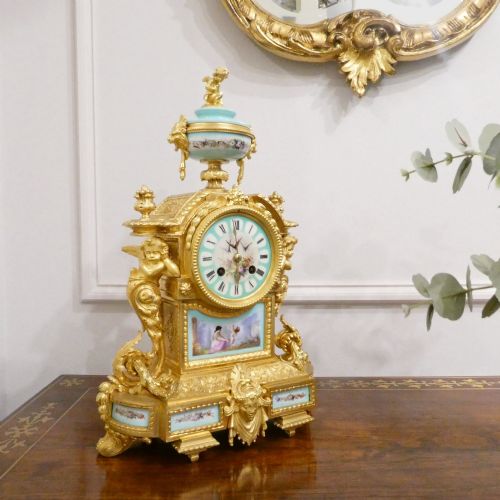
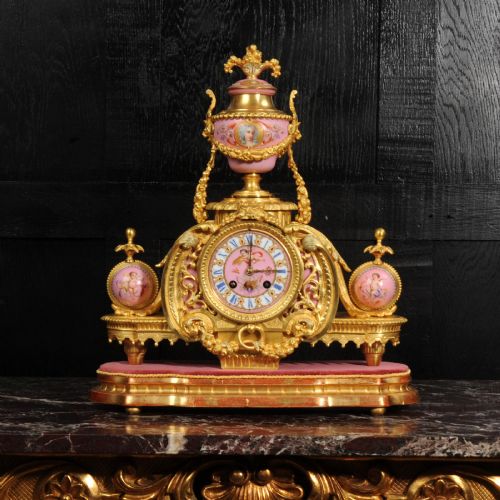
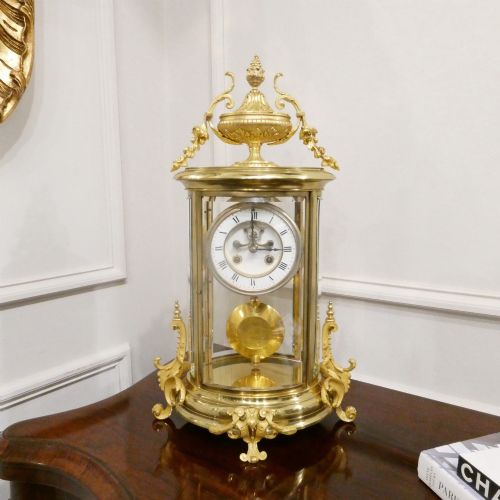
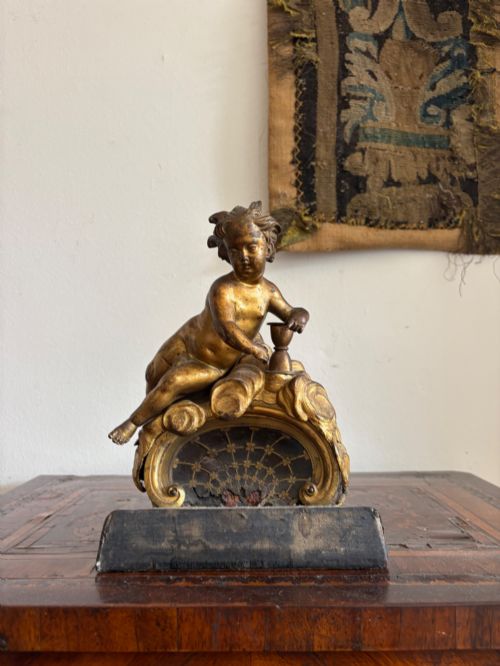
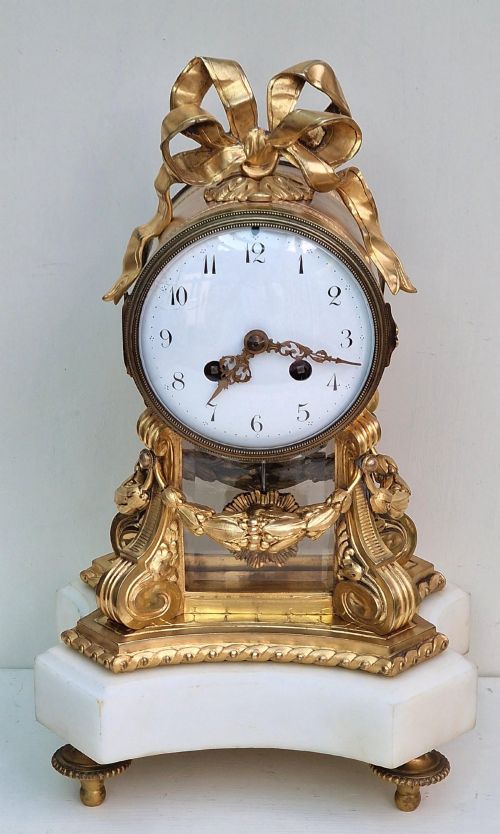
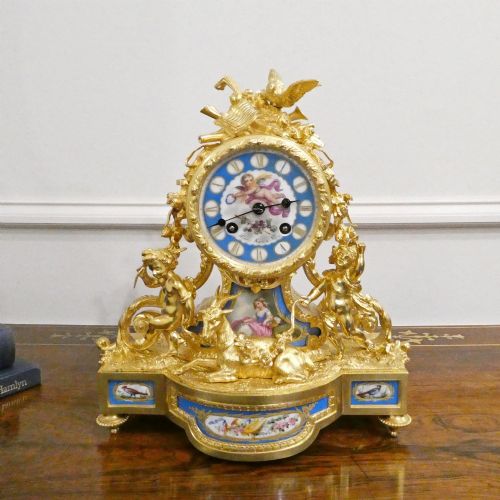
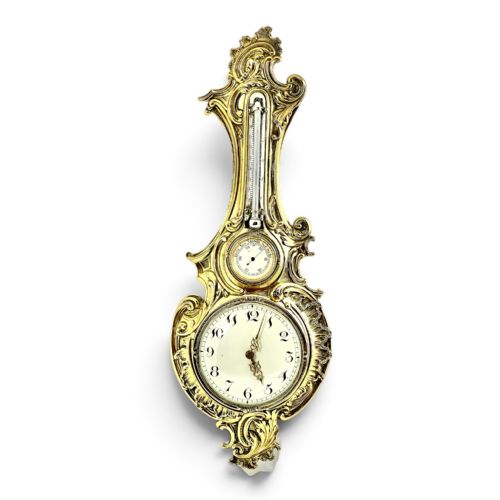
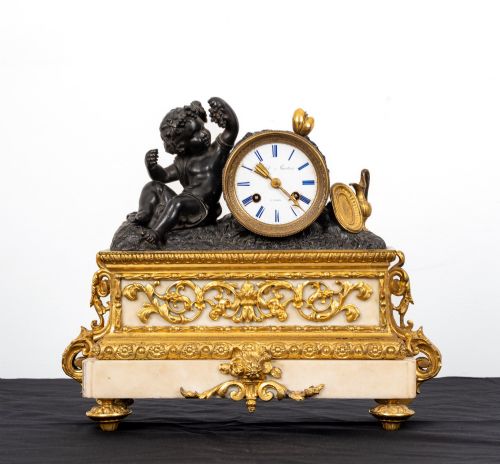
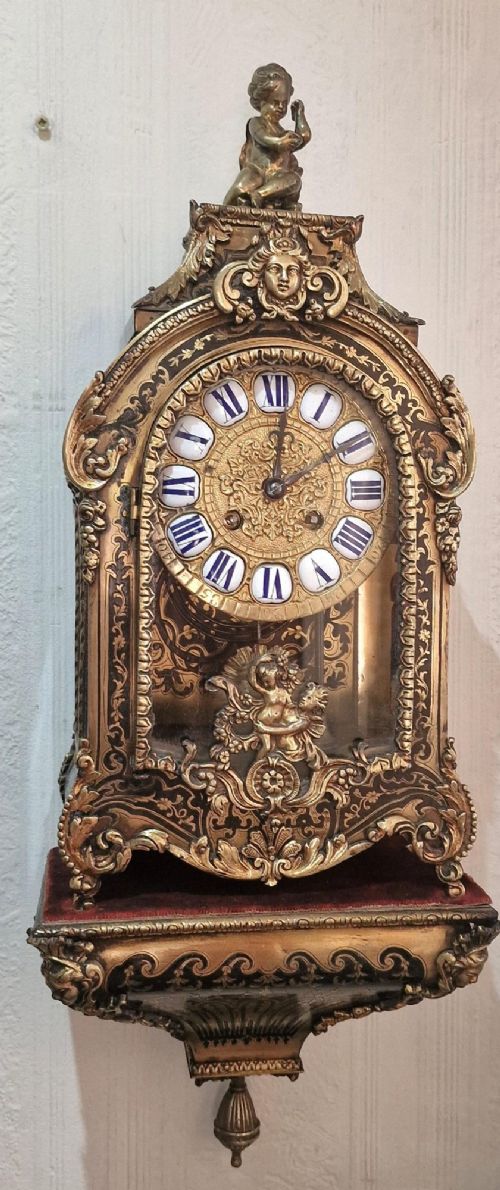
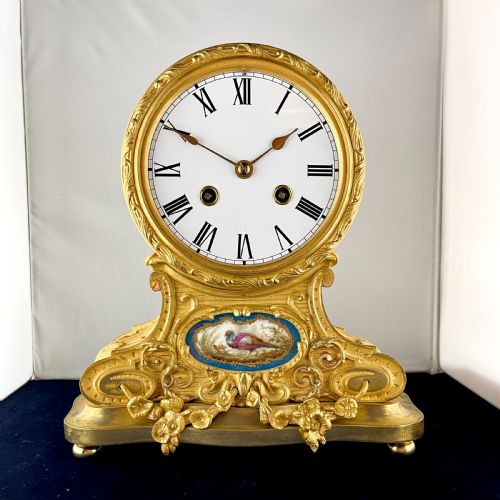
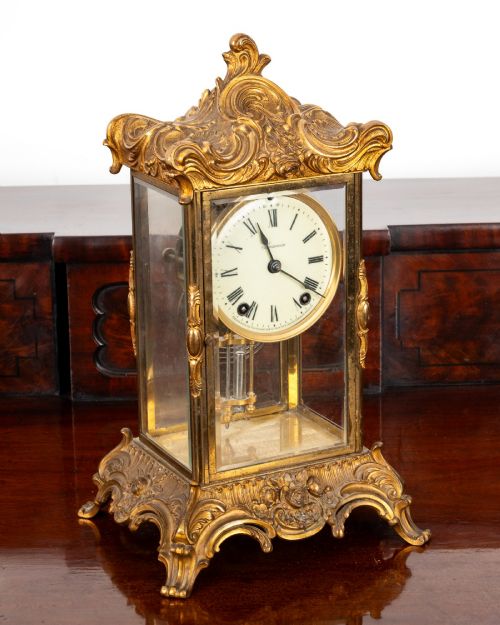
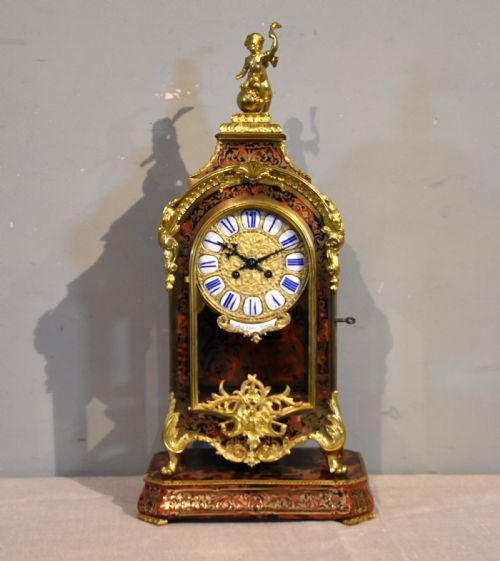
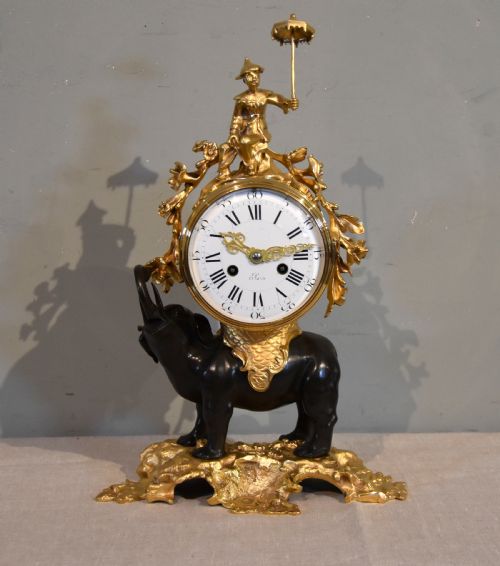
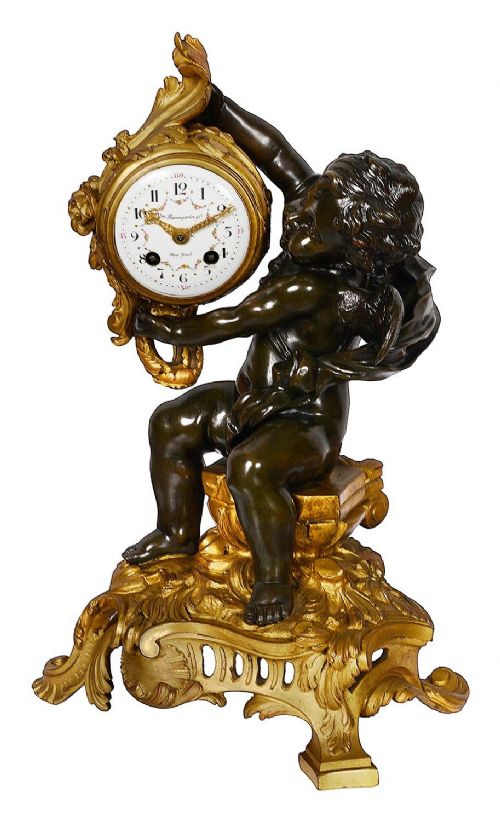
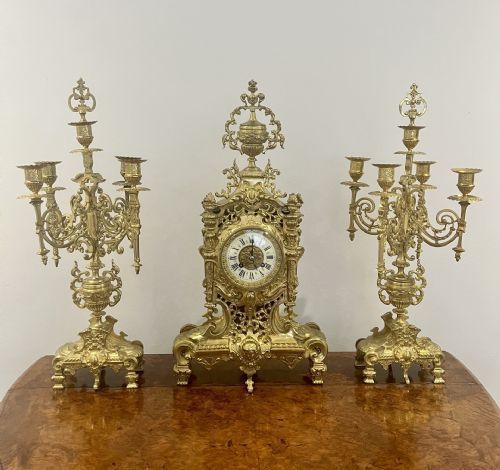
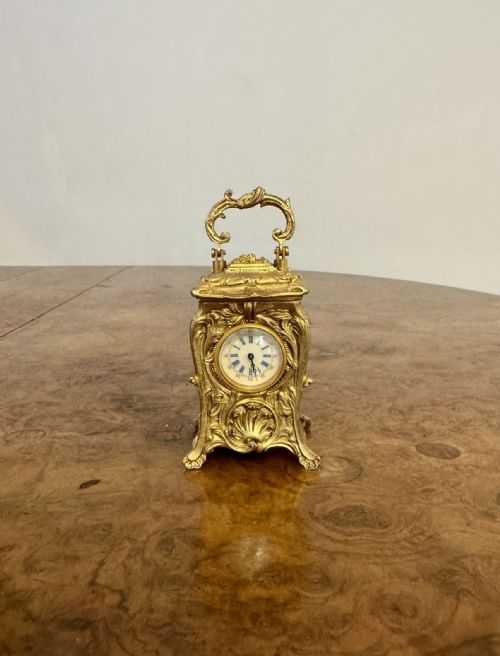
When searching for an antique rococo clock, buyers encounter predominantly nineteenth-century French mantel clocks and cartel wall clocks alongside matching clock garnitures. These pieces display the characteristic Louis XV and Rococo Revival styles defined by C-scrolls, floral mounts and figural elements.
The domestic mantel clock serves as the most frequent form on this page, often accompanied by side pieces or mounted on white marble bases. Cartel wall clocks also appear, hanging securely by carved giltwood or gilt bronze frames.
Materials and Construction
Maker workshops cast cases in bronze, brass and ormolu, applying mercury gilt or silver finishes to achieve deep metallic lustre. Porcelain plaques from Sèvres and painted enamel dials integrate into the metal frameworks.
Cabinetmakers constructed wooden carcasses using walnut, tortoiseshell and boulle marquetry of brass and tortoiseshell. Movement makers such as Samuel Marti, Japy Frères and Vincenti supplied the mechanical brass gear trains that drive the strikes and pendulums.
An eighteenth-century ormolu windmill populated by Meissen harlequin and columbine figures brings theatrical storytelling to timekeeping.
Evaluating Craftsmanship
Quality rests in the crispness of the bronze chasing and the depth of the original gilding across asymmetric scrollwork. Heavy, solid castings with finely articulated figures and hand-painted porcelain panels distinguish superior workshops from simpler production.
The integration of signed clock movements by notable makers adds mechanical reliability and historical weight to the piece. Preservation of original mercury gilding and intact porcelain elements determine the desirability of surviving examples.
Achille Brocot·Samuel Marti·Henry Marc·Japy Frères·Leroy Paris·Vincenti·Raingo Freres·Leon Message
The Antique Rococo Clock Glossary
- Ormolu
- Gilded bronze produced by applying a mixture of gold and mercury to a bronze base and heating it. This technique creates a durable, warm golden finish characteristic of French luxury objects.
- Cartel clock
- A wall clock housed in an ornate frame matching the material of the case. These decorative timepieces mount directly onto wall surfaces using integrated brackets.
- Garniture
- A set consisting of a central clock flanked by matching decorative objects such as vases or candelabra. Such ensembles create symmetrical arrangements on mantelpieces.
- Boulle
- Marquetry technique utilising tortoiseshell and brass inlay developed by André-Charles Boulle. Artisans cut thin sheets together to produce contrasting patterns across clock cases.
- Champlevé
- Enamelling method where troughs are gouged into a metal surface and filled with vitreous enamel powder before firing. This process produces colourful decorative bands and panels.
Antique Rococo Clock: Frequently Asked Questions
How do I wind the clock?
Use the appropriate winding key on the dial arbor, turning gently until resistance indicates the mainspring is fully tensioned.
Avoid over-winding to protect the historical springs within the brass movement.
Where should I place my clock?
Position the clock on a stable mantelpiece, shelf or wall bracket away from direct sunlight and damp conditions.
Level the base carefully to ensure the pendulum swings evenly and keeps accurate time.
How do I identify the period?
Examine the style of the cast bronze mounts, dial signatures and the construction methods visible inside the case. Nineteenth-century revivals frequently reinterpret eighteenth-century Louis XV motifs using industrial casting techniques.
Maker stamps on the backplate provide precise dates and workshop origins.
What is a clock garniture?
A clock garniture includes a central clock accompanied by a matching pair of decorative objects, such as candelabra or vases, designed en suite. These sets unified interior decorative schemes on nineteenth-century mantelpieces.
Materials match across the entire ensemble for visual harmony.