



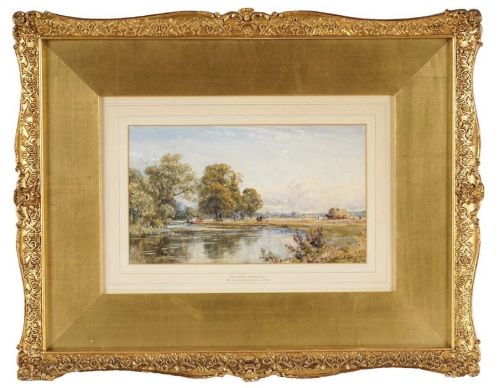
Antique River Landscape Artwork
These antique river landscape artwork pieces capture waterways and rural banks through nineteenth-century oils, watercolours, and charcoal drawings.
Antique River Landscape Artwork
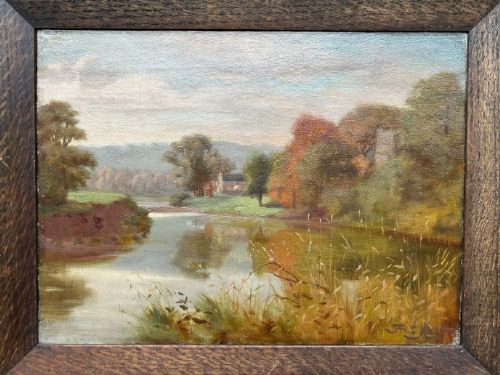
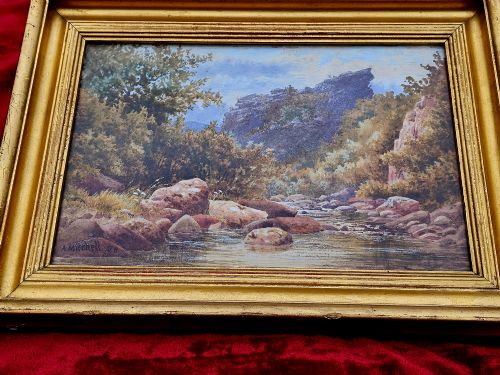
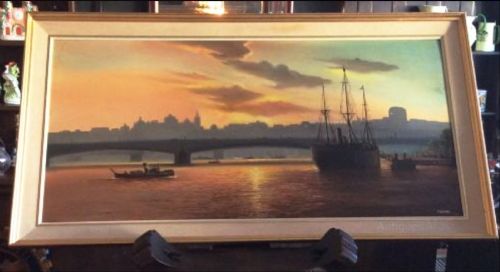
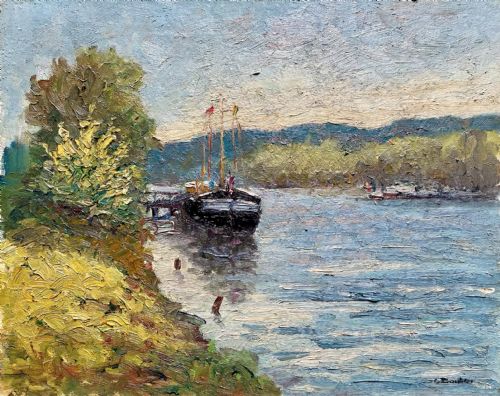
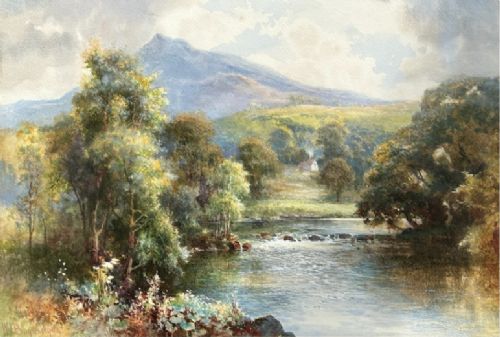
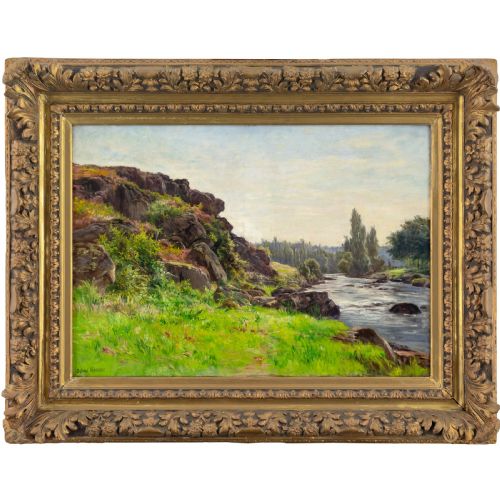
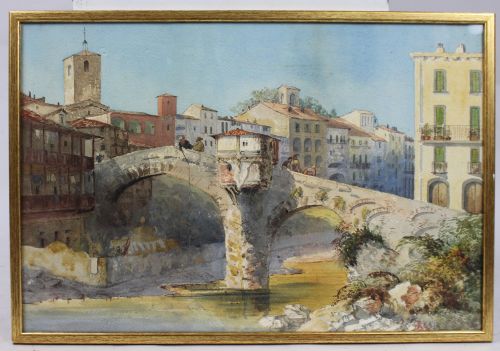
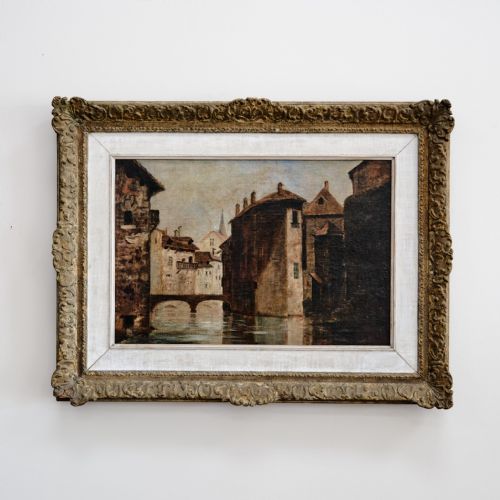
When you search for antique river landscape artwork, you encounter framed watercolours and oil paintings recording rural riverbanks, bridges, and city waterways. The selection spans the nineteenth century through the early twentieth century, taking in British, French, and Dutch views.
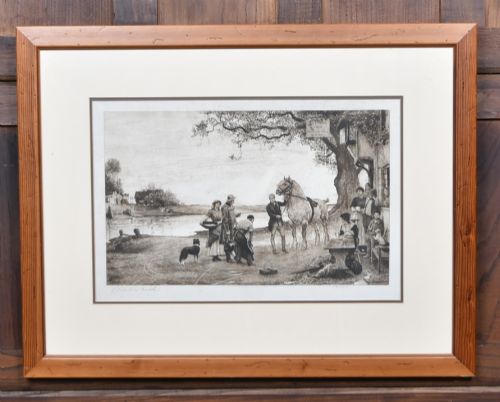
Most examples present watercolours on paper or oil on canvas, depicting specific locations such as the Thames, Welsh rivers, and continental canals. Smaller charcoal drawings and etchings also appear alongside larger gallery canvases.
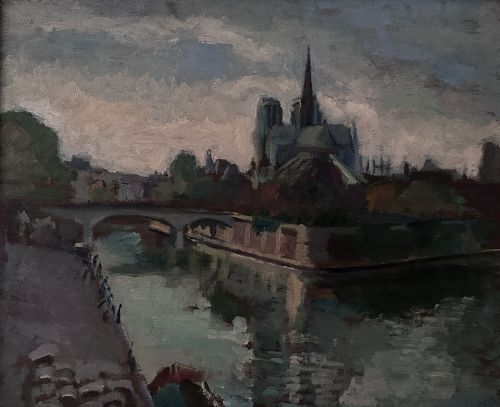
The styles shift from Victorian and Romantic watercolours towards Edwardian tonalism and French impressionism. Pastoral scenes of figures near water sit beside industrial townscapes and misty morning vistas.
How they were made
Artists worked primarily in oil paint on canvas, wood panels, or board, building up pigment for rich textures, while others used delicate watercolour and pen and ink on paper. Support frames often include period wood and gesso mouldings.
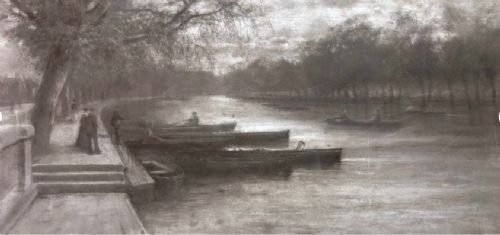
Charcoal drawings on canvas or paper relied on smudged lines and tonal shading to capture atmospheric mist and evening light. Etchings and lithographs utilised inked plates pressed onto paper sheets to multiply topographical views.
Antique River Landscape Artwork Retail Price Guide 2026
Typical asking prices for river landscape artwork among the pieces listed under this phrase on Sellingantiques today, from the lower quarter to the upper quarter. They describe what is for sale here now, not the wider market.
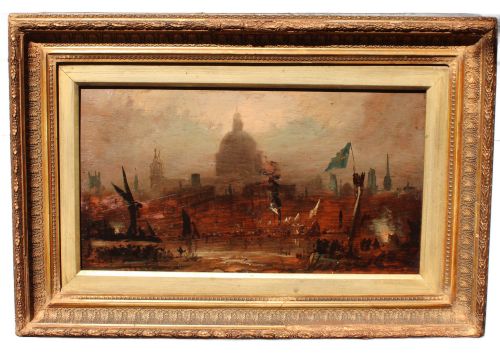
Several artists clearly took inspiration from moody evening fog, channelling distinct Whistler aesthetics onto riverbanks.
What varies in quality
Distinction lies in the handling of light, water reflections, and atmospheric perspective rather than mere subject matter. Stronger works convey a distinct mood through confident brushwork or precise watercolour washes.
The integrity of the original support, paper condition, and the survival of period frames influence the overall character of each piece. Signed works by recorded artists carry distinct documentation compared to anonymous school pieces.
Alfred Young Nutt·Frederick Marriott·William Joseph Boyes·Robert W Macbeth·Robert Thorne Waite·Francis Moltino·David Roberts·Albert Bierstadt·Willem Bos·Henri Ottmann·George Oyston·Albert Rieger·Herbert Royle·Florence Adelina Hess·Henry H Parker
The Antique River Landscape Artwork Glossary
- Gesso
- A plaster-like mixture applied to wood frames or panels to prepare a smooth surface for gilding or painting. It provides the rigid base for ornate period framing.
- Watercolour
- A paint consisting of pigment suspended in a water-based solution, traditionally applied to paper. It allows for translucent washes and delicate tonal shifts.
- Impressionism
- An artistic movement focusing on shifting light and ordinary subject matter through visible brushstrokes. This style appears in late nineteenth and early twentieth-century river views.
- Etchings
- Printmaking technique where acid cuts into unprotected parts of a metal plate to hold ink. The inked plate then transfers the linear design onto paper.
- Panel
- A flat piece of wood used as a rigid support for oil paintings instead of canvas. Wooden supports frequently appear in nineteenth-century continental works.
Antique River Landscape Artwork: Frequently Asked Questions
How do I date a river painting?
Examine the framing, paper type, and canvas stretcher construction alongside any signatures or artist dates. Stylistic clues like Victorian costume or Edwardian tonalism also narrow the decade.
Written inscriptions on the reverse of the canvas or paper mount often record specific locations and exhibition years.
Where should I hang these artworks?
Position them away from direct sunlight and damp environments to protect nineteenth-century paper and oil pigments. Stable indoor humidity preserves both the canvas and the original gesso frame.
Display them at eye level on neutral walls where artificial lighting can mimic natural daylight.
Are charcoal drawings fragile?
Charcoal particles rest loosely on the paper or canvas surface and can smudge if touched or subjected to vibration. Glazing with protective glass safeguards the delicate medium from accidental contact.
Keep framed charcoal pieces securely sealed to prevent dust accumulation behind the glass.
What is the difference between oil and watercolour?
Oils use slow-drying pigment suspended in oil, allowing thick impasto and deep colour saturation on canvas or wood panels. Watercolours use water-soluble binders on paper, creating translucent layers and lighter luminosity.
Watercolours require glass protection, whereas older oil paintings on canvas generally remain unglazed.