

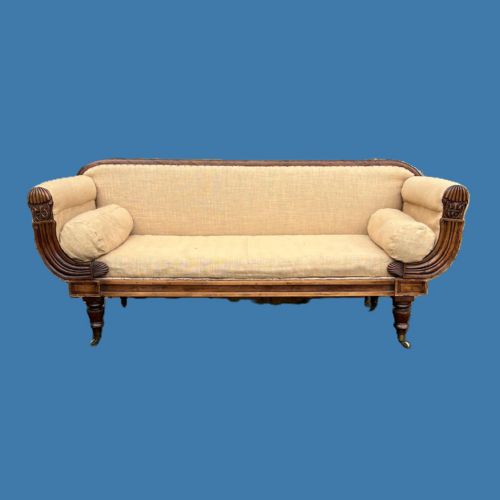

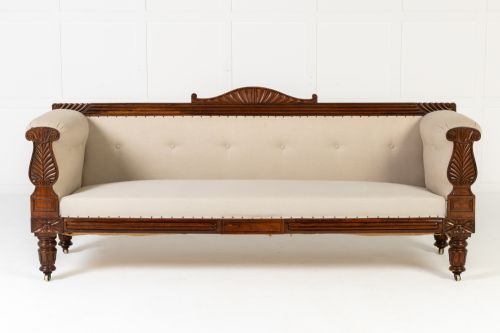


Antique Regency Settee
An antique regency settee brings classic seating to a room, offering scrolling arms and carved frames from the nineteenth century.
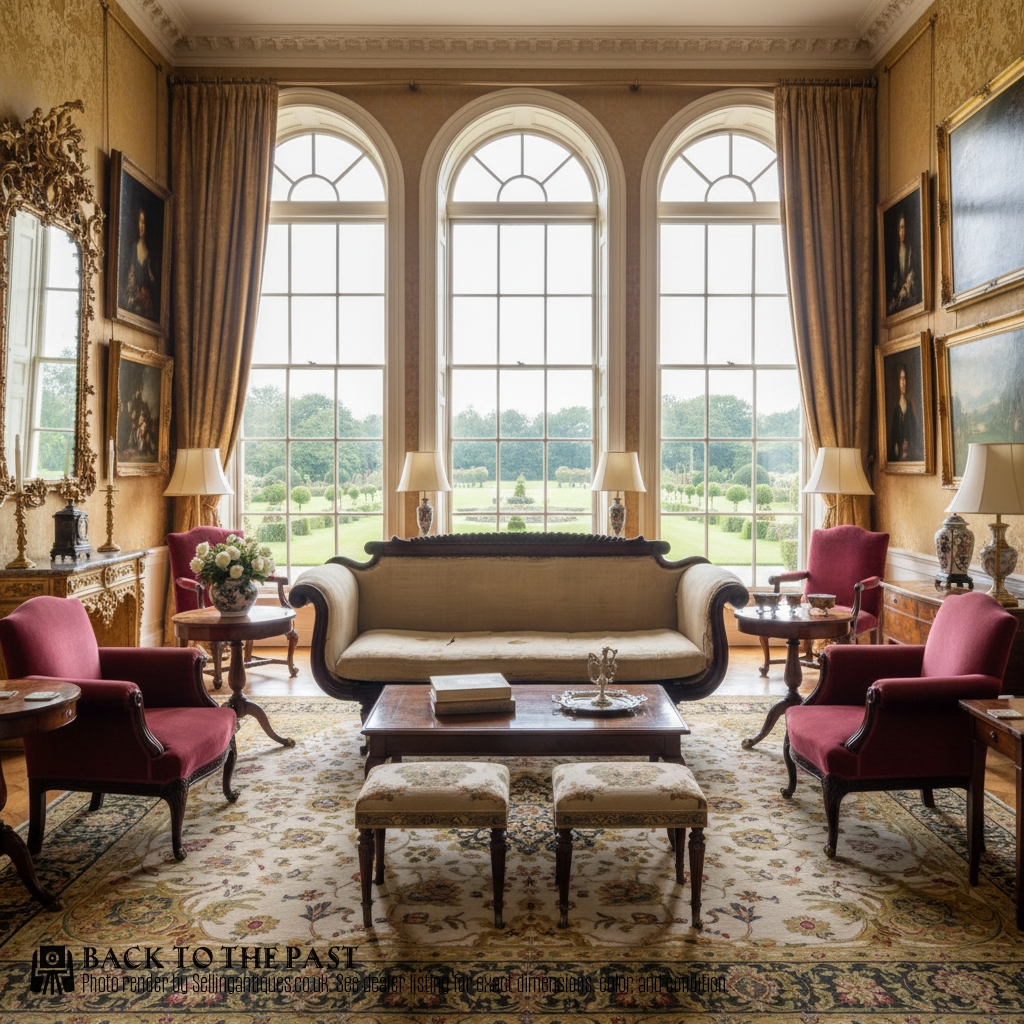
Antique Regency Settee
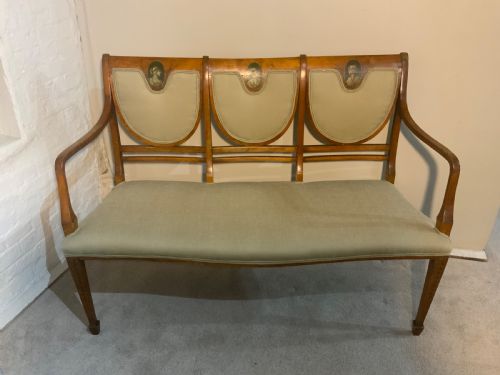
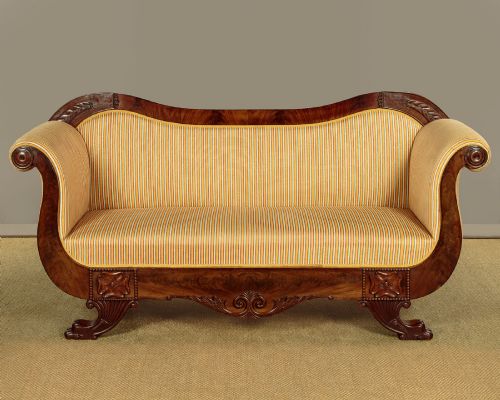
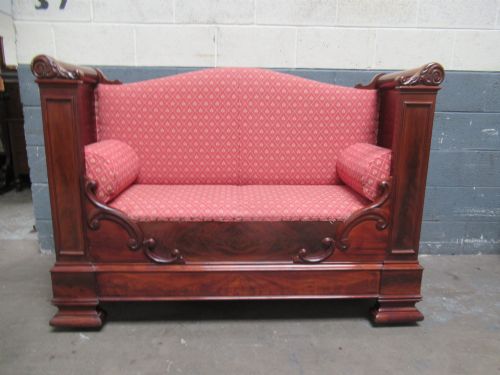
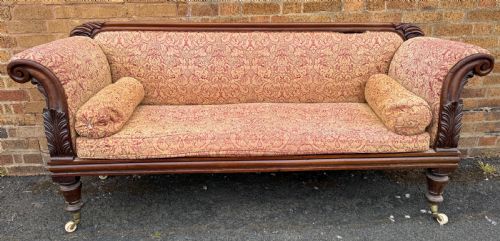
When you search for an antique regency settee, you encounter grand seating pieces spanning the nineteenth century, including styles from George IV, William IV, and early Victorian periods. These pieces appear as scroll-end couches, double-ended sofas, daybeds, and chair-back settees.
The selections on this page encompass various forms built for drawing rooms, libraries, and country houses. Mahogany and rosewood frames dominate, alongside painted satinwood, walnut, and wrought iron garden benches.
Materials and construction
Craftsmen utilised solid timbers such as mahogany, rosewood, and walnut to build sturdy frames, frequently incorporating carved details, brass inlay, and giltwood finishes. Caned seating panels and exposed show frames appear alongside examples prepared for upholstery with fabric, hessian, or brown leather.
Structural designs rely on scroll ends, lyre shapes, and double-ended configurations requiring precise joinery. Cabinetmakers shaped the timber into curved arms and bench seats, blending neo-classical lines with functional nineteenth-century seating requirements.
Listings feature nineteenth-century seating constructed from mahogany, rosewood, and walnut, alongside brass, leather, and fabric materials.
Judging quality and proportion
Superior examples display balanced proportions, crisp timber carving, and refined scroll ends that define the best nineteenth-century workshops. The integration of decorative elements like brass inlay or gilding elevates specific pieces above standard seating.
Consider the integrity of the show frame and the harmony of the timber grain, whether mahogany, rosewood, or satinwood. Quality rests in the execution of the carved details and the preservation of the original structural form.
The Antique Regency Settee Glossary
- Scroll End
- A sweeping, curved armrest design characteristic of nineteenth-century seating. This shape defines many couches and daybeds from the period.
- Double Ended
- A sofa style featuring matching scrolled or raised ends on both sides. This symmetrical form allows reclining from either direction.
- Show Frame
- An exposed wooden structural framework surrounding the upholstered portions of a settee. These visible areas often display fine carving or polished mahogany.
- Caned
- Woven rattan material utilised for seat bases and backrests. This technique provides a light, textured surface seen on specific satinwood and Anglo-Indian pieces.
- Campaign Sofa
- A portable seating form adapted for travel or military use. These pieces often utilise simulated rosewood or sturdy mahogany construction.
Antique Regency Settee: Frequently Asked Questions
Where were these settees placed?
These seating pieces originated in grand country houses, drawing rooms, and libraries during the nineteenth century. Owners positioned them to serve as comfortable daybeds or formal reception furniture.
Larger versions filled expansive drawing rooms, while smaller benches and window seats suited private chambers and hallways.
What woods were used?
Cabinetmakers utilised dense timbers including mahogany, rosewood, satinwood, and walnut for these frames. Many pieces also feature ebonised finishes or simulated rosewood graining.
Giltwood and wrought iron appear on specific salon and garden variants respectively.
Are these settees comfortable?
Original pieces vary from firm caned seating to deeply upholstered versions designed for reclining. Many settees feature sprung or stuffed cushions wrapped in leather or fabric.
Modern buyers often retain traditional padding methods or update the upholstery fabric to suit contemporary living spaces.