
Antique Regency Chiffonier
An antique regency chiffonier brings refined 19th-century utility to a room through disciplined timber and precise brass detailing.
Form and Period
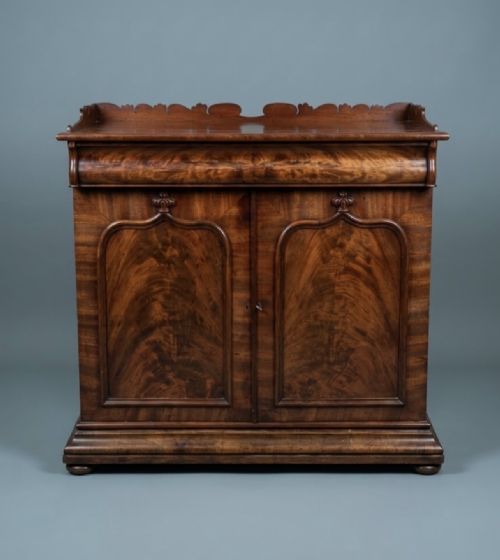
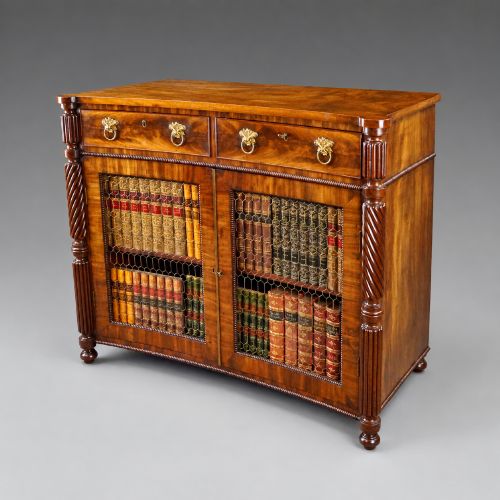
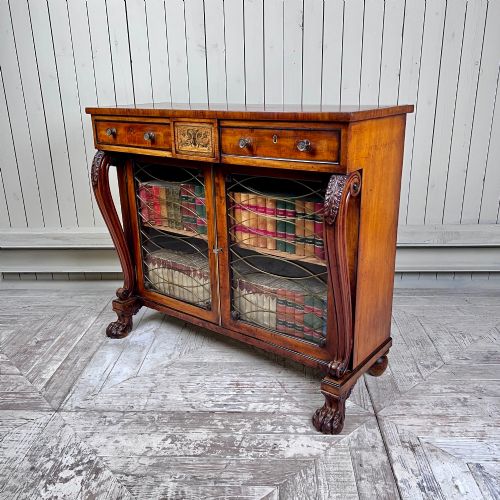
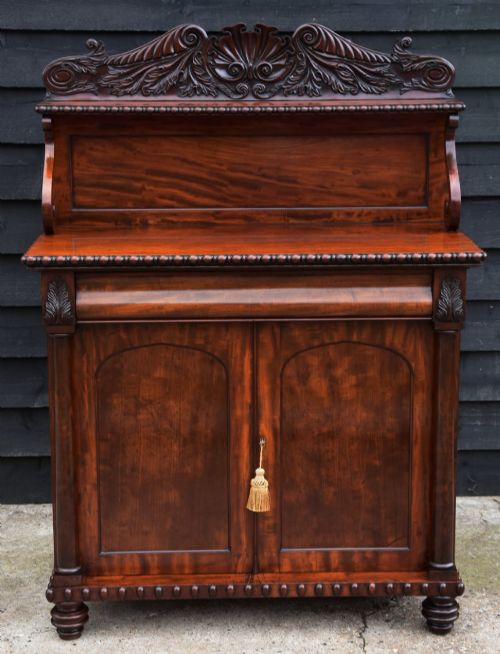
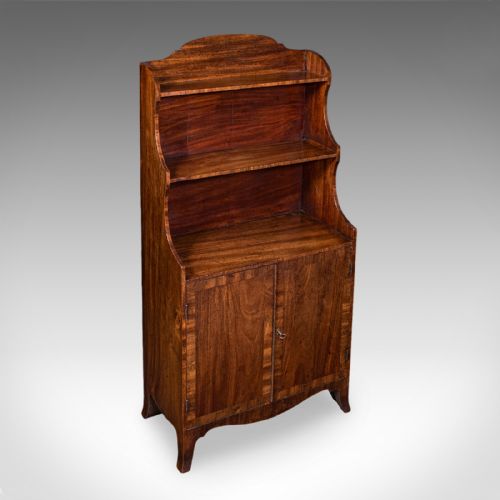
The antique regency chiffonier is a low-standing storage piece combining a cupboard base with shelves or a superstructure, emerging from the 19th century as a versatile room cabinet. These items appear across the Regency and Victorian periods, often taking the form of side cabinets, sideboards, or open bookcases.
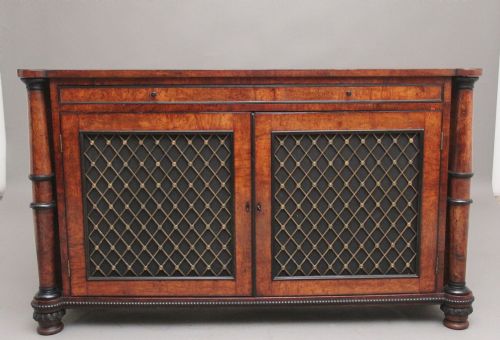
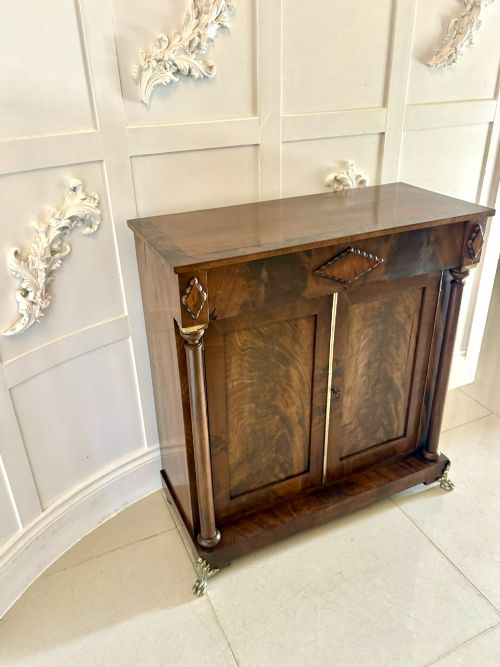
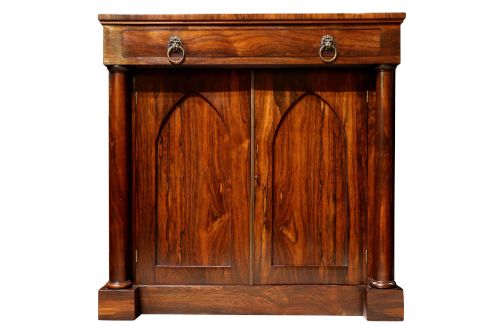
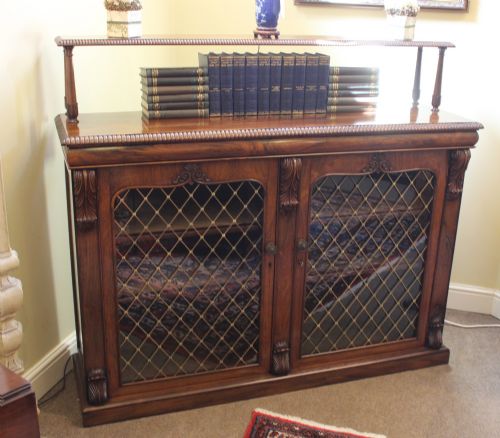
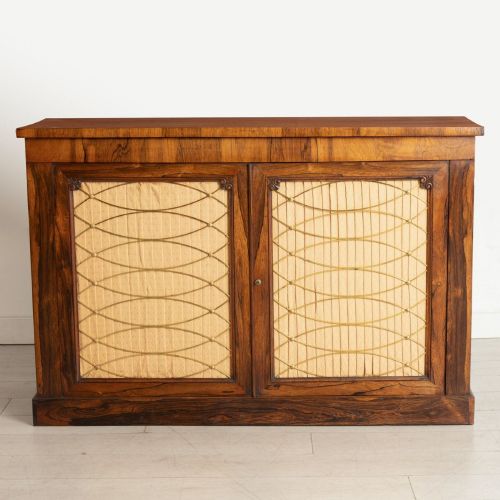
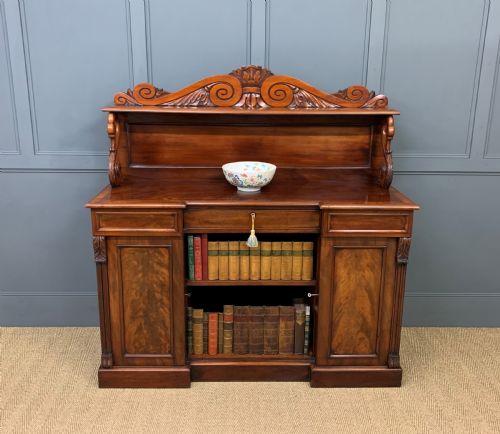
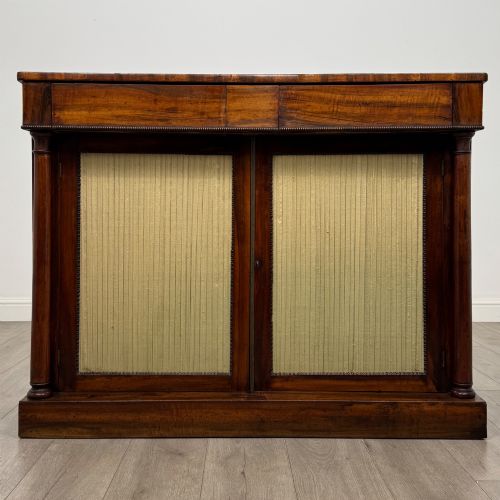
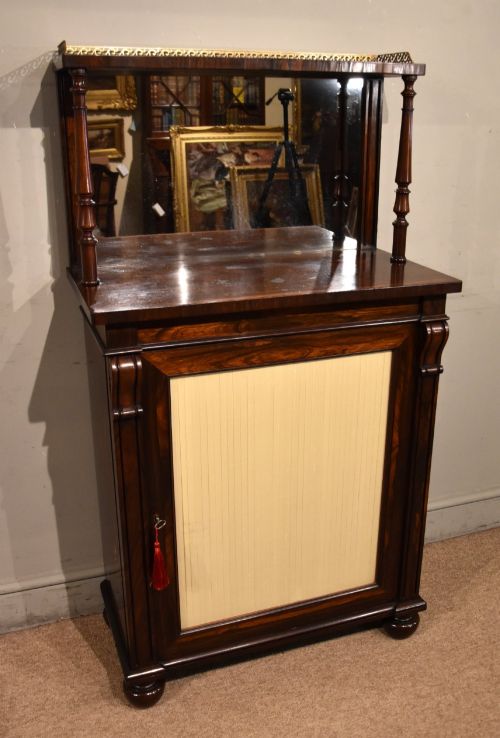
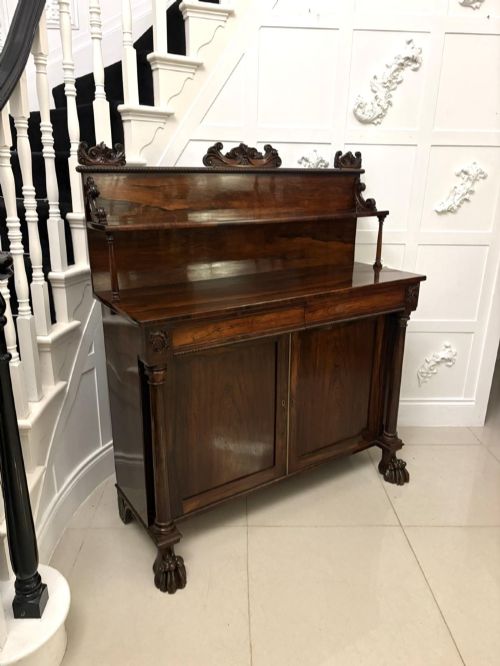
Mahogany and rosewood dominate the surviving examples, shaped into clean rectangular silhouettes that frequently integrate mirror glass, fabric panels, or marble tops. The most common configuration met here pairs enclosed lower storage with open upper display space, reflecting the functional evolution of domestic furniture in this era.
Materials and Technique
Cabinetmakers utilised dense timbers such as figured mahogany and rosewood, selected for their striking grain patterns and finished with polished surfaces. Construction relied on traditional joinery methods to build sturdy carcass frames for the two-door storage cupboards and associated side cabinets.
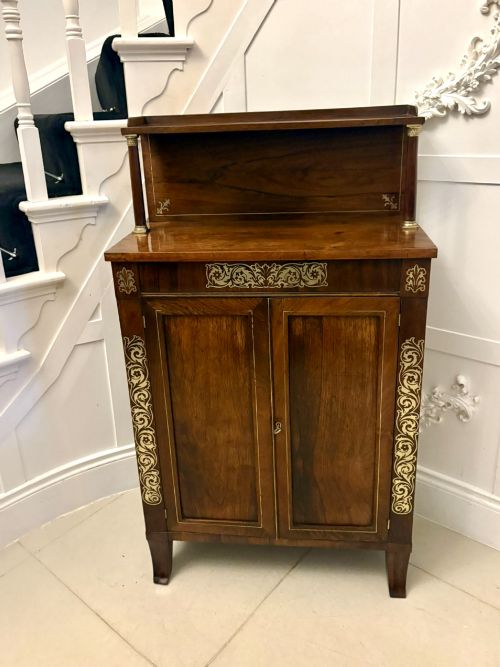
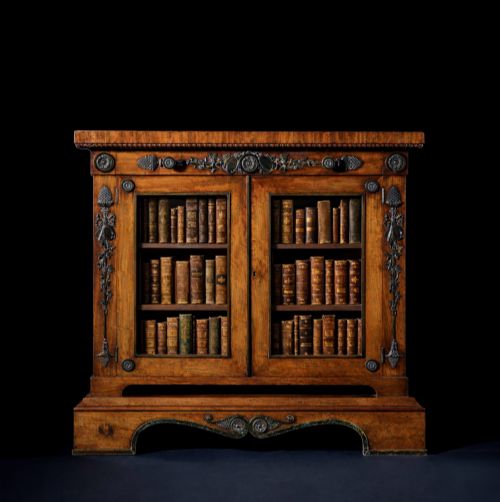
Brass inlay and decorative mounts provide sharp contrast against the dark wood grounds, alongside occasional gilding and silk-backed grille doors. Mirror glass inserted into the superstructure adds reflective depth, while specialised touches like marble tops appear on select rosewood variants.
Retail Price Guide 2026
Typical UK retail prices for regency chiffonier, calculated from the Sellingantiques database of over a million retail prices indexed since 2003. This retail price guide relies exclusively on Sellingantiques data; no external sources or auction records are used, so the figures do not describe the wider market.
Some upper shelves hide tiny mirrored panels designed to bounce candlelight around a dim evening drawing room.
Design and Execution
Quality rests in the selection of the timber veneers, where figured mahogany and rich rosewood display deliberate grain alignment across the facade. Superior pieces show crisp execution in their brass inlay work and finely carved details rather than heavy, generic ornamentation.
Proportion and structural integration separate standard items from the finer examples attributed to major workshops or distinctive regional cabinetmaking traditions. The relationship between the lower cupboard and the upper shelving must feel balanced and resolved in its architectural lines.
S. Jamar·Gillows of Lancaster
The Antique Regency Chiffonier Glossary
- Chiffonier
- A low cabinet featuring a cupboard base, frequently topped with a superstructure of shelves or a mirror. This form gained popularity during the Regency period for dining and drawing rooms.
- Superstructure
- The tiered shelving or mirrored backing mounted above the main cabinet body. It provides display space for porcelain and decorative objects.
- Brass Inlay
- Strips or motifs of brass set flush into the timber surface to create geometric or floral patterns. This technique defines much of the refined decorative work of the Regency style.
- Figured Mahogany
- Mahogany timber exhibiting natural rippling, flame, or mottled patterns within the grain. Cabinetmakers reserved these choice cuts for the most prominent exterior surfaces.
Frequently Asked Questions
What is an antique regency chiffonier used for?
These cabinets served primarily as dining room or drawing room furniture for storing linens, silver, or books while displaying decorative items on the upper tiers.
Today, they function well as sideboards, media consoles, or accent storage units in living spaces.
How do mahogany and rosewood chiffoniers differ?
Mahogany versions typically present deep reddish-brown tones with straight or flame grain patterns, aligning with classic English cabinetmaking traditions.
Rosewood variants offer darker, heavily figured purplish-brown surfaces often enhanced by contrasting brass inlay or marble tops.
What is a chiffonier superstructure?
The superstructure refers to the elevated shelves or mirrored back panels positioned on top of the main low cabinet body.
It transforms a simple cupboard into a tiered display piece characteristic of the Regency period.
Are these pieces strictly from the Regency period?
While originating in the Regency era around the early 19th century, production extended into the subsequent Victorian period.
Design characteristics and material choices help distinguish the earlier Regency items from later 19th-century interpretations.