




Antique Red Glass Vessel
An antique red glass vessel brings rich colour and light to a room, ranging from deep ruby carafes to delicate cranberry vases.
Antique Red Glass Vessel
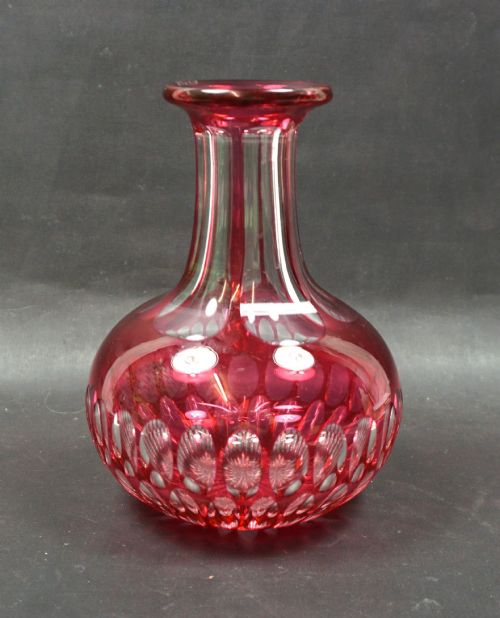
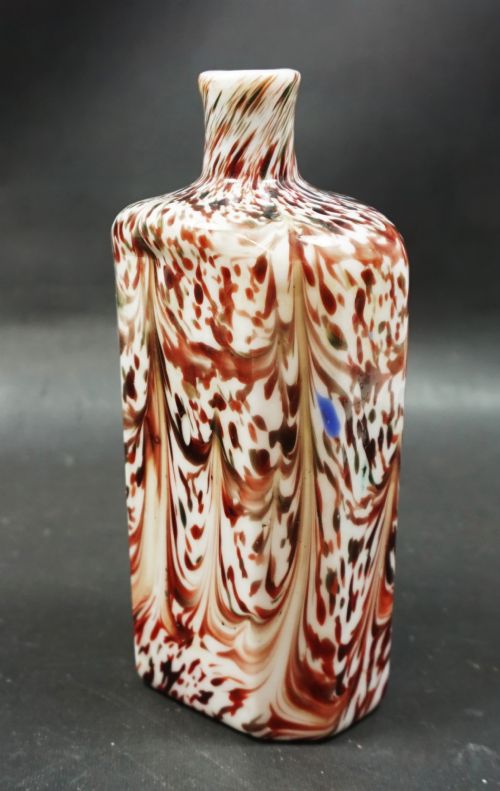
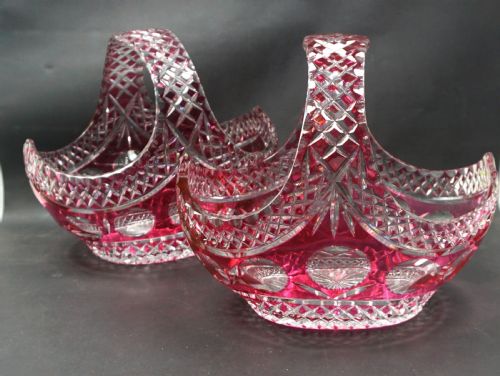
An antique red glass vessel encompasses a wide variety of forms found on this page, including vases, decanters, baskets, trinket boxes, and large apothecary carboy containers. These objects serve both decorative and functional roles in domestic interiors across different periods.
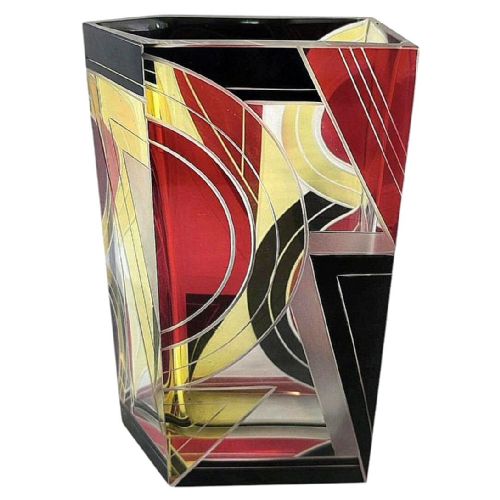
The selections span from the mid-eighteenth century through the Victorian era and into the early twentieth century, taking in Art Nouveau and Art Deco designs. English, French, Belgian, Swiss, and Bohemian origins appear throughout the selection.
Cranberry glass and ruby glass dominate the offerings, often shaped into trumpet vases, jugs, and lidded jars. Buyers encounter both simple blown forms and heavily decorated examples featuring enamel or cameo work.
How they were made
Many items utilise cranberry or ruby glass, achieved by adding gold chloride or copper to the molten batch to produce distinct red tones. Over-crystal techniques involve layering red glass over clear crystal before cutting or etching away the top layer to reveal contrast.
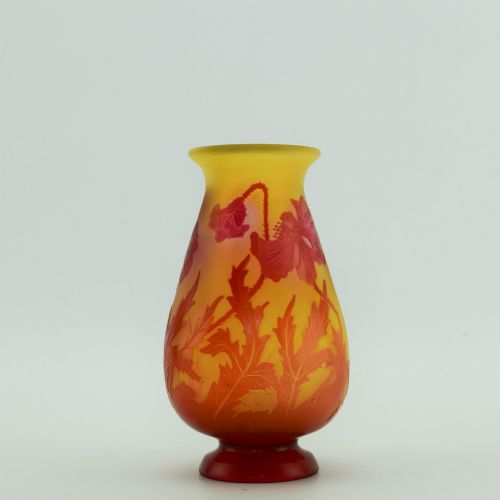
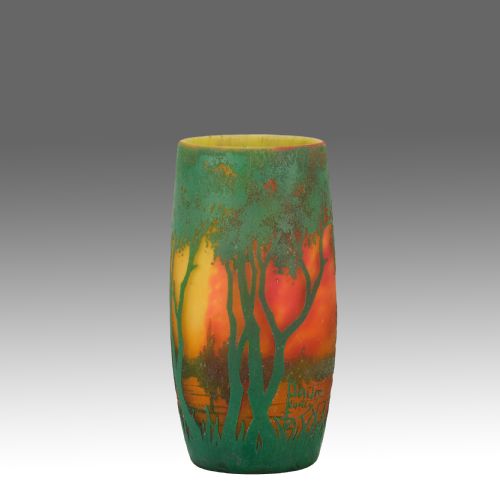
Cameo glass pieces involve multiple layers of coloured glass fused together, then carved by hand or acid-etched to create raised designs against a contrasting background. Enamel decoration and gold leaf are frequently applied to the surface and fired for permanence.
Engraving methods introduce intricate surface patterns such as fruiting vines directly into the crystal or glass body. Blow-out or souffle techniques push the hot glass outward into a mould to create high-relief floral motifs.
Even a simple Victorian trinket box manages to look as though it holds a secret.
What varies in quality
The depth and consistency of the red colouration set the visual standard for these pieces, alongside the clarity of the underlying crystal. Master glassmakers achieved rich, even hues without muddy patches or unwanted cloudiness.
The skill of the hand-carving or acid-etching dictates the refinement of cameo and cased pieces. Crisp, undercut details show superior craftsmanship compared to shallow or blurred surface patterns.
The integration of secondary materials, such as silver lids or applied enamel, influences the overall standard of an object. Precise placement and preserved gilding indicate higher workshop standards.
Val St Lambert·Legras·Daum Freres·Emile Galle
The Antique Red Glass Vessel Glossary
- Cranberry glass
- A transparent, pinkish-red glass coloured with gold chloride during the melting process. It became particularly popular during the Victorian period for tableware and decorative items.
- Cameo glass
- A luxury form of art glass created by fusing layers of different coloured glass together, then carving or acid-etching the outer layer to form a design in relief. This technique requires immense skill and patience from the artisan.
- Carboy
- A large, rigid vessel traditionally used for holding liquids, often seen in large glass formats during the early twentieth century. These utility containers now function primarily as decorative floor or table centerpieces.
- Mary Gregory glass
- Glassware decorated with white enamel silhouettes of children, usually depicted in pastoral settings amidst foliage. The style originated in the nineteenth century and appears frequently on cranberry backgrounds.
- Over-crystal
- A technique where a layer of coloured glass is cased over a clear crystal core, allowing artisans to cut through the outer layer to expose the clear material underneath.
Antique Red Glass Vessel: Frequently Asked Questions
What is the difference between cranberry and ruby glass?
Cranberry glass tends to have a brighter, pinkish-red tone achieved through the use of gold in the glass batch. It was widely used for Victorian tablewares and decorative ornaments.
Ruby glass generally presents a deeper, more saturated dark red appearance, often created using copper or other metallic oxides. Both colours appear across various forms like vases and decanters.
How can I date my red glass vessel?
Examine the base for pontil marks, wear patterns, and manufacturing signatures or workshop labels. Victorian pieces often display characteristic mould seams or hand-applied decoration styles like Mary Gregory enameling.
Art Nouveau and Art Deco items show distinct stylistic motifs, such as stylized floral carving or geometric patterns. Comparing the weight, thickness, and colour saturation with documented period examples helps confirm the era.
Can I use these vessels for fresh flowers?
Most antique glass vases and carafes hold water safely for fresh flowers, provided they have no internal cracks or structural damage. Fill them with lukewarm water rather than hot water to protect the aged material.
Empty and clean the vessel promptly after use to prevent mineral deposits from forming inside. Delicate cameo or gilded pieces require extra care when handling near water.