
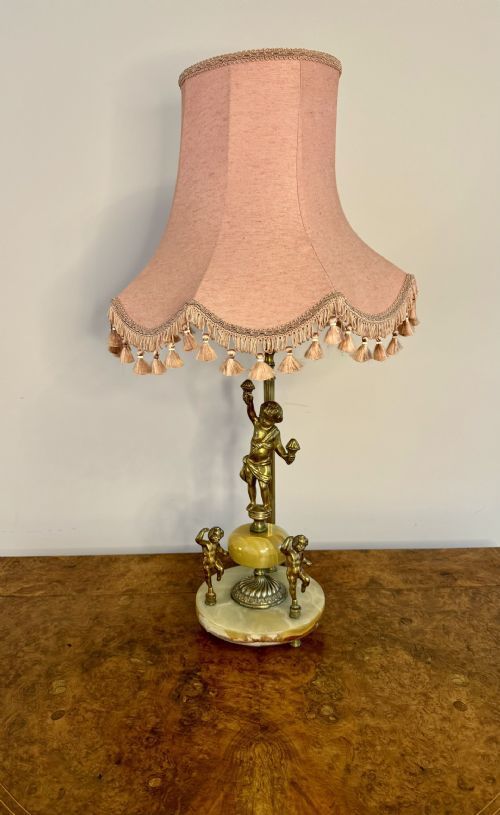


Antique Putto Desk Light
An antique putto desk light brings figurative sculpture to working surfaces, combining classical winged charm with period illumination.
Antique Putto Desk Light
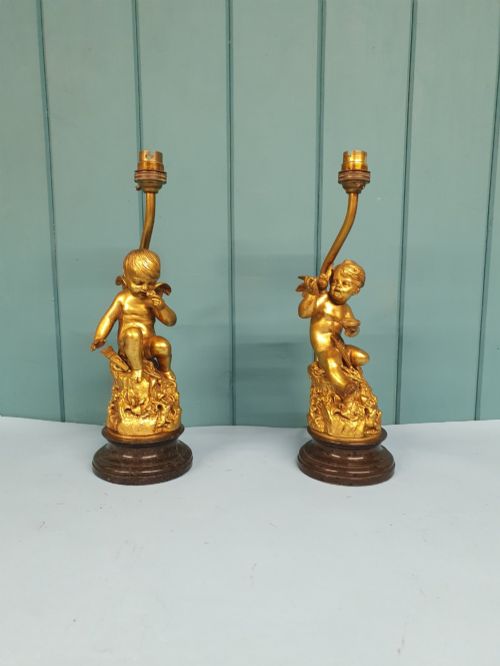
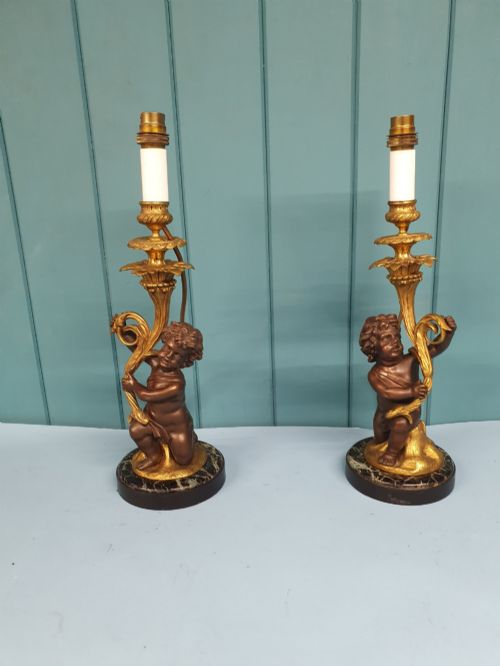
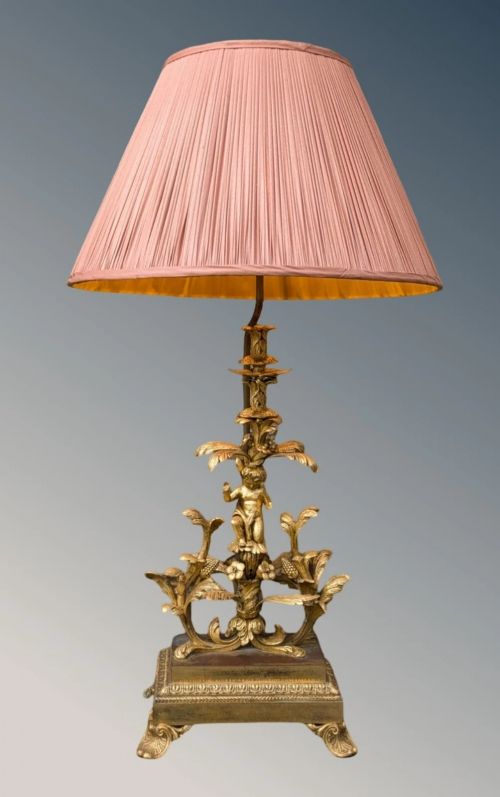
An antique putto desk light typically takes the form of a figural table lamp or a converted candlestick featuring a cherub or putto motif. These pieces emerge predominantly from the nineteenth century and the early twentieth century, spanning Victorian, Edwardian, and various French revival styles.
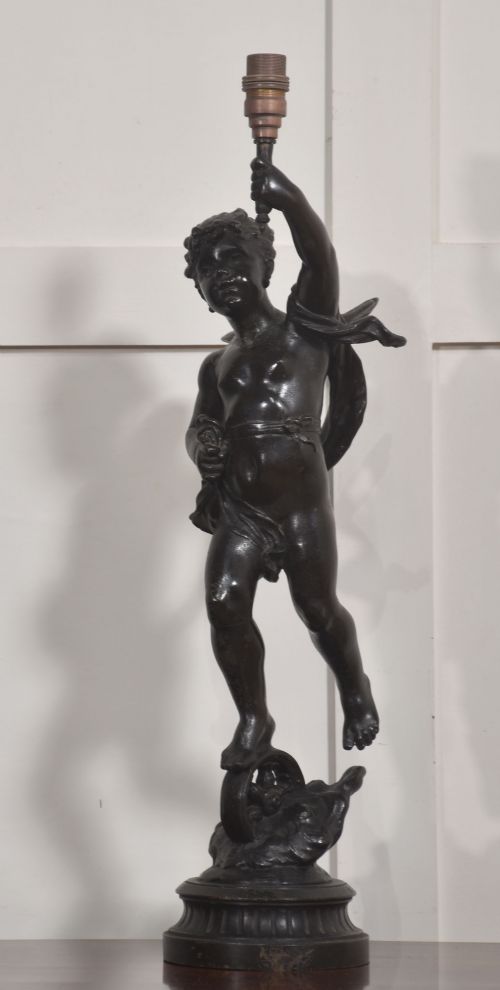
You encounter pairs of matching lamps alongside monumental single pieces on this page. The forms range from classical bronze statuettes adapted for lighting to elaborate ormolu and marble table lamps.
Origins lean heavily toward French designs, including Rococo Revival, Empire, and Second Empire aesthetics. Materials such as gilt bronze, patinated bronze, and onyx frequently form the structural base of these desk lamps.
Materials and construction methods
Maker workshops utilised metal casting techniques to form the bronze, brass, and ormolu figures of cherubs and putti. Gilt bronze and fire-gilded ormolu provide the bright metallic surfaces seen across the nineteenth-century examples.
Mounts frequently incorporate carved marble or polished onyx to anchor the heavy metal bases. Selected pieces integrate fabric shades or hand-painted porcelain components to complete the desk lighting assembly.
Dolphins occasionally join the cherubs on the base, proving that eighteenth-century French fantasy knew no zoological bounds.
What defines quality in these pieces
The choice of secondary materials marks another distinction, where solid marble and heavy ormolu outclass simpler timber or spelter constructions. The integrity of the original mercury gilding or patination separates superior specimens from later alterations.
Aug. Moreau
The Antique Putto Desk Light Glossary
- Putto
- A plump, naked male child figure frequently depicted in classical art and decorative objects. These figures form the central sculptural element of these desk lights.
- Ormolu
- Finely ground high-carat gold applied to a bronze object using a mercury amalgamation technique. This process creates a brilliant, durable golden surface finish on nineteenth-century mounts.
- Patinated bronze
- Bronze that has been chemically treated to produce a controlled surface colour or dark finish. This treatment highlights the sculptural details of the cherub figures.
- Tole peinte
- Painted sheet metal used for decorative lamp components and shades. It appears on specific period lighting pieces within these listings.
Antique Putto Desk Light: Frequently Asked Questions
How do I light a desk with these lamps?
These figural lamps sit directly on a writing surface to provide concentrated task or ambient illumination. Most modern setups use a low-wattage LED bulb to protect the antique materials from excessive heat.
Placement depends on the height and weight of the specific bronze or marble base. Ensure the cord routing does not strain any historic fittings retained within the lamp body.
Were these always electric lamps?
Many nineteenth-century examples began as candlesticks or oil lamps before later conversion to electricity. Statuettes and candelabra bases were routinely adapted as wiring became standard in homes.
This conversion process preserves the original antique sculpture while accommodating contemporary lighting requirements. Look for evidence of past adaptations within the central column.
How do I care for gilt bronze?
Gilt bronze and ormolu require gentle dusting with a soft, dry cloth to prevent the accumulation of grit. Avoid all chemical polishes and abrasive cleaners that can strip away the historic metallic finish.
Keeping the piece away from direct moisture preserves the underlying metal and any integrated marble or onyx components.
What periods do these lamps represent?
The listings span from the mid-nineteenth century through the Edwardian era and into the 1920s. Victorian and French Second Empire pieces share space with later revival designs.
Stylistic cues like rococo scrolls or classical proportions help connect individual pieces to their manufacturing decade.