




Gilded Cherub Lamp
A gilded cherub lamp brings sculptural presence and warm illumination to a room, cast in bronze, brass, or ormolu.
Gilded Cherub Lamp
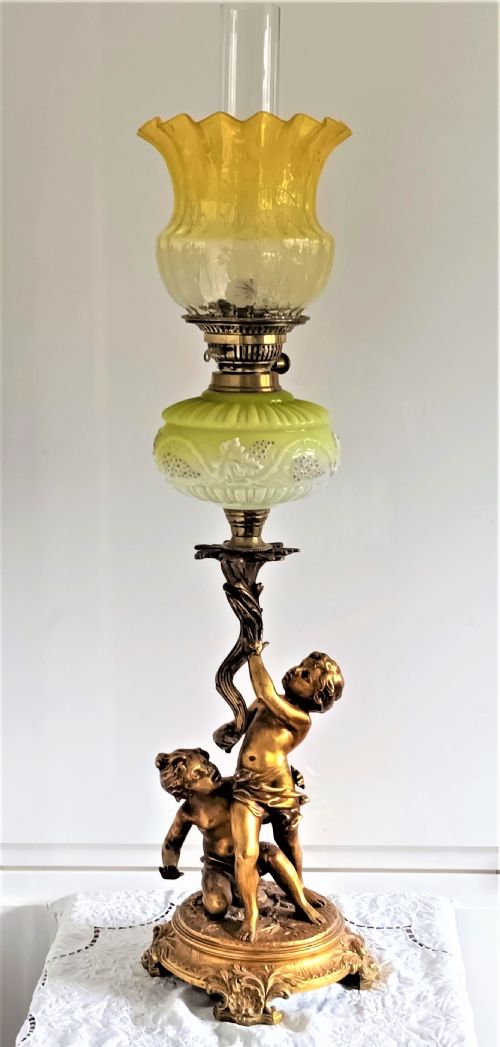
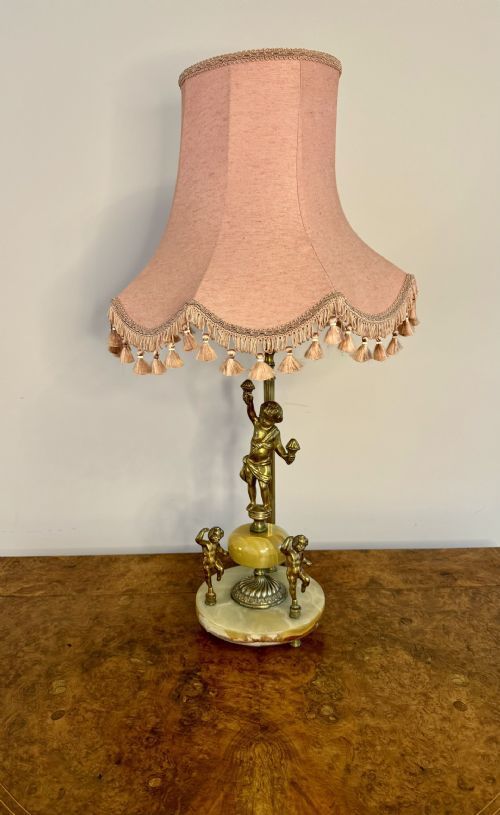
A gilded cherub lamp combines figural sculpture with functional lighting, drawing on French Rococo Revival, Victorian, and Edwardian design traditions. These decorative objects take the form of table lamps, oil lamps, candelabra, and ceiling lights, often depicting winged figures or putti.
The pieces available span from the nineteenth century into the early twentieth century, with French and English origins predominating. Buyers frequently encounter table lamps and converted oil lamps that place the cherub figure centrally upon an onyx, porcelain, or metal base.
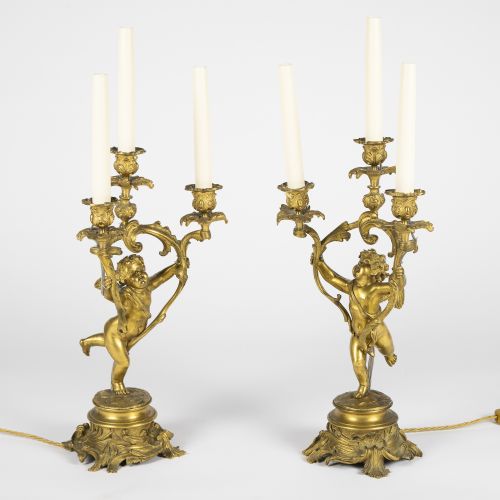
Makers integrated the figural elements into various lighting configurations, ranging from single bulb table fixtures to monumental multi-light candelabra. The stylistic vocabulary leans heavily towards French Rococo and Empire influences, expressing ornate decorative schemes.
Materials and construction methods
Makers utilised cast metals including gilt bronze, ormolu, brass, and spelter to form the primary figures and structural mounts. These metal elements were frequently combined with porcelain, glass, or polished onyx to create varied textures and visual contrast.
Surface gilding and patination applied to the bronze or brass components provided the characteristic metallic lustre seen across the pieces. Fabric shades completed the lighting assemblies, occasionally retaining original beaded fringes or trims.
Materials recorded across the inventory include gilt bronze, ormolu, brass, spelter, porcelain, glass, and onyx.
Assessing quality in execution
The choice and integration of secondary materials such as porcelain plaques or solid onyx bases dictate the overall ambition of the object. Heavier metal gauge and substantial structural integrity distinguish the most accomplished examples.
E. Mottheau of Paris
The Gilded Cherub Lamp Glossary
- Ormolu
- Gilt bronze, typically produced by applying a finely ground high-carat gold-mercury amalgam to a bronze object before heating. This technique creates a durable, rich golden surface finish characteristic of fine nineteenth-century French metalwork.
- Putti
- Plural of putto, representing plump, winged infant figures frequently depicted in classical and Renaissance art. These motifs form the central sculptural subject of the lamps.
- Spelter
- A zinc alloy used as a less expensive alternative to bronze for decorative castings. It takes patination and gilding well, appearing frequently in nineteenth-century decorative objects.
- Candelabra
- A multi-branched lighting fixture designed to hold several candles or bulbs. Many examples in this category were later adapted to electricity.
- Giltwood
- Wood that has been coated with a thin layer of gold leaf or powder. This finish appears on carved wooden elements associated with certain candelabra.
Gilded Cherub Lamp: Frequently Asked Questions
How do I wire an old lamp?
Rewiring typically involves replacing historic internal cord with modern insulated wire to meet contemporary safety standards. A qualified electrician can perform this update while preserving the original decorative mounts.
Many surviving pieces have already undergone rewiring and testing, though collectors should inspect the internal components before regular use.
Were these originally electric?
Most nineteenth-century pieces began as oil lamps or candle-holding candelabra before later conversion to electricity. This adaptation occurred gradually as households adopted electric lighting during the late Victorian and Edwardian periods.
Original oil fonts and burners are frequently replaced with lamp fittings, though some retain their original configuration.
How do I clean gilded bronze?
Gilt surfaces require careful maintenance using a soft, dry cloth to remove dust without abrasive action. Liquid cleaners can damage the delicate gold layer on ormolu and gilt bronze.
Preserving the original patination ensures the object retains its historical character and visual depth.
How do I date a cherub lamp?
Dating relies on examining the casting techniques, material combinations, and stylistic markers associated with periods like the Victorian era or French Rococo Revival. Base materials such as onyx or porcelain often point to specific decades of production.
Maker marks, where present, provide definitive clues to the workshop or foundry origin.