
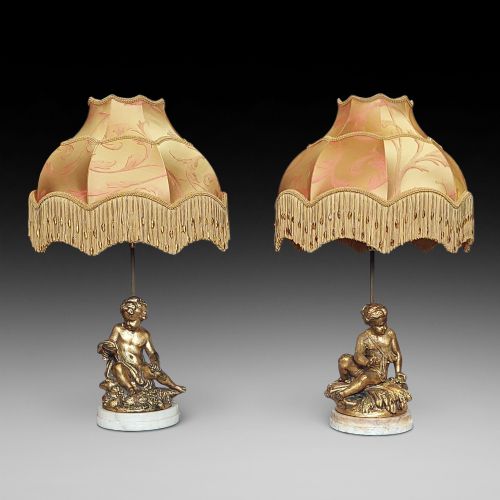


Putto Table Lamp
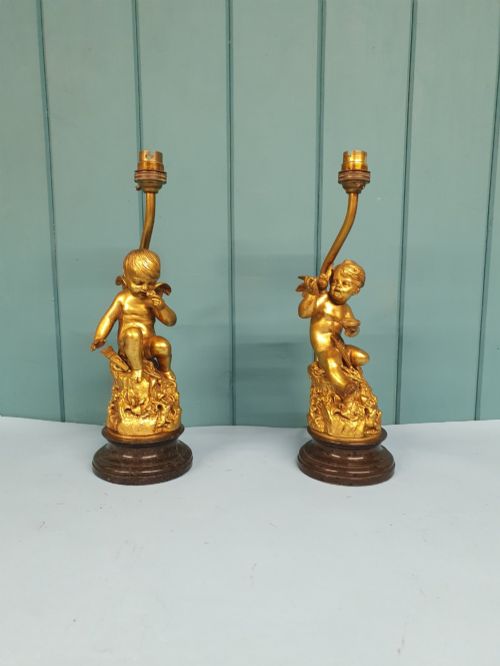
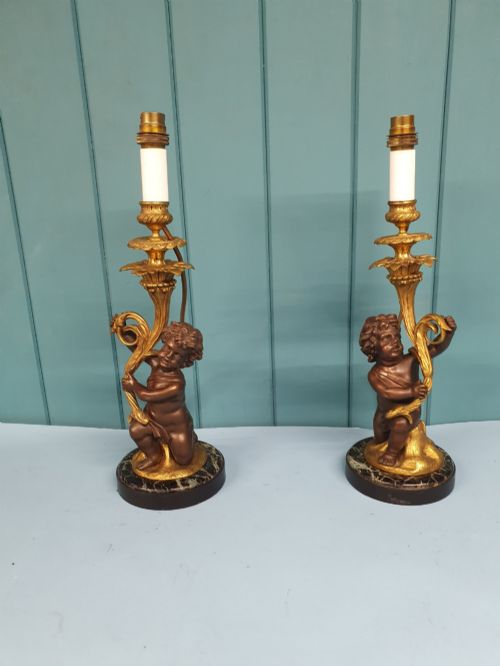
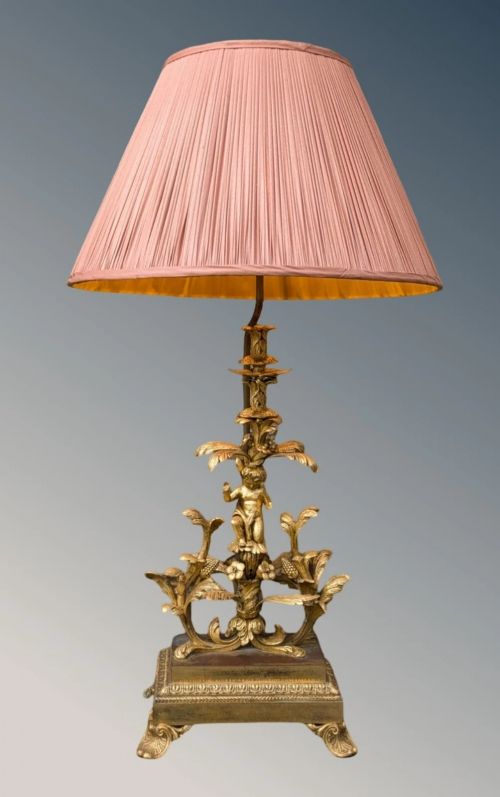
A putto table lamp brings figurative charm and sculptural weight to a room, combining classical figures with functional illumination.
Putto Table Lamp
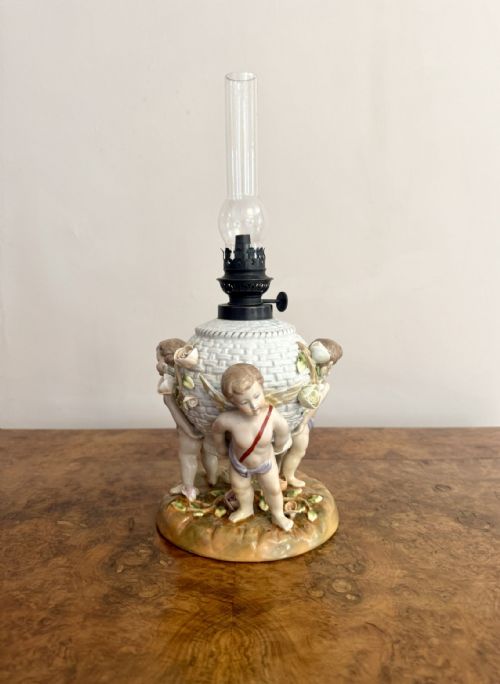
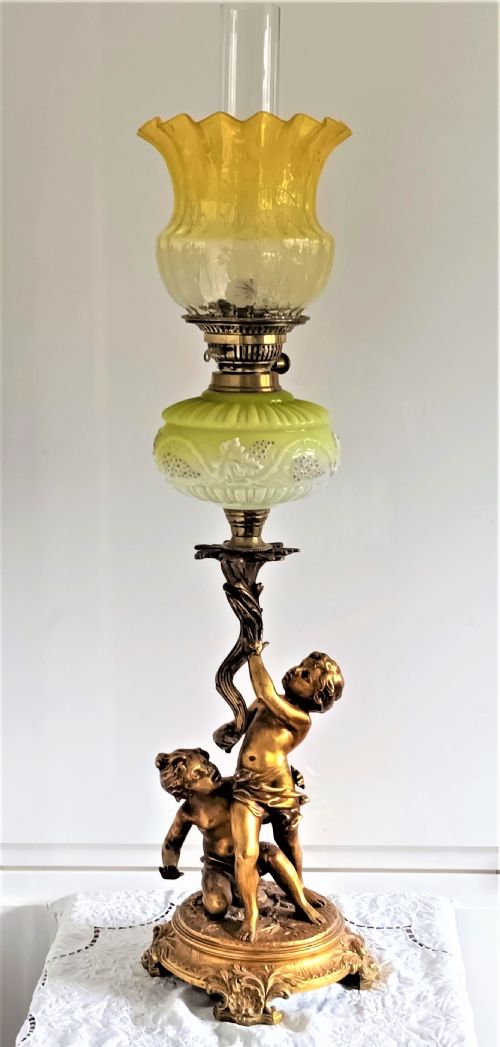
The objects take diverse forms, including converted oil lamps, candelabra, and dedicated lamp bases paired with fabric or beaded shades. Many examples arrive in pairs, offering symmetry for mantelpieces or side tables.
Continental workshops, particularly French and Italian makers, produced the majority of these pieces in styles that draw on Rococo Revival, Neoclassical, and Baroque traditions. The figures often interact with decorative elements such as dolphins, torches, or foliate bases.
Materials and construction methods
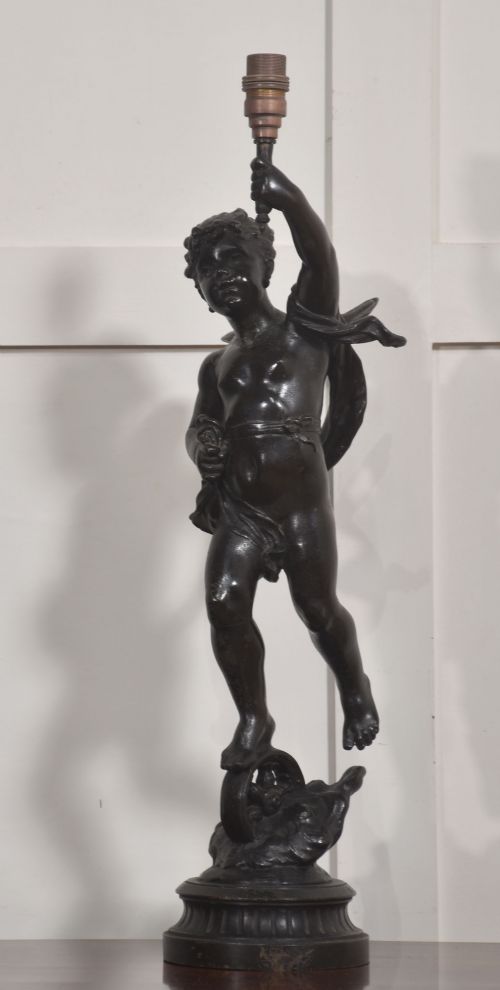
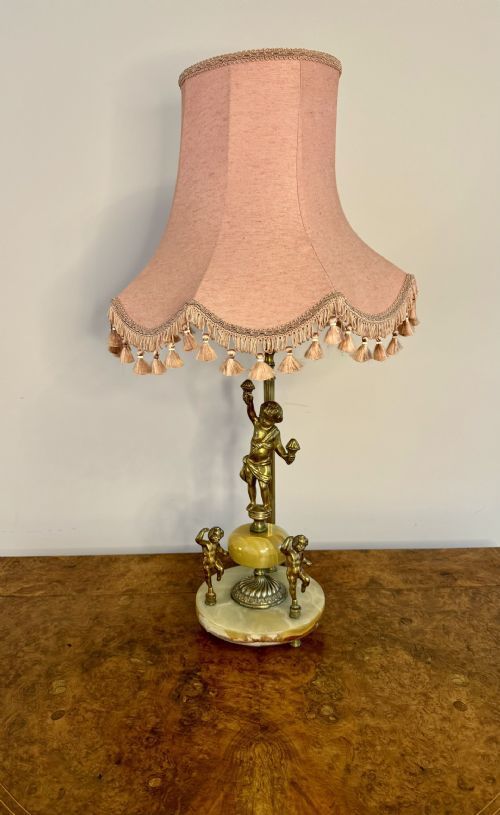
Foundry cast bronze, brass, or ormolu provide the structural body for metal examples, often finished with patination or fire gilding. These cast components are frequently mounted on marble, alabaster, or onyx plinths to add stability and colour contrast.
Ceramic pieces utilise hard-paste porcelain from factories like Sitzendorf and Meissen, or earthenware such as maiolica, which are hand-painted and glazed before being fitted for electricity or oil use. Wooden and plaster variants appear alongside metal and ceramic, reflecting the diverse material preferences of nineteenth-century makers.
Cherubs occasionally haul heavy dolphins or wield torches, proving that mythological multitasking is a full-time job in bronze.
Assessing quality and execution
Material selection and mounting integrity separate standard production from superior items, particularly in the weight of the bronze or the intricacy of the porcelain modelling. Original gilding and integrated marble bases rather than replacement parts elevate the standing of a piece.
Aug. Moreau·Sitzendorf·Meissen·Sevres
The Putto Table Lamp Glossary
- Putto
- A plump, naked male child figure found in classical art, often winged and synonymous with cherubs. These figures form the central sculptural element of the lamp base.
- Ormolu
- Finely ground high-carat gold applied to bronze through a mercury-gilding process, common on nineteenth-century French pieces. This technique yields a deep, warm metallic lustre.
- Toleware
- Painted or lacquered tin and sheet metal used for decorative lamp components and shades. It provides a smooth surface for hand-painted floral or gilt motifs.
- Patination
- The natural or induced surface ageing on metal that creates a darker, richer tone over time. It highlights the underlying relief of the bronze casting.
- Candelabra
- A branched candlestick designed to hold multiple lights, frequently converted into or utilised alongside table lamps. They share the same figural bronze or gilt-metal vocabulary.
Putto Table Lamp: Frequently Asked Questions
Are these lamps converted from oil lamps?
Many nineteenth-century examples began life as oil lamps or candelabra before receiving electrical wiring in later decades. This evolution is standard for period lighting.
Conversion methods vary, but original reservoirs and burners are frequently retained to preserve the historic character of the object.
How do I style a putto lamp at home?
These lamps function effectively on heavy wooden side tables, chests of drawers, or mantels where their sculptural weight anchors the space. Pair them with neutral silk or pleated shades to let the bronze or porcelain figure remain the focal point.
Their classical motifs complement traditional interiors as well as eclectic, layered room schemes.
How can I tell French from Italian pieces?
French pieces typically rely on finely chased ormolu, patinated bronze, and Louis XVI or Empire styling. Italian examples frequently incorporate alabaster, marble mounts, and softer Rococo forms.
Examining the casting quality and the type of stone or gilt metal helps clarify the geographic origin.
What periods do these lamps date from?
The selection spans the nineteenth century through the early twentieth century, encompassing Victorian, Edwardian, and nineteen-twenties production. Revivals of Rococo and Baroque styles dominate the aesthetic across these decades.
Dates are generally assigned based on stylistic indicators and manufacturing techniques rather than maker marks.