
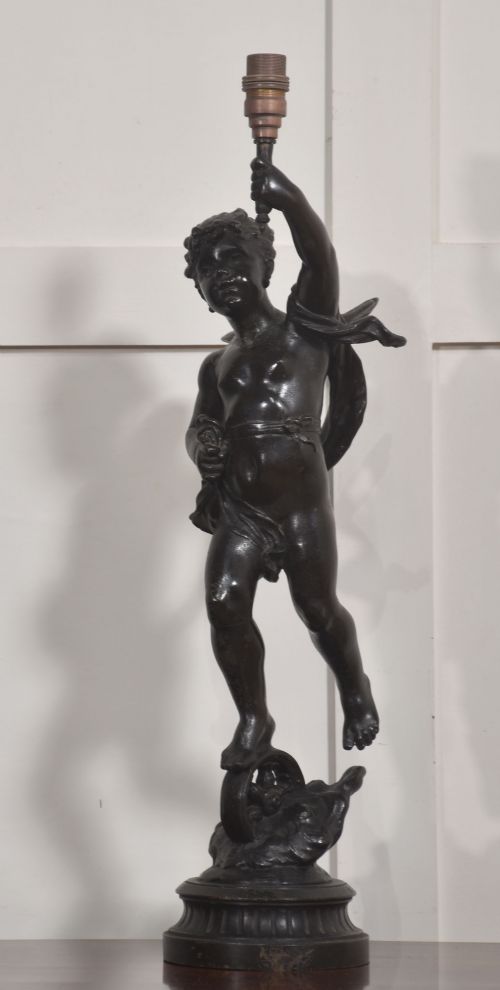
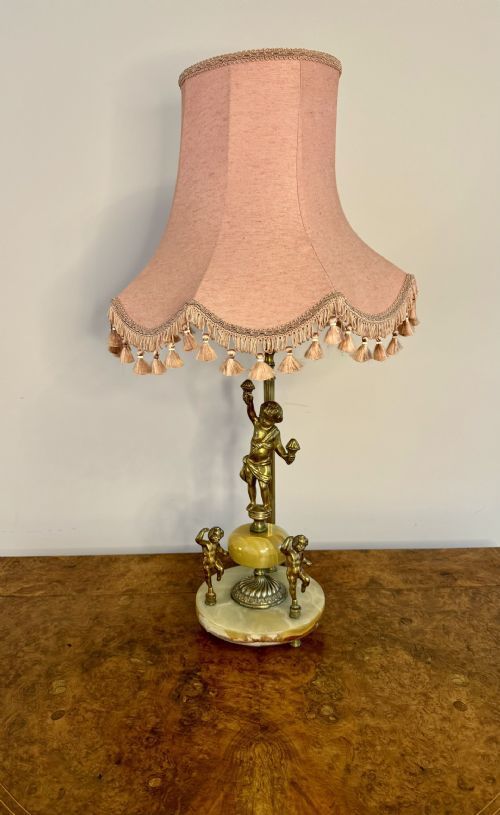


Antique Putto Desk Lamp
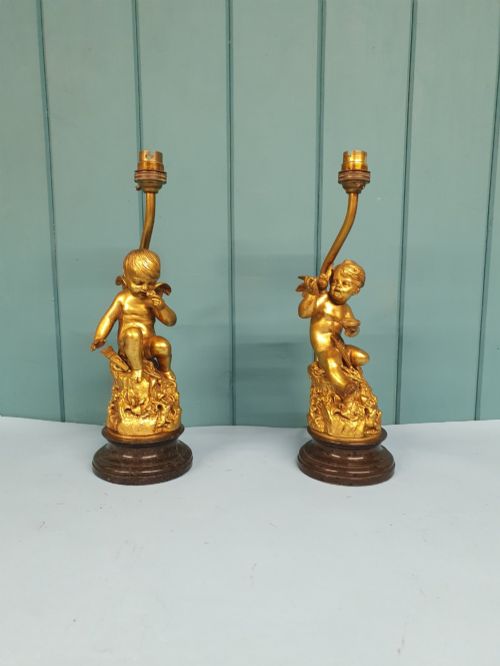
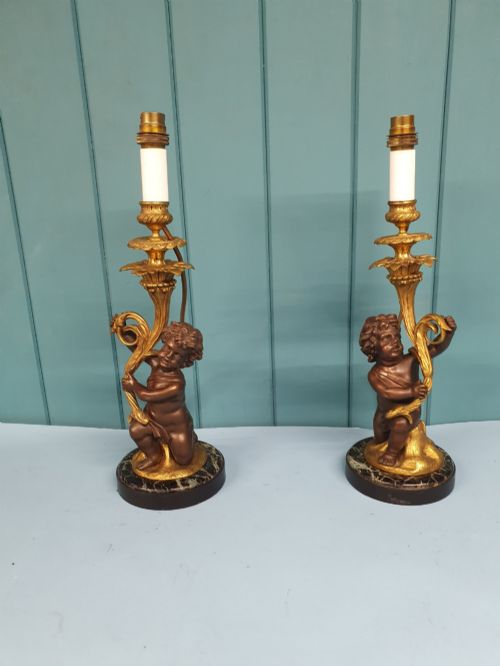
These antique putto desk lamp selections bring sculptural figural lighting into a room, pairing classical figures with period illumination.
Antique Putto Desk Lamp
An antique putto desk lamp combines figural bronze or brass sculpture with functional table illumination, often taking the form of a cherub or putto holding a light source. These pieces draw heavily on French Rococo Revival, Neoclassical, and Empire styles, reflecting continental design influences from the nineteenth century up to the Edwardian era.
The selections on this page span the nineteenth century, the Victorian period, and the early twentieth century up to nineteen thirty. Buyers will frequently encounter paired table lamps alongside monumental single bases, utilising materials like ormolu, marble, and gilt bronze.
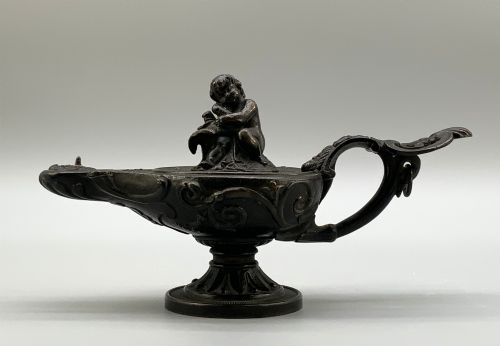
Many examples originate from French workshops or the Grand Tour tradition, occasionally incorporating converted oil lamps and porcelain vases. The dominant motif throughout is the winged putto or cherub, integrated into table lamps and oil lamp conversions.
Materials and Construction
Foundry work relies on cast bronze, brass, and ormolu, frequently finished with patination or fire gilding to highlight the anatomical details of the putti. Heavier bases often incorporate supportive plinths of carved marble, onyx, or oak to anchor the figural elements.
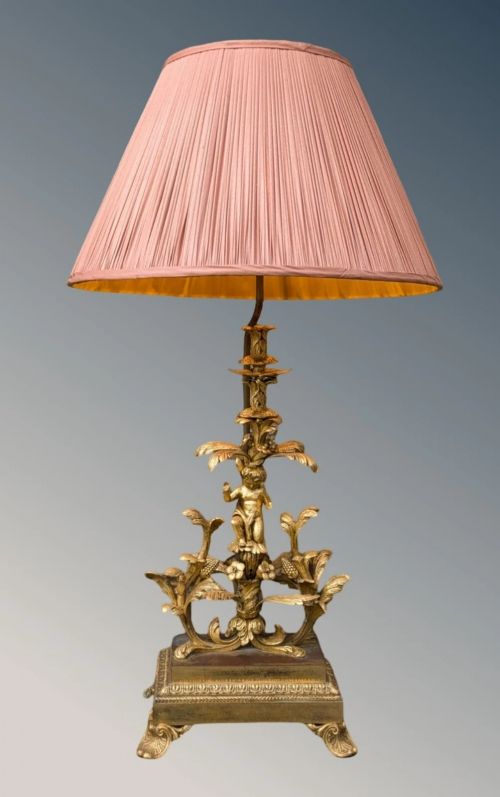
Lighting components merge older oil lamp mechanisms and classical statuettes with later electrical conversions, pairing metalwork bodies with fabric shades. Some models combine cast metal figures with porcelain body sections or painted toleware details.
Assessing Craftsmanship and Detail
Material selection and decorative complexity dictate the tier of the piece, with heavy fire-gilt ormolu and integrated marble or onyx plinths representing more ambitious manufacture than simpler brass or spelter alternatives.
Aug. Moreau·French Sevres
The Antique Putto Desk Lamp Glossary
- Putto
- A plump, naked male child figure frequently found in classical art and decorative metalwork. They appear winged on these lamps, resembling cherubs.
- Ormolu
- Finely ground high-carat gold-mercury amalgam applied to a bronze base. This technique produces a durable, rich golden surface typical of French decorative pieces.
- Patinated Bronze
- Bronze treated with chemical solutions to produce a darkened or antiqued surface finish. This treatment accentuates the sculptural contours of the cherub figures.
- Grand Tour
- A cultural journey undertaken by nineteenth-century Europeans to collect classical antiquities and works of art. Many figural bronzes originate from this tradition.
- Tole Peinte
- Painted sheet metal used for decorative lamp bodies and canisters. It offers a smooth surface for applied colour and pastoral decoration.
Antique Putto Desk Lamp: Frequently Asked Questions
What is an antique putto desk lamp?
These decorative lamps feature cast metal figures of cherubs or putti combined with table lighting fixtures from the nineteenth and early twentieth centuries.
They draw on French styles like Rococo Revival and Neoclassical design, serving as both functional illumination and sculptural works of art.
Were these always electric lamps?
Many examples began life as oil lamps, figural statuettes, or decorative vases before being converted to electricity later in their operational lives.
Original nineteenth-century oil mechanisms and burner assemblies are frequently adapted or replaced to accommodate modern wiring safely.
How do I date an antique cherub lamp?
Dating relies on examining the casting quality, the type of metal patination, and the construction methods used on the base and mounts.
Pieces from the nineteenth century often feature heavy cast bronze and hand-chased ormolu, while later Edwardian examples incorporate different alloy mixes and onyx.
Where should I place this lamp?
These figural lamps suit prominent surfaces such as desks, sideboards, and large tables where their sculptural detail remains fully visible.
Pairing them with appropriate fabric shades helps balance the visual weight of the bronze or gilt metal bases.