


Antique Putti Table Light
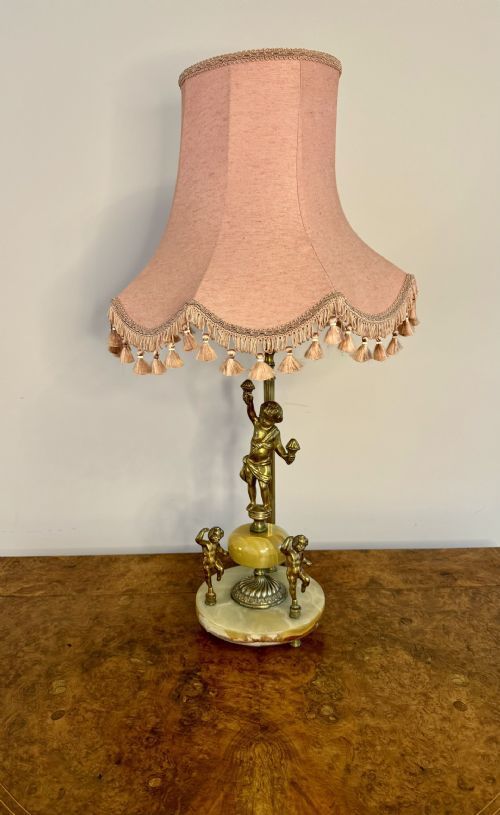
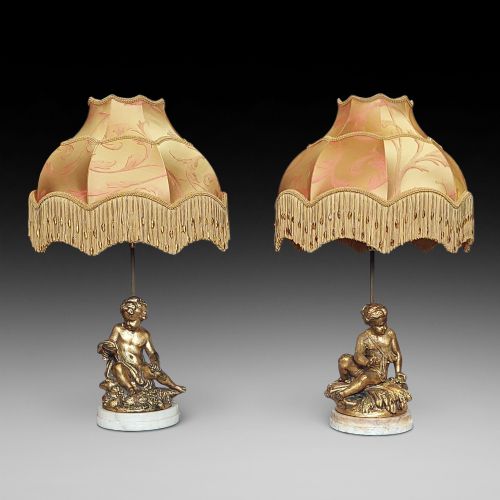
An antique putti table light brings figural charm and warm illumination to a room, cast in bronze or shaped in porcelain.
Antique Putti Table Light
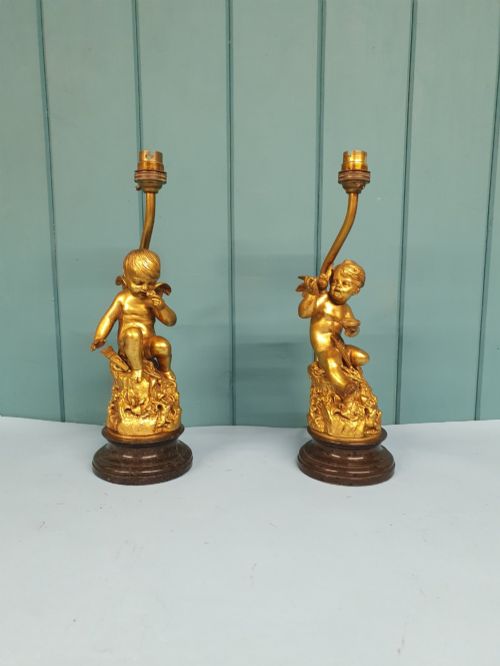
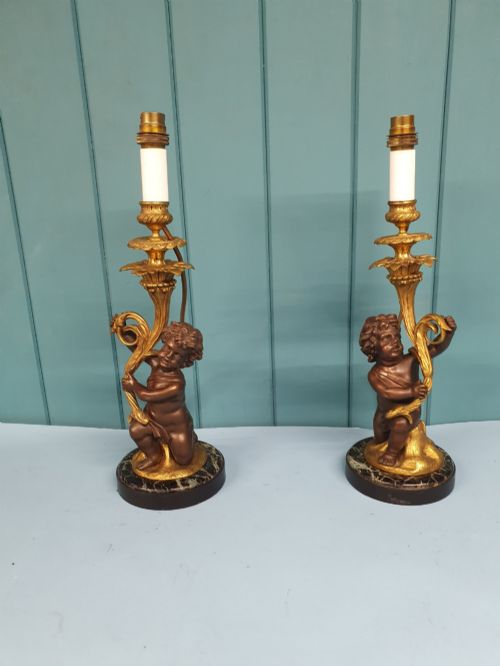
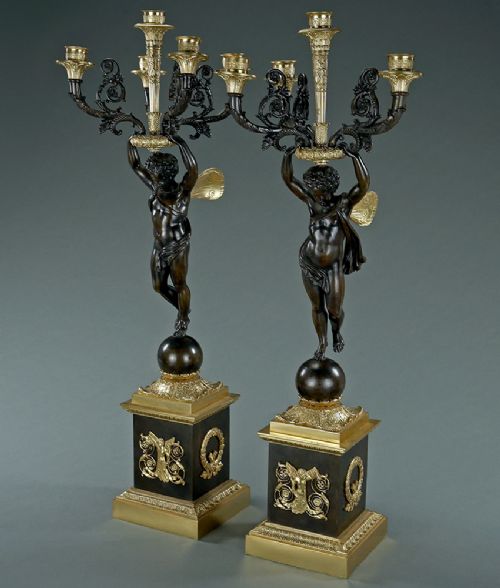
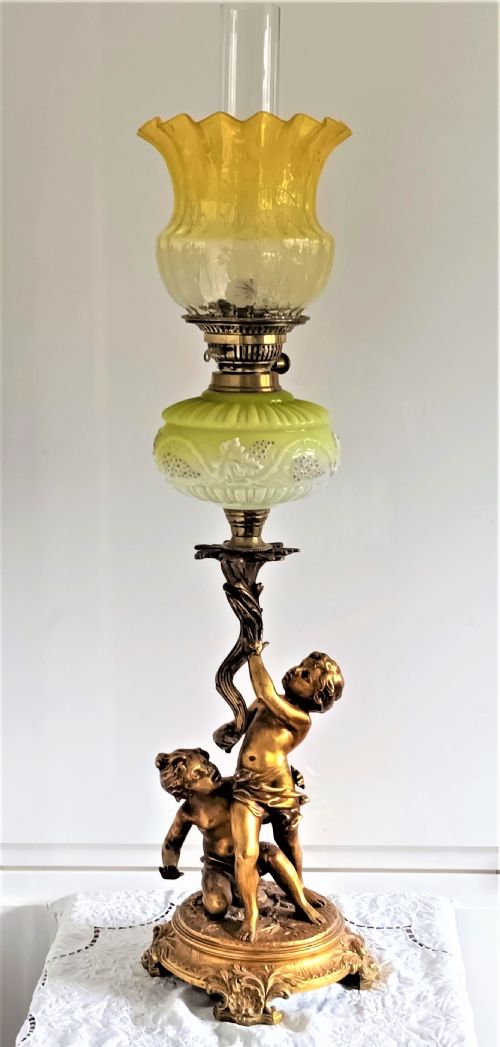
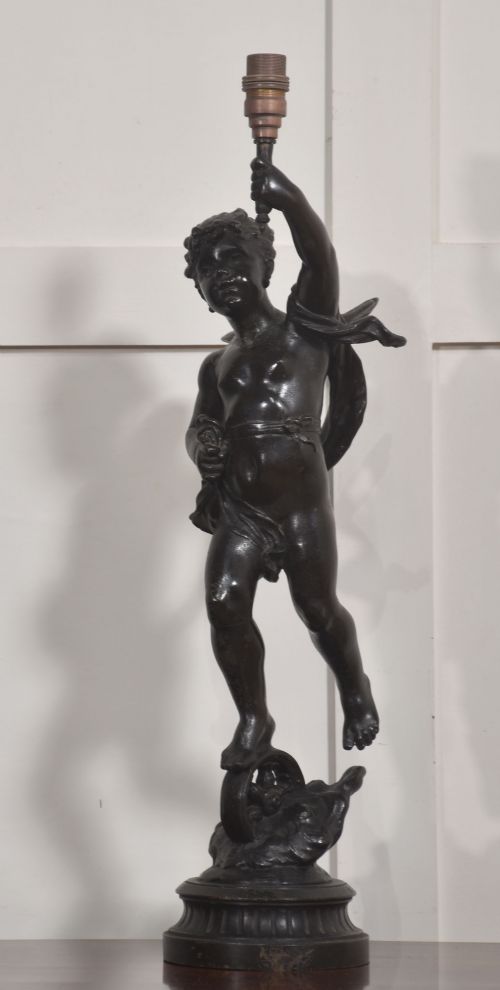
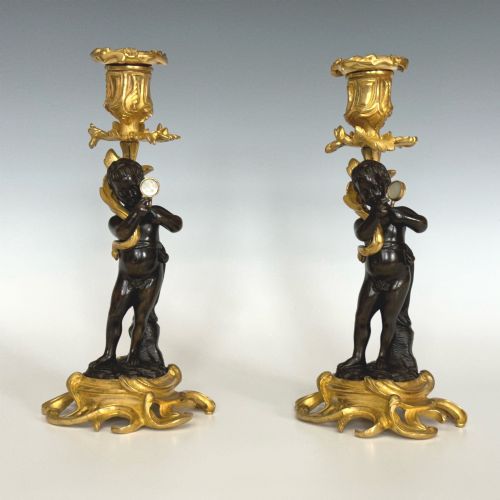
When you search for an antique putti table light, you are looking at figural lighting and candle holders featuring winged cherubs, infants or mythological cupids. The examples on this page span the nineteenth century and the early decades of the twentieth century, originating largely from French, English, and German workshops.
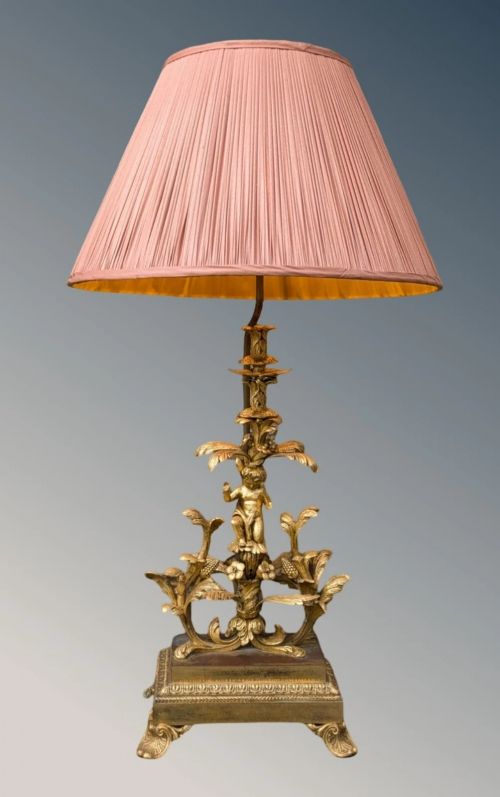
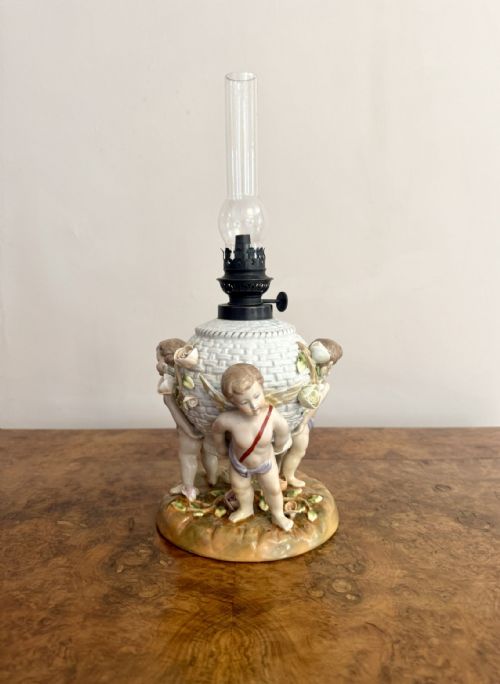
These pieces appear primarily as pairs of table lamps, converted oil lamps, candelabra, and candlesticks. Many started life as candle holders or oil lamps before receiving later electrical conversions during the twentieth century.
The putti figures are typically rendered in bronze, ormolu, brass, or painted porcelain, often mounted upon white marble bases or tiered metal plinths. Stylistic influences draw heavily on French Rococo Revival, Louis XVI style, and Victorian aesthetics.
Materials and construction
Metal components rely on traditional foundry methods such as lost-wax casting for bronze and patinated or gilt brass, finished with hand chasing to sharpen the fine details of hair, wings, and drapery. Ormolu applications involve the meticulous union of mercury gilding over bronze to achieve a lasting golden sheen.
Ceramic elements utilise porcelain bodies from factories like Sitzendorf, Meissen, or Sevres, shaped in moulds and hand-painted with coloured enamels and gilt accents before firing. Bases frequently incorporate turned white marble or variegated onyx to provide stable weight beneath the metal or ceramic figures.
Many a stern Victorian parlour was kept in check by a platoon of chubby, bronze infants permanently frozen mid-mischief.
Distinctions in quality
Quality rests heavily upon the crispness of the metal chasing and the depth of the casting, where superior examples retain sharp definition in the cherub's facial expressions and feather tips rather than softened contours. The integration of materials also defines the grade, seen in the harmonious weight of a solid marble plinth paired with heavy fire-gilt bronze rather than lighter spelter alternatives.
In ceramic versions, the standard is judged by the delicacy of the hand-painted enamels, the subtlety of the porcelain modelling, and the preservation of original gilt highlights without rubbing. The coherence of the design, such as matched pairs sharing identical patination and casting marks, elevates the standing of the lighting piece.
Aug. Moreau·Sitzendorf·Meissen·Sevres
The Antique Putti Table Light Glossary
- Putti
- Plural of putto, representing a chubby male child, often winged, derived from classical art and frequently depicted in Renaissance and Revival decorative objects.
- Ormolu
- Finely ground high-carat gold applied to a bronze base using a mercury amalgam, creating a rich golden surface that resists tarnishing over time.
- Candelabra
- A branched candlestick designed to hold multiple taper candles, often adapted later in its life to house electrical lamp fittings.
- Patinated bronze
- Bronze treated with chemical solutions or heat to produce a controlled surface colour, ranging from deep brown to greenish tones.
- Toleware
- Tin-plated steel or iron painted with opaque lead enamels, frequently utilised for decorative lamp shades and canisters in nineteenth-century interiors.
- Spelter
- An alloy based on zinc, used as a less expensive substitute for bronze in nineteenth-century figures and frequently given a bronze-like finish.
Antique Putti Table Light: Frequently Asked Questions
What is a putto?
A putto is a plump, naked child figure, often winged, originating in classical art and widely revived during the nineteenth century.
These figures appear across French and German metalwork and porcelain, usually representing playful mythological cherubs or cupids.
Were these lamps originally electric?
Most nineteenth-century examples began life as oil lamps, candle holders, or candelabra before receiving electrical wiring later.
Conversions are standard practice for antique lighting, allowing period figural pieces to function safely as modern table lamps.
How do I identify porcelain figures?
Porcelain elements on these lamps often originate from continental factories such as Sitzendorf or Meissen.
Examining the underside for underglaze factory marks helps identify the specific pottery and narrow down the production period.
How do I clean bronze and ormolu?
Dusting gently with a soft, dry cloth is the safest method for preserving historic patination and fragile fire gilding.
Harsh metal polishes should be avoided because they strip away the original surface finish and thin the gold layer on ormolu.