


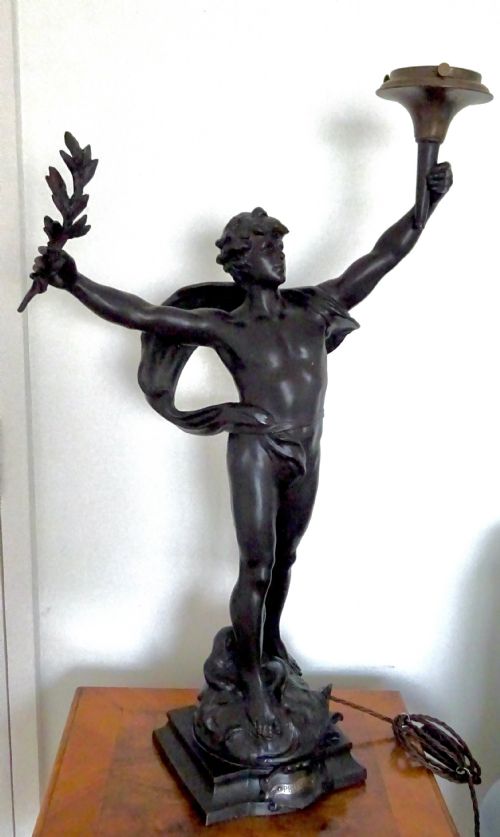
Antique Spelter Figural Lamp
An antique spelter figural lamp brings sculptural presence to a room, combining cast metal figures with period lighting.
Antique Spelter Figural Lamp
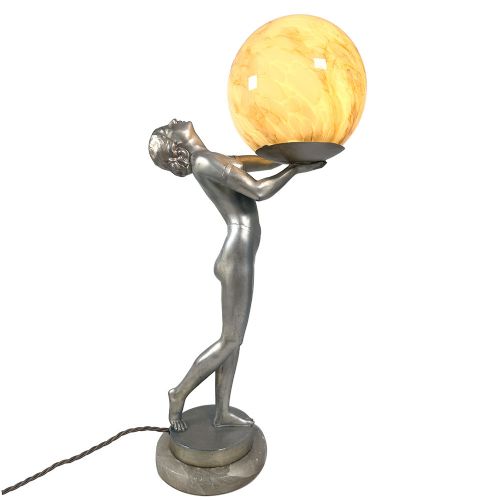
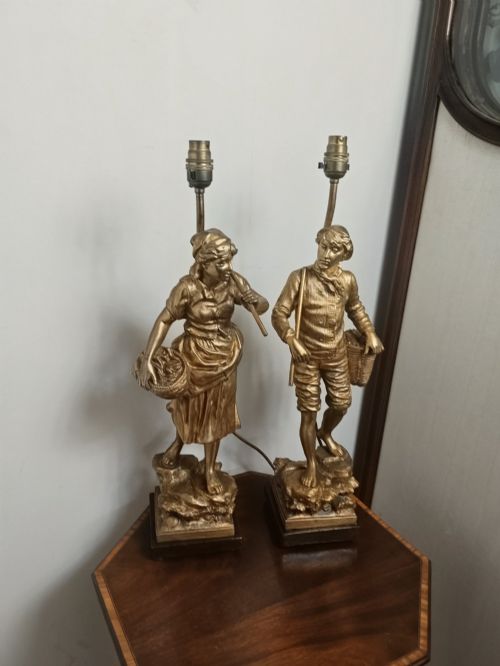
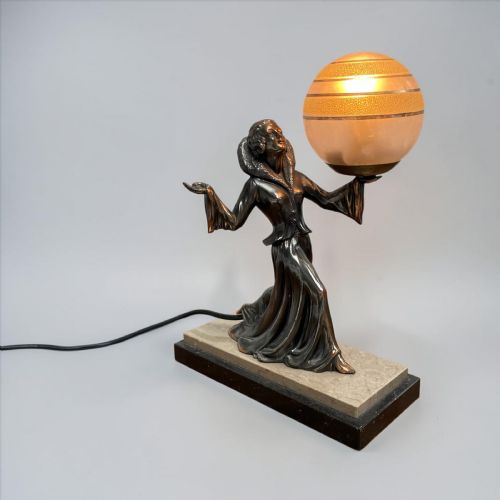
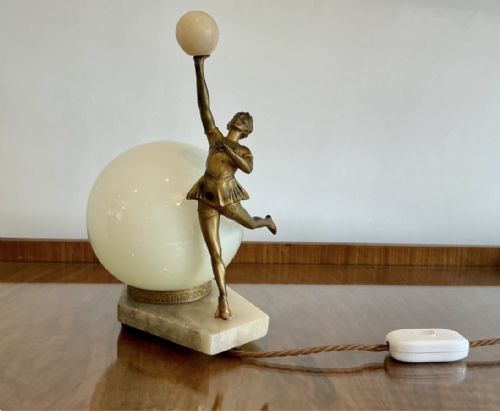
When you search for an antique spelter figural lamp, you encounter cast metal sculptures integrated with table lighting, predominantly from the late nineteenth century and the early decades of the twentieth century. These pieces frequently depict human figures, ranging from classical subjects to stylised Art Deco ladies holding torches or glass shades.
The selections on this page span several distinct design movements, including French Belle Epoque, Art Nouveau, and Art Deco. You are most likely to meet pieces mounted on marble bases, sometimes paired with glass or fabric shades, reflecting the aesthetic preferences of periods such as nineteen twenty and nineteen thirty.
Makers and sculptors often signed their work directly on the metal casting, giving these table lamps the character of freestanding sculptures. Collectors look for these signed examples alongside unsigned works that display the same decorative ambition and sculptural weight.
How they were made
The primary material is spelter, an alloy based on zinc that allowed founders to cast intricate figural details at a lower cost than bronze. These metal castings received various surface finishes, including patination, silvering, gilding, and painting to simulate more expensive materials.
Founders mounted the spelter figures onto heavy bases made of marble, brass, or other metals to provide stability for the lamp structure. Glass, fabric, and torchere shade elements completed the assembly, integrating electrical fittings or early burner components into the sculptural form.
Several figures hold torches aloft with such enthusiasm that the shade becomes the brightest member of the household.
What varies in quality
The quality of the base materials and the harmony between the figure and the shade shape influence the overall success of the piece. Integrated signatures from known sculptors and founders elevate the standing of a lamp within the marketplace.
E Rousseau·L & F Moreau·P Sega·Auguste Moreau·Émile Bruchon
The Antique Spelter Figural Lamp Glossary
- Spelter
- A zinc-based alloy commonly used in the manufacture of decorative figures and lamps. It was often finished with metallic paints or chemical patination to resemble bronze.
- Patinated metal
- A metal surface treated with chemicals to produce a decorative coloured coating or aged appearance. This finish protects the metal and defines the sculptural contours.
- Torchere shade
- An upward-pointing shade designed to direct light toward the ceiling or diffuse it through decorative glass. It frequently appears held aloft by the central figural casting.
- Art Deco
- A design style dominant in the nineteen twenties and nineteen thirties characterised by streamlined forms and geometric patterns. In lamps, this appears in the stylised geometry of the figures and bases.
Antique Spelter Figural Lamp: Frequently Asked Questions
What is a spelter lamp?
A spelter lamp is a lighting fixture featuring a cast zinc-alloy figure as its primary decorative element. These pieces function as both sculptural works and functional table illumination.
They emerged in various European workshops, particularly in France, during the late nineteenth and early twentieth centuries to provide decorative lighting for domestic interiors.
How do I date an antique lamp?
Dating relies on the stylistic markers of the figure, base materials, and manufacturing techniques. Art Nouveau and Art Deco designs correspond to distinct periods within the early twentieth century.
Signatures, foundry marks, and the integration of electrical components also help narrow down the production era.
Are these lamps fragile?
Spelter is a softer and more brittle metal than bronze, requiring careful handling to prevent bending or surface damage. The marble bases add considerable weight, making secure placement essential.
Care should be taken when cleaning the patinated or painted surfaces to preserve the original finish.
Can these lamps be rewired?
Many examples retain older wiring that requires replacement to meet modern electrical safety standards. Professional rewiring ensures the lamp can be used safely in a contemporary home.
This process preserves the original metal body and lamp structure while updating the internal electrical components.